In the deep forests of the Western Amazon, where rivers moved like silver snakes through the land and the night sky reflected itself upon still waters, there lived a small frog whose heart was filled with restless curiosity. Each evening, as darkness settled and the sounds of insects rose in song, the frog would sit beside a quiet pool and stare upward in wonder.
Above him, the moon glowed softly in the sky. Below him, the same moon shimmered in the water.
The frog watched the reflection with growing concern. To his eyes, the moon appeared trapped beneath the surface, caught in the pool and unable to rise. Night after night, the frog returned to the same place, troubled by what he believed he saw. He could not understand how such a great and beautiful light could be held captive by something as small as water.
At last, the frog decided he must act.
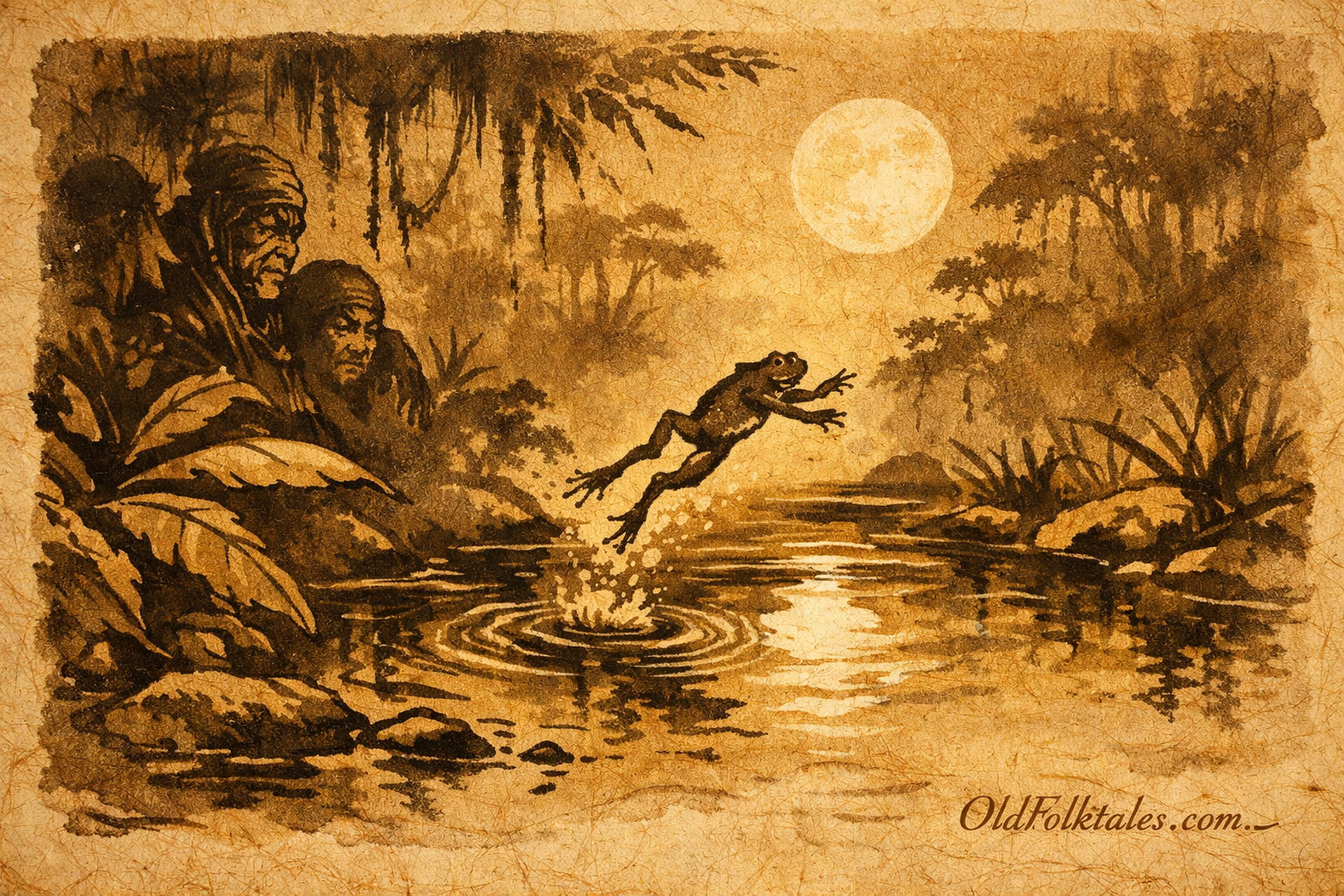
Leaping toward the reflection, he splashed into the pool, hoping to push the moon free. The water rippled, and the image broke apart, but when the surface grew still again, the moon returned, unchanged and unmoved. The frog leaped again. And again. Each time, the moon remained exactly where it was.
As the night wore on, the frog grew tired. His legs ached, his breath became shallow, yet his determination pushed him onward. He believed that effort alone could solve the mystery. If he leaped enough times, surely the moon would escape.
Other creatures watched from the shadows. Some were puzzled. Others were concerned. Still, the frog would not stop.
By dawn, exhaustion overtook him. He collapsed at the edge of the pool, his strength spent. That morning, the elders of the forest approached, the older animals who had lived long enough to understand the rhythms of the world. They had seen the frog’s struggle and waited for the right moment to speak.
One elder explained gently that the moon in the water was not trapped at all. It was only a reflection, an image shaped by light and surface. The true moon had always been free in the sky above. The frog listened quietly, his confusion giving way to understanding.
Only then did he realize that his efforts, though driven by care and curiosity, had been guided by misunderstanding. His leaps had not helped the moon; they had only harmed himself.
From that day on, the frog watched the water with new eyes. He learned to ask, to listen, and to observe before acting. And the elders continued to teach, reminding all creatures that wisdom grows through patience and shared knowledge.
Thus, the forest remembered the frog’s lesson: curiosity is powerful, but without understanding, it can lead to unnecessary suffering.
Click to read all South American Folktales — timeless stories from the Andes to the Amazon.
Moral Lesson
This folktale teaches that curiosity must be guided by wisdom and understanding, and that respect for elder knowledge helps prevent harm born from misinterpretation.
Knowledge Check
1. What troubled the frog in the story?
He believed the moon was trapped in the water.
2. Why did the frog keep leaping into the pool?
He tried to free the moon’s reflection.
3. What caused the frog’s exhaustion?
Endless effort driven by misunderstanding.
4. Who helped explain the truth to the frog?
The elders of the forest.
5. What does the moon’s reflection symbolize?
Misinterpretation and limited understanding.
6. What lesson does the frog learn?
That wisdom and patience should guide curiosity.
Source: Indigenous oral folklore; documented in Amazonian myth studies
Cultural Origin: Western Amazon (Indigenous traditions)