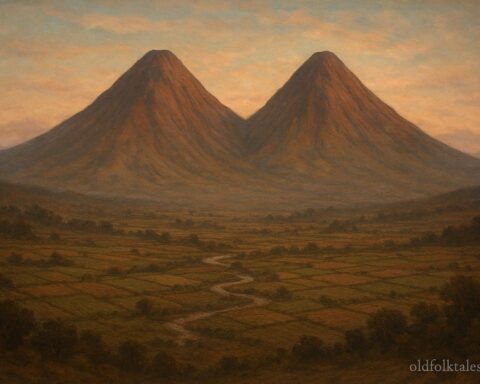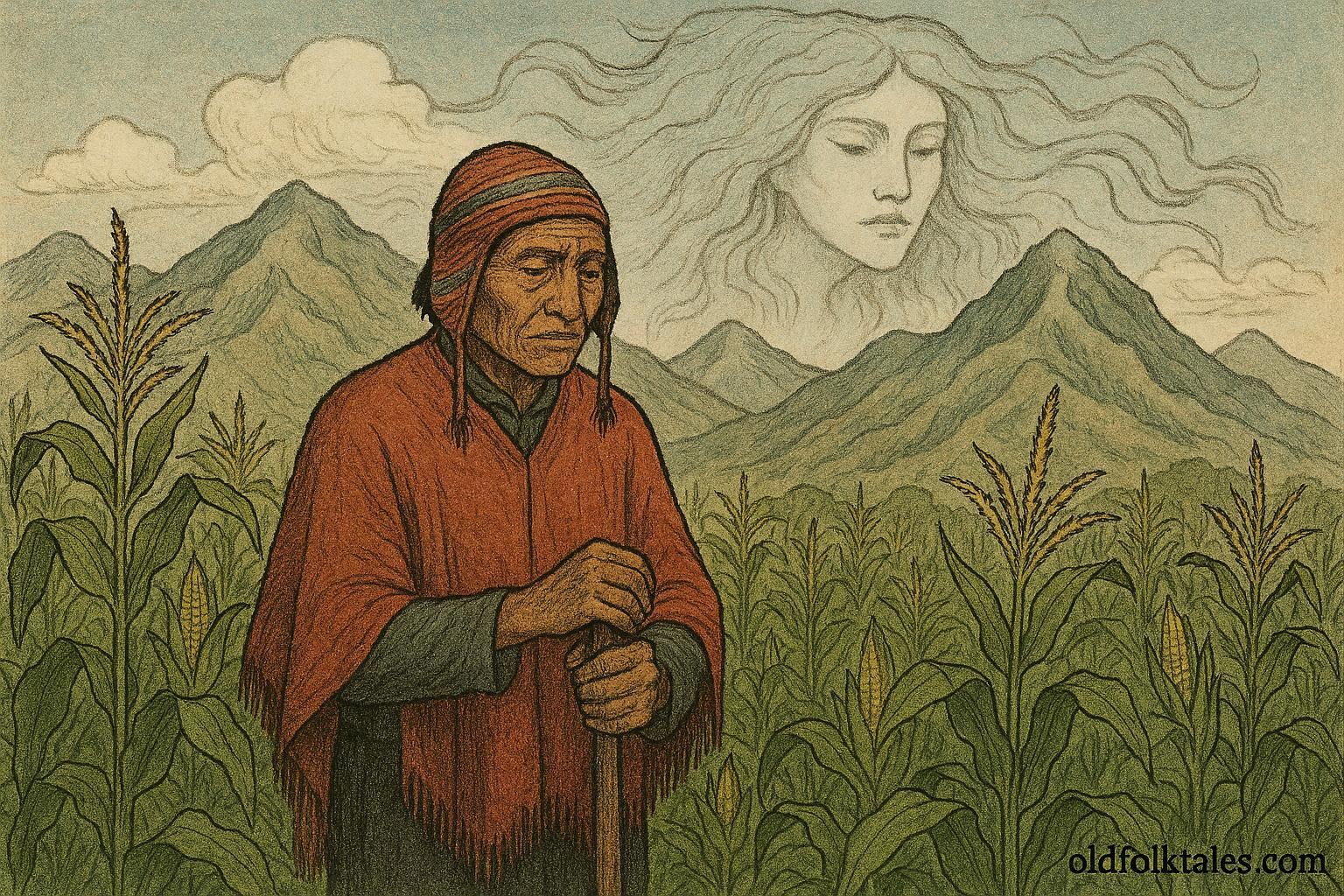
Long ago, in the fertile valleys of the Andes, a great drought came upon the land. The rivers shrank, the maize fields withered, and the villagers faced starvation. The elders prayed to the mountain spirits for relief, but the skies remained clear and the sun relentless. Among the villagers was a humble farmer named Túpac, known for his kind heart and unshakable devotion to his community.
Túpac saw the children of the village with hollow cheeks, the mothers struggling to feed the youngest, and the elders praying with empty bowls. One night, as he slept beneath the stars, a spirit of the mountain appeared to him, shimmering with the light of moonlit snow. The spirit spoke:
“You seek to feed your people, but the drought will not end without a price. What are you willing to offer?”
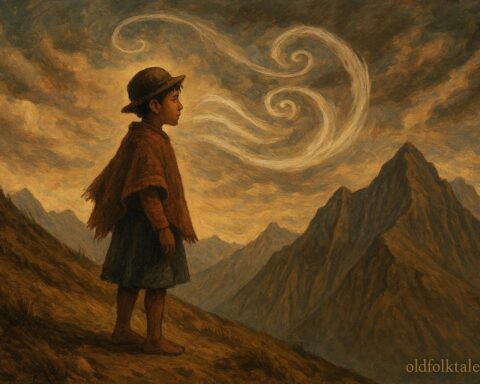
Túpac hesitated. What could he give that was worthy? Gold, land, or grain he did not have, would be nothing to a mountain spirit. Finally, he said, “I offer my voice. Let my words fall silent if my people may eat.”
Discover ancient tales passed down by the Indigenous peoples of the Americas.
The spirit considered his choice and nodded. “So be it. Speak no more, and the maize shall grow to feed the village. Remember, your voice is the price, and silence is your burden.”
At dawn, Túpac awoke to a miracle. The fields were green, ears of maize heavy with kernels, and the rivers trickled gently through the valley. His neighbors rejoiced, unaware of the pact. Túpac tried to call out in celebration, but no sound came from his throat. He could only gesture and smile, a silent witness to the fruits of his sacrifice.
In the days that followed, the villagers gathered and harvested the maize, sharing it with everyone. They marveled at the sudden abundance and praised the mysterious blessings of the mountains. Túpac helped where he could, guiding the hands of children and elders, though he could not speak. His silence became a symbol, a living reminder that survival often required courage, humility, and personal sacrifice.
Over time, the villagers began to understand the true cost. They treated the land with greater respect, offered regular prayers to the mountain spirits, and shared resources generously. Túpac, though voiceless, became a revered figure. When disputes arose or selfishness threatened, the sight of him standing quietly reminded all that life’s abundance required balance and that selfishness or greed would bring hardship.
The story spread through the valleys: a man had given his most cherished gift his voice to save his people. Children learned that the mountain spirits were vigilant, and elders emphasized that courage often involves loss. Some nights, the winds seemed to carry Túpac’s whispers, a faint echo of gratitude, reminding everyone that even in silence, virtue endures.
Years later, travelers passing through the valley would ask the villagers why a quiet man always stood at the edge of the fields. They were told of Túpac, the farmer who traded his voice for maize, and how his selflessness had saved the village. They learned that survival was never without consequence and that generosity often demanded personal sacrifice.
Thus, the legend of Túpac became part of the moral fabric of the community. Parents pointed to the maize fields and reminded children that nature rewarded courage and punished selfishness. And although Túpac never spoke again, his deeds resonated through generations, a living testament to integrity, humility, and the weight of promises.
Click to read all South American Folktales — timeless stories from the Andes to the Amazon.
Moral Lesson:
True selflessness often demands personal sacrifice. Courage and integrity can ensure the survival and well-being of a community, but such actions come with costs that must be honored and respected.
Knowledge Check
1 What did Túpac offer to the mountain spirit?
He offered his voice in exchange for the survival of his village
2 Why did the maize grow abundantly after his sacrifice?
Because the spirit honored Túpac’s selfless offer
3 How did Túpac communicate after giving up his voice?
He used gestures and silent guidance to help the villagers
4 What lesson did the villagers learn from Túpac’s sacrifice?
That generosity, humility, and respect for nature are essential for survival
5 How did Túpac’s silence serve the community over time?
It became a living reminder of courage, integrity, and the cost of selflessness
6 What is the central theme of the story?
Sacrifice, survival, and moral responsibility
Source:
Adapted from Agricultural Myths of the Central Andes, Universidad Nacional de San Marcos (2001)
Cultural Origin:
Quechua peoples, Peru