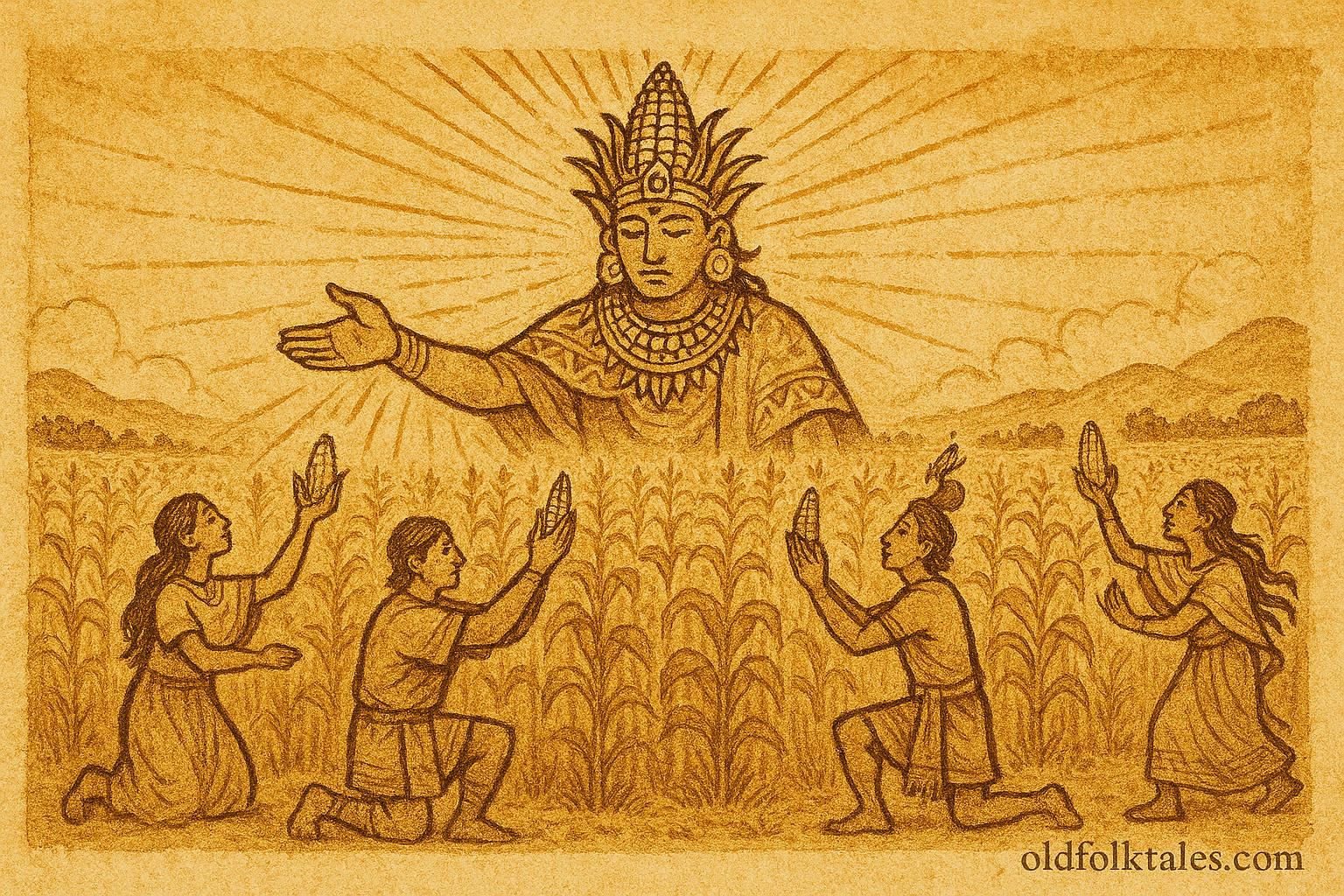
Long ago, in the fertile highlands and river valleys of the Yucatán, the people of a Mayan village thrived under the blessing of the Maize God. Known as a divine provider, the Maize God was said to watch over their crops, ensuring that the golden kernels of maize, the lifeblood of their community, would flourish. Maize was more than food; it was a sacred gift, sustaining bodies and souls alike, woven into every ritual, every celebration, and every prayer.
For generations, villagers honored the god with offerings of maize, intricate dances, and songs of gratitude during planting and harvest seasons. Elders reminded the young of the delicate balance between human labor, divine blessing, and the cycles of nature. Yet one year, as a harvest waned and the skies remained dry, some villagers began to neglect their rituals. They assumed the earth and the maize would always provide, regardless of their reverence.
The consequences were immediate. Fields that had once shimmered with life turned brittle and brown. Water ran low in the rivers, and famine’s shadow crept across homes. Children went hungry, and elders prayed in desperation, their voices rising to the heavens. It was then that the Maize God, displeased at being disregarded, decided to teach the people a lesson.
In a dream, the deity appeared to the village priest, radiant with golden corn and shimmering leaves. “Only through humility, gratitude, and devotion can your lands be restored,” the god said. “Honor the maize, honor the earth, and honor the divine, for life depends on this sacred balance.”
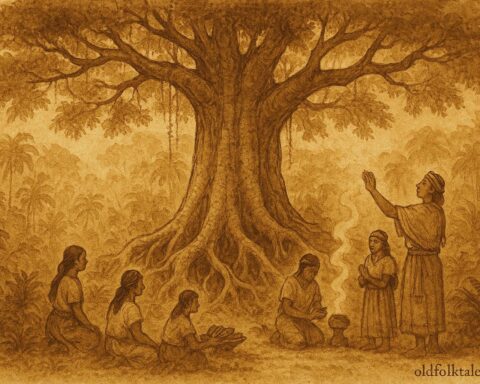
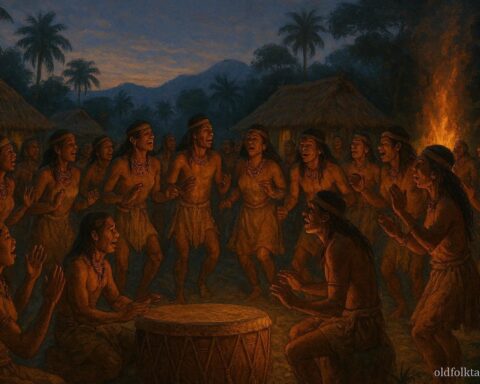
The next morning, the villagers gathered in the central plaza, offering the remaining kernels of maize and performing the dances their ancestors had taught. They sang with sincerity, their hearts filled with reverence rather than obligation. Even those who had doubted the god now knelt, recognizing their dependence on forces greater than themselves.
Slowly, the earth responded. Rain fell gently upon the dry fields, streams returned to their banks, and the maize stalks grew tall and golden. The Maize God’s blessing had returned, stronger than ever, as a reward for their renewed gratitude. From that day forward, the people remembered that sustenance was not a guarantee, but a sacred gift to be respected and honored in both ritual and daily life.
The story of the Maize God endured through generations, reminding the Mayan people that prosperity is intertwined with humility, devotion, and a harmonious relationship with the natural and divine worlds.
Moral Lesson
This Mayan folktale teaches that gratitude and reverence toward both divine forces and nature are essential for sustaining life and prosperity. Neglecting spiritual and ecological balance leads to hardship, while mindful respect restores abundance.
Knowledge Check
Q1: Who is the Maize God?
A central deity in Mayan culture, responsible for providing maize and sustenance.
Q2: Why did the Maize God become displeased with the villagers?
Because they neglected rituals and failed to show gratitude.
Q3: What actions did the villagers take to restore the god’s favor?
They offered maize, performed ritual dances, and prayed sincerely.
Q4: What does maize symbolize in Mayan culture?
Life, sustenance, prosperity, and sacred connection to the divine.
Q5: How does the story connect human behavior to environmental outcomes?
It illustrates that neglecting rituals and reverence leads to crop failure, showing a link between spiritual respect and ecological stewardship.
Q6: What moral or lesson does this folktale teach?
Gratitude, reverence, and harmony with divine forces and nature sustain life and community well-being.
Source: Popol Vuh; Mayan oral traditions
Cultural Origin: Mexico (Mayan folklore)