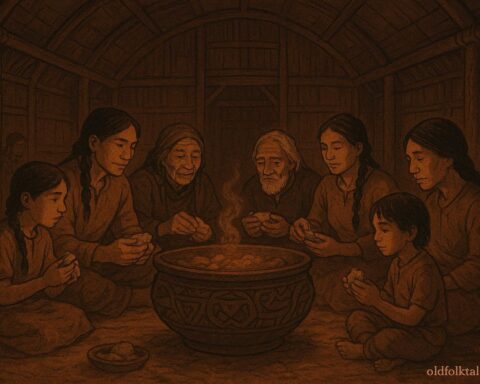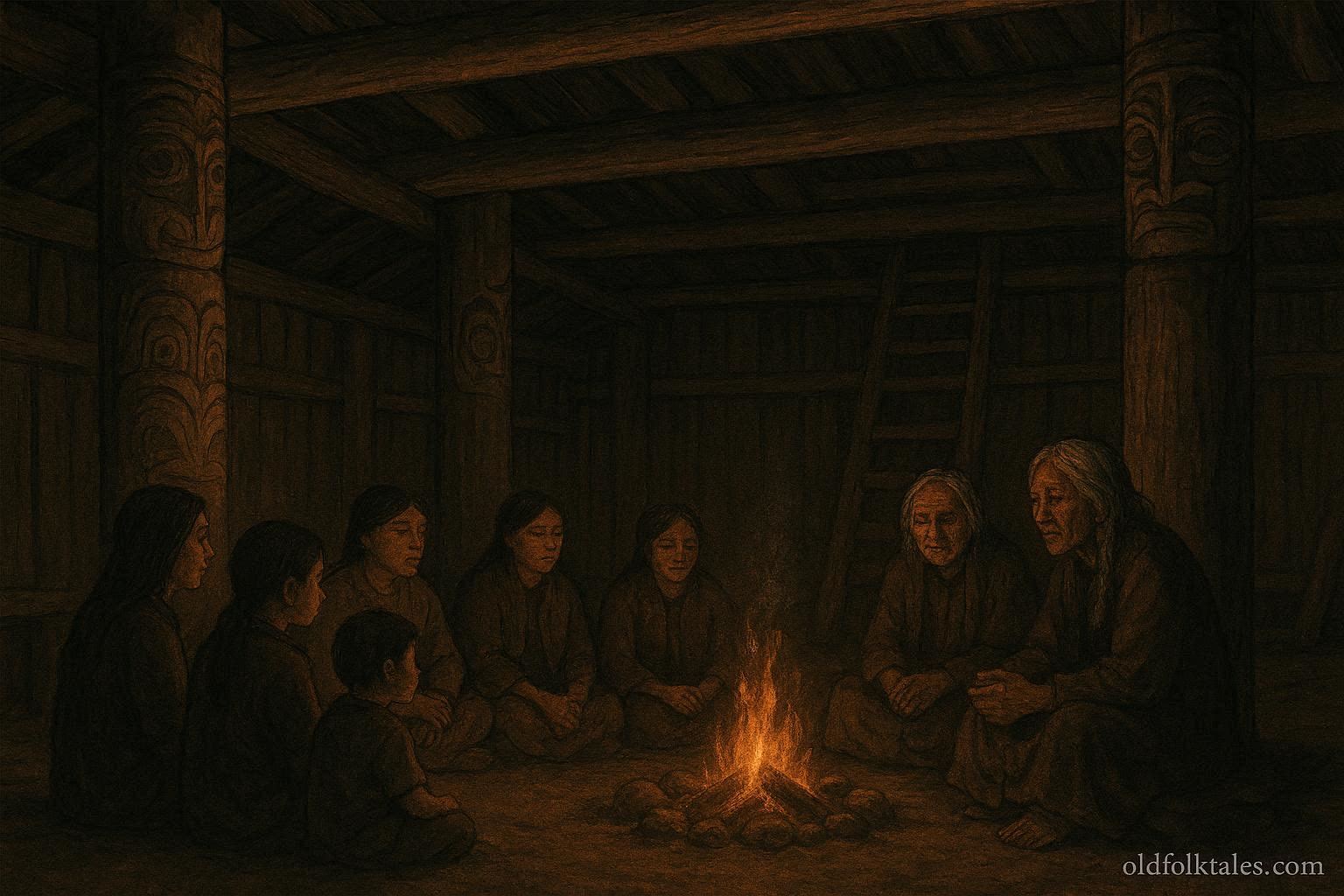
In a Dakelh village nestled among the cedar forests of British Columbia, there was a lodge unlike any other. This lodge was not merely a place for meeting or feasting; it was a sacred space, a place where the elders met, stories were shared, and decisions that affected the community were made. The lodge’s timbers were carved with ancestral symbols, and smoke from ceremonial fires always lingered gently in its rafters.
For generations, villagers had been taught that the lodge responded to the behavior within its walls. When people spoke with humility, listened attentively, and acted respectfully, the lodge seemed warm and welcoming. Its hearth glowed brighter, the air felt lighter, and the stories shared resonated deeply. But when mockery, gossip, or selfishness entered, the lodge would grow cold. The fire dimmed, the air stiffened, and the walls seemed to close in on those inside.
One season, a group of young men and women began to treat the lodge with carelessness. They laughed at the stories of the elders, mocked the sacred symbols, and interrupted the ceremonies with irreverent chatter. At first, the elders attempted to guide them with gentle reminders. “This is a place of respect,” they said. “The lodge listens to all who enter.” But the young people paid little heed.
Explore the ancestral legends of Canada, Mesoamerica, and South America’s Indigenous tribes.
Then, something remarkable happened. As the laughter and mockery continued, the lodge itself seemed to respond. The fire grew dim, and the warmth faded. Even when they brought fresh wood and kindling, the fire would not take. The carved timbers creaked in discomfort, and the usual calm presence that filled the lodge became heavy and oppressive. The villagers began to whisper: “The lodge refuses laughter.”
Confused and fearful, the young people approached the elders. “Why does the lodge grow cold?” they asked. One elder, her eyes wise with years, replied, “The lodge reflects the hearts of those who enter. It welcomes joy, but only when it comes with respect. Laughter born of mockery or pride weakens its spirit. The lodge teaches harmony, and it will not serve those who disrupt it.”
Realizing their error, the young people felt shame. They decided to make amends. They approached the lodge quietly the next day, carrying gifts of smoked fish and cedar boughs. They bowed their heads, listened in silence, and allowed the stories of the elders to pass through their hearts. Gradually, they laughed again but this time, their laughter was warm, respectful, and shared with humility.
The lodge responded immediately. Its fire glowed with renewed life, and the timbers seemed to sigh in contentment. The air felt lighter, the smoke from the ceremonial fire danced more freely, and the elders smiled knowingly. The young villagers understood that the lodge did not oppose joy, but it demanded that all joy be rooted in respect and consideration for others.
From that day forward, the Dakelh people treated the lodge with care and mindfulness. It became not only a space for communal decision-making and celebration but also a living lesson in how behavior shapes the spaces we inhabit. Visitors were reminded that laughter must honor the community, and mockery, even when playful, could disrupt the balance of shared life.
Through the lodge, the Dakelh learned that sacred spaces are not passive. They reflect the intentions and actions of those who enter. Joy and celebration can thrive, but only when guided by respect, patience, and attentiveness to communal harmony.
Moral lesson
Respect and mindfulness sustain harmony in communal spaces. Joy must be tempered with consideration for others, or the balance of shared life will falter.
Knowledge check
- What caused the lodge to grow cold?
Mockery, irreverent behavior, and disrespect from the villagers. - How did the young people restore warmth to the lodge?
By approaching with humility, listening attentively, and offering gifts respectfully. - What does the lodge symbolize?
The living reflection of communal ethics, harmony, and respect for tradition. - Why is laughter acceptable in the lodge?
Only when it is rooted in respect, humility, and shared joy. - What lesson do the elders teach about sacred spaces?
That sacred spaces respond to the behavior and intentions of those who enter. - Which First Peoples cultural group does this story originate from?
Dakelh First Peoples, British Columbia, Canada.
Source: Adapted from Indigenous governance teachings; First Nations Cultural Council
Cultural origin: Dakelh First Peoples, British Columbia, Canada