In the plains of what is now Alberta, the Blackfoot people built lodges that served as homes, meeting spaces, and ceremonial centers. At the heart of each lodge stood a central pole, tall and strong, designed to hold the roof and support the life beneath it. Elders taught that the lodge pole was more than timber; it represented the unity of the family and the community, the strength of cooperation, and the harmony of leadership. A lodge with a weak or wobbly pole was said to reflect discord or selfishness within those who lived beneath it.
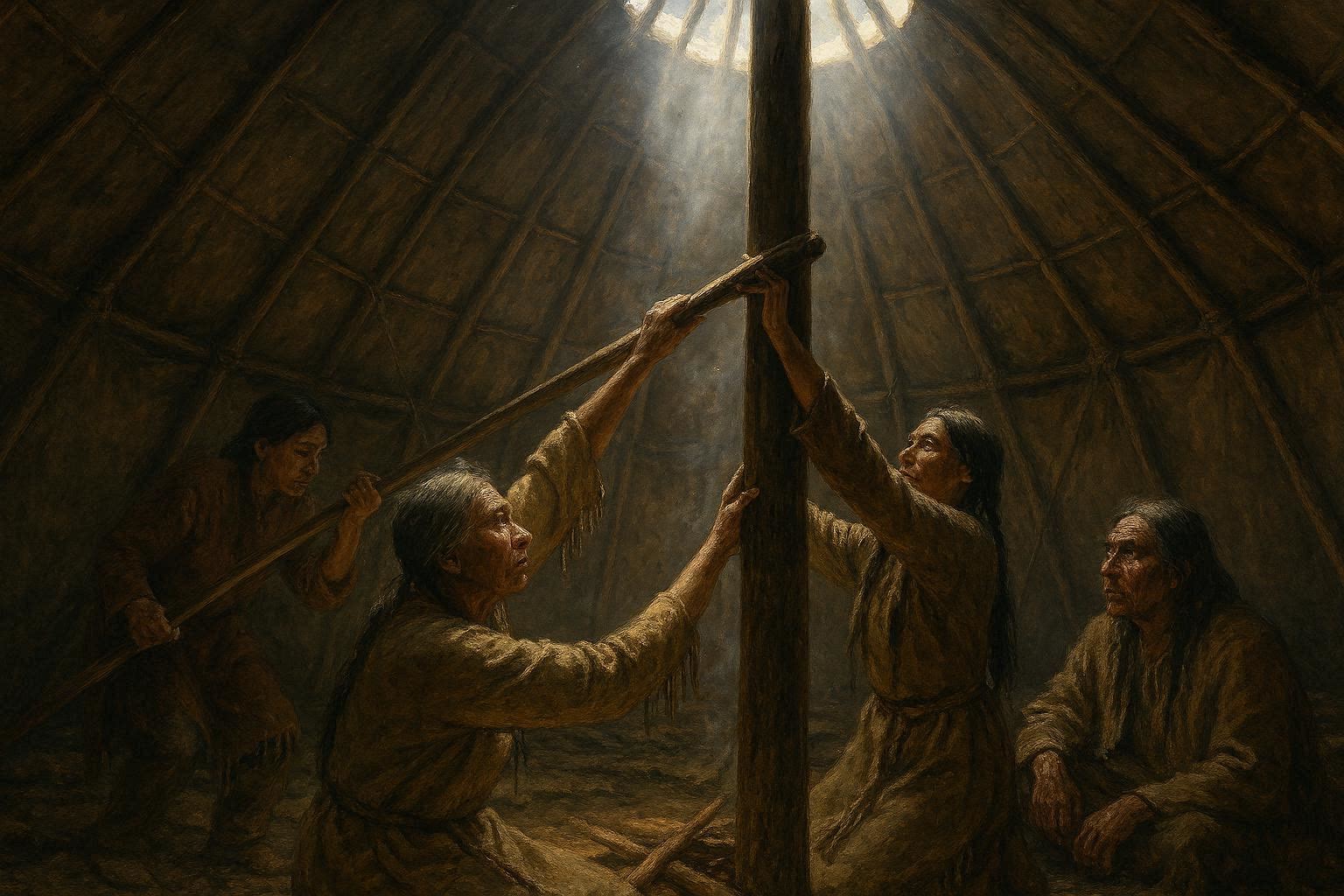
Long ago, there was a community preparing for the construction of a new lodge. The men gathered the tallest, straightest lodge pole from the surrounding forests. They transported it carefully across the plains, cutting a shallow trench in the center of the lodge circle where it would stand. As they lifted it into place, the pole shivered, bent slightly, and then crashed to the ground. Surprised, the men tried again, but each time it leaned, twisted, or fell completely. No amount of effort could make it remain upright.
The elders convened a council to determine why the pole refused to stand. It was revealed that disputes among the families over leadership roles and hunting privileges had created tension. Pride, jealousy, and stubbornness had unsettled the balance of the community. The lodge pole, sensitive to the intentions and harmony of the people, would not support the roof until the human discord was resolved.
One elder, Wise Crow, spoke to the assembly: “The lodge pole is like the heart of our home. If the heart is divided, it cannot hold life above it. Only when the people come together, listen to one another, and act with shared purpose will the pole rise and remain firm.”
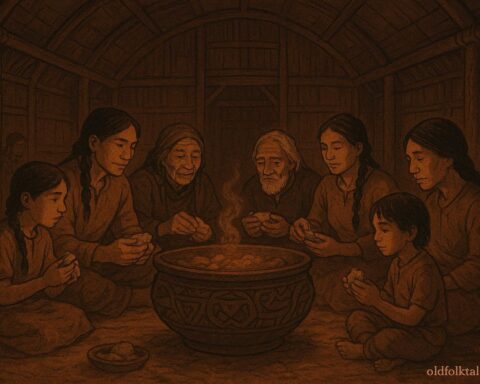
The families began to work together. They gathered in circles, listening carefully as each person spoke about their concerns and desires. Instead of arguing, they sought solutions that honored the needs of all. Younger men helped the elders lift the pole, and women prepared offerings of gratitude for the earth and the trees that provided the timber. After many days of dialogue and cooperation, the community agreed on leadership roles and hunting responsibilities. The quarrels that had plagued them were replaced by a shared understanding of their interconnectedness.
When the lodge pole was lifted again, it stood tall, unwavering. The roof was secured, and the lodge became a place of warmth, ceremony, and gathering. Children played inside without fear of collapse, and the elders conducted storytelling, passing lessons of morality, cooperation, and respect to future generations. The lodge pole, once stubborn and unyielding, now symbolized the strength of unity and the tangible benefits of resolving conflict through communication and shared responsibility.
Travelers who passed the lodge remarked on its impressive structure and the harmonious life within. The story of the lodge pole became a teaching for communities far beyond the plains. Families recounted that even in distant lodges, the principles held true: where unity and cooperation prevail, life flourishes; where discord reigns, even the strongest support may fail.
Elders emphasized that this lesson applied beyond the lodge. Just as the pole cannot stand amidst division, the community cannot thrive when individuals act only for themselves. Harmony, shared leadership, listening, and compromise are essential for safety, stability, and the well-being of all. Children learned that disputes must be addressed openly and respectfully and that cooperation is a skill practiced in daily life. The lodge pole reminded everyone that the physical world and social order are deeply intertwined.
Even today, Blackfoot storytellers recount the tale to teach young people about the importance of unity, mutual respect, and the consequences of unresolved disputes. The central pole is more than wood; it is a living reminder that the strength of the people determines the strength of their shelter, and that leadership is meaningful only when it serves the community as a whole.
Explore the ancestral legends of Canada, Mesoamerica, and South America’s Indigenous tribes.
Moral Lesson
True leadership and stability require cooperation, respect, and the resolution of disputes. The strength of the collective determines the strength of the home and community.
Knowledge Check
1 Why did the lodge pole collapse repeatedly?
Answer Disputes and discord among the community made the pole refuse to stand.
2 What did the elders advise to make the pole stable?
Answer They advised listening, cooperation, and resolving conflicts.
3 How did the community respond to the lodge pole’s refusal?
Answer They held councils, resolved disputes, and worked together.
4 What does the lodge pole symbolize?
Answer It symbolizes unity, leadership, and the well-being of the community.
5 What lessons did children learn from the lodge pole story?
Answer They learned that cooperation, listening, and respect are essential for community life.
6 How is the lesson applied beyond the lodge structure?
Answer Harmony and shared responsibility are necessary for any collective endeavor or group.
Source:
Adapted from Blackfoot communal structure teachings, Glenbow Museum archives
Cultural Origin:
Blackfoot Confederacy, Alberta