Long ago, in a quiet village deep within the Brazilian Amazon, the people lived close to the forest and depended on the land for survival. The rivers guided their travel, the trees sheltered their homes, and the earth provided what food it could. Yet in those early days, nourishment was uncertain, and hunger often followed poor harvests. Life required patience, cooperation, and deep trust in the unseen forces that shaped the world.
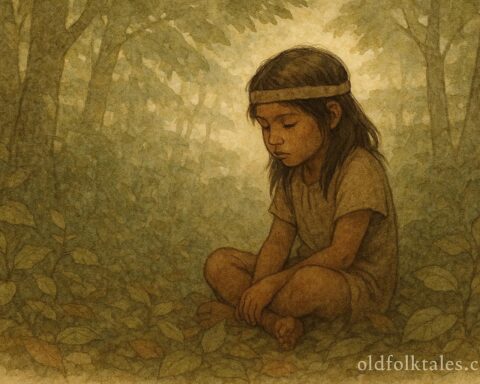
One day, a mysterious child was born among the villagers. She was unlike any other baby they had seen. Her skin was unusually pale, and her presence seemed gentle and calm, as though she carried a quiet light within her. The people named her Mani. From the beginning, she was loved deeply, cared for by the entire community, and treated as a blessing.
Discover Mexico’s timeless tales blending Indigenous roots and Spanish tradition
Mani grew quickly, and her laughter filled the village. Wherever she walked, people felt comforted. Though young, she carried a peaceful spirit that drew others close. The elders watched her carefully, sensing that her life held meaning beyond what could be easily understood.
But Mani’s time was brief.
Without warning, she fell ill. Despite every effort made to heal her, her strength faded. The village gathered around her, mourning even before her passing, for they felt a great loss approaching. When Mani died, the grief was profound. She was buried within the village, as was custom, and the people honored her with prayers and remembrance.
Days passed. Then weeks.
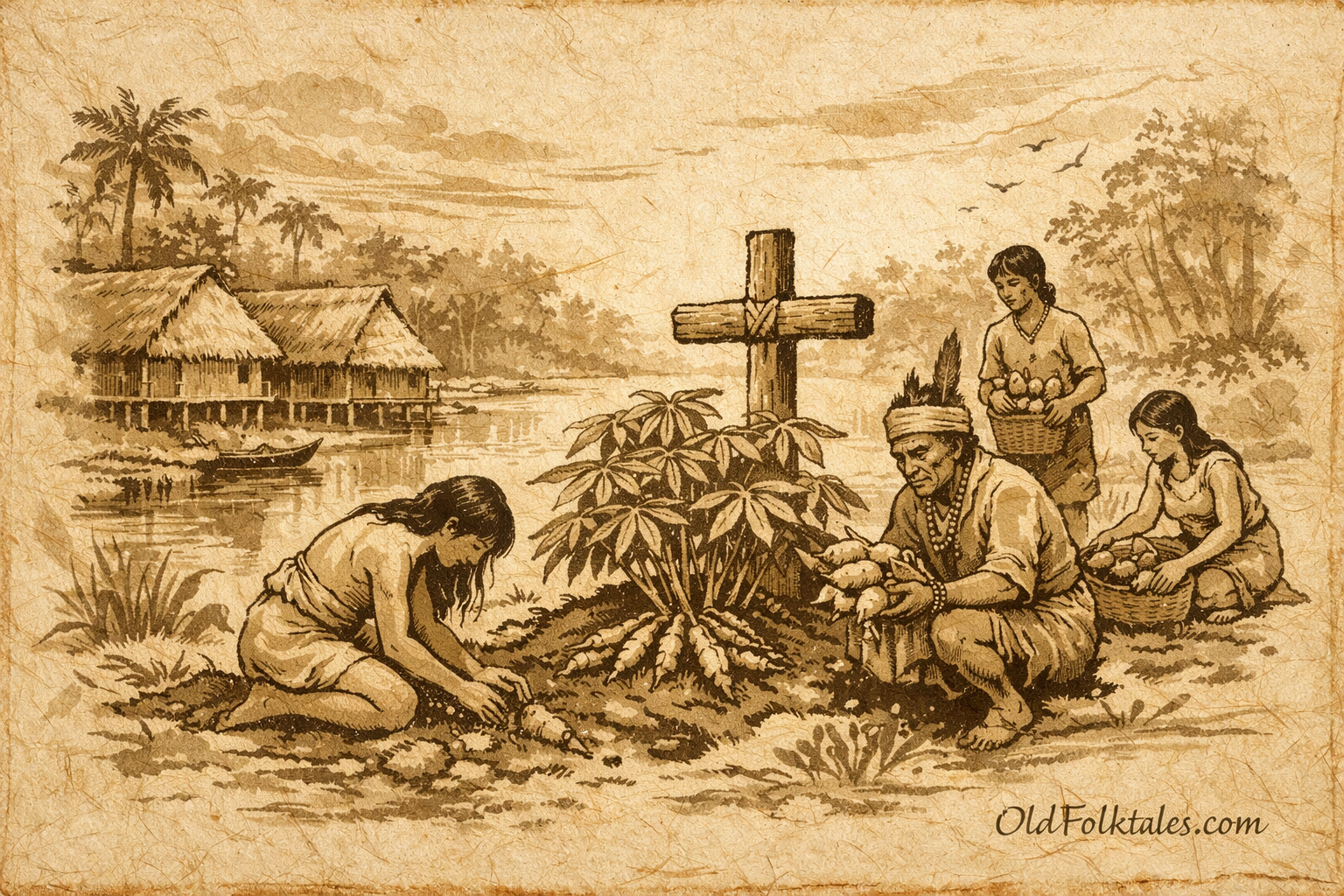
From Mani’s grave, something unexpected occurred. The soil began to rise, and from it grew a strange plant unlike any the villagers had seen before. Its leaves spread outward, strong and healthy, and beneath the earth, thick roots formed. The people watched with awe and caution, uncertain whether the plant was a blessing or a warning.
Guided by the elders, the villagers carefully uncovered the roots. They prepared them as they did other plants, cooking them slowly and sharing the food among the community. When they ate, they discovered the roots were nourishing and filling. Strength returned to their bodies. Hunger eased. Life was sustained.
The people understood then that Mani had not truly left them.
They named the plant manioc, in her honor, recognizing it as a gift born of sacrifice. From that moment forward, manioc became central to their survival. It fed families, supported villages, and shaped rituals and traditions passed down through generations.
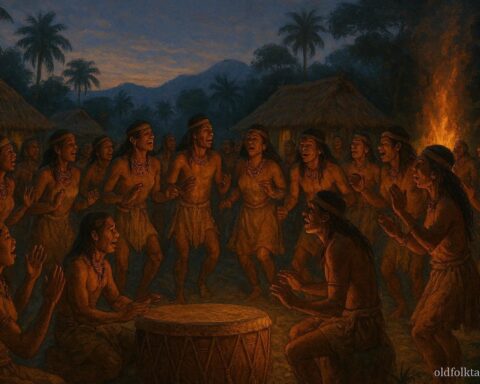
The story of Mani was told to children beside cooking fires and during harvest celebrations. It reminded the people that the earth remembers those who give themselves for others. Manioc was not merely food, it was a living connection to ancestry, sacrifice, and gratitude.
Through this legend, the people learned that loss could bring life, and that remembrance could sustain the future. Mani lived on through the roots that fed her people, binding generations together through nourishment and respect for the land.
Discover South America’s folktales filled with magic, transformation, and ancestral wisdom
Moral Lesson
This folktale teaches that sacrifice and remembrance give rise to life and sustenance, and that honoring those who came before us nourishes future generations.
Knowledge Check
1. Who was Mani in the folktale?
A mysterious child whose death gave rise to the manioc plant.
2. What grew from Mani’s grave?
A plant producing nourishing roots known as manioc.
3. Why was manioc important to the villagers?
It became a staple food that sustained life and survival.
4. What does manioc symbolize in the story?
Sacrifice, remembrance, and life arising from loss.
5. How did the villagers honor Mani?
By naming the plant after her and preserving her story.
6. What cultural value does the story reinforce?
Respect for ancestors and gratitude toward the earth.
Source: Indigenous oral tradition; recorded in Brazilian ethnographic collections
Cultural Origin: Amazon Basin, Brazil (Indigenous folklore)