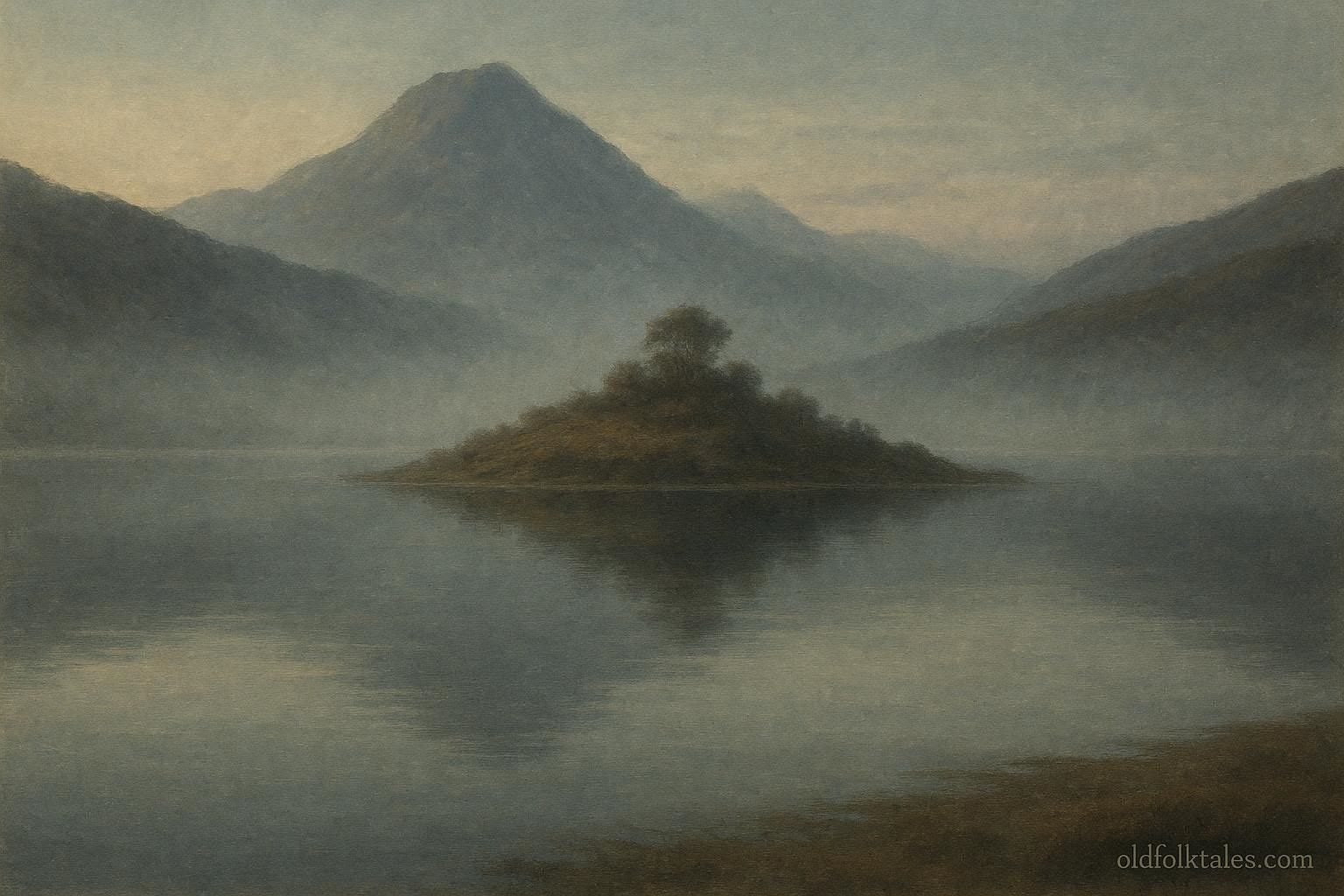
Long before the waters of the great Andean lake stretched wide and uninterrupted, an island sat at its center like a resting stone. It was not large, but it was fertile, ringed with reeds and fed by gentle currents. From a distance, smoke from cooking fires could be seen rising calmly into the sky, a sign of settled life.
The island was home to a close-knit community of the Aymara people. They farmed small plots, fished carefully from the lake, and spoke often of balance. Their ancestors had taught them that water remembers everything. What it gives can also be taken away.
For many generations, the islanders lived well. Canoes came and went. Traders crossed the lake. Pilgrims stopped to rest before continuing their journeys. Hospitality was once the pride of the island. No traveler left hungry. No stranger slept without shelter.
But prosperity slowly hardened into comfort, and comfort into arrogance.
Explore the ancestral legends of Canada, Mesoamerica, and South America’s Indigenous tribes.
As the years passed, the islanders began to see themselves as separate from the shores that surrounded them. They believed the lake favored them alone. When travelers arrived, the islanders grew suspicious. Food was counted. Doors were closed earlier at night.
Strangers were no longer welcomed as guests, but questioned as threats.
One evening, as the sun lowered itself into the water, a small canoe approached the island. Inside were three travelers, soaked from wind and rain. Their supplies were gone, their strength nearly spent.
They called out politely, asking only for shelter until morning.
The islanders gathered, whispering among themselves. Some remembered old teachings. Others shook their heads.
“If we feed everyone who arrives,” one said, “we will have nothing left.”
“The lake provides,” said another, “but not endlessly.”
They turned the travelers away.
The canoe drifted back into the dark, swallowed by mist.
That night, the lake grew restless.
Waves lapped higher against the shore than usual. Fish swam in strange patterns. The reeds whispered even when there was no wind. Elders felt unease settle into their bones, but no one spoke of it openly.
The next day, another visitor came. This one walked across the shallow water where stones formed a temporary path during dry seasons. The stranger was old, bent, and carried nothing but a staff.
They asked for water.
Again, the islanders refused.
“We have little to spare,” they said. “Go to the shore villages.”
The stranger looked at the lake, then back at the people.
“The lake hears more than you think,” they said quietly.
Then they turned and vanished into the reeds.
That night, rain fell without pause. The lake level rose slightly, but not enough to alarm anyone. The islanders slept.
On the third day, no visitors came. But the water crept closer to the homes. Fields grew muddy. Paths disappeared.
Some suggested making offerings. Others argued it was unnecessary. The lake had always risen and fallen.
By the fourth day, the water had surrounded the central gathering place. Children were told not to play near the shore. Still, no one left the island.
Pride held them in place.
On the fifth night, the lake rose silently.
There was no storm. No wind. No warning cry from birds.
Water flowed evenly across the island, filling low ground first, then climbing slowly. Homes nearest the shore collapsed as their foundations softened. People woke to wet floors and rushed outside, confused and frightened.
The elders gathered and called for offerings at last. Food was thrown into the water. Cloth was burned. Words of apology were spoken too late.
The lake did not respond.
By dawn, the island had shrunk to a narrow ridge. People crowded together, clutching children and belongings. The water was calm, almost gentle, as if performing a necessary task.
One elder fell to their knees.
“We forgot who we were,” they said. “We closed our doors and believed the lake would not remember.”
As the sun rose higher, the last of the land slipped beneath the surface. Canoes untied themselves and floated away empty. Fires were extinguished without smoke.
The island disappeared completely.
Those who had tried to swim were carried to the shores by the same water that had taken their home. Fishermen from nearby villages pulled survivors from the lake in silence.
When the people looked back, there was nothing where the island had been. Only smooth water, reflecting the sky.
From that day on, the lake was said to have swallowed its own island.
No stone rose to mark it. No debris floated. The water erased all signs.
But the memory remained.
Fishermen reported nets catching nothing over that spot. Birds avoided landing there. On quiet mornings, the surface sometimes rippled without wind.
Elders began teaching children the story.
They said the lake does not punish in anger. It corrects imbalance. When hospitality is denied, the bond between land and people weakens.
Strangers were welcomed again in all lakeside villages. Food was shared even in lean seasons. Doors were left open at dusk.
And when canoes passed over the place where the island once stood, people lowered their voices.
Because beneath the water, the lake still remembers.
Click to read all South American Folktales — timeless stories from the Andes to the Amazon.
Moral lesson
A community that closes itself to others breaks the balance that sustains it. Hospitality is not generosity alone, but responsibility to the living world that provides.
Knowledge check
- Where was the island located?
At the center of a large Andean lake. - What value did the islanders abandon over time?
Hospitality toward strangers. - How did the lake first show warning signs?
Through restlessness, rising water, and unusual natural behavior. - Did the lake destroy the island suddenly?
No, it swallowed the island slowly and silently. - What happened to the survivors?
They were carried to the shore by the lake and rescued. - What lesson do surrounding communities learn?
That denying hospitality disrupts balance and brings loss.
Source:
Adapted from Oral Traditions of Lake Communities, Museo Nacional de Etnografía y Folklore, Bolivia (2005)
Cultural origin:
Aymara peoples, Bolivia