In the Upper Amazon, where the forest grows thick with memory and the ground holds the marks of countless journeys, hunters were taught from childhood that tracking was more than skill. It was a language. Footprints, bent grass, broken twigs, and disturbed soil all spoke, but only to those who listened with patience and humility.
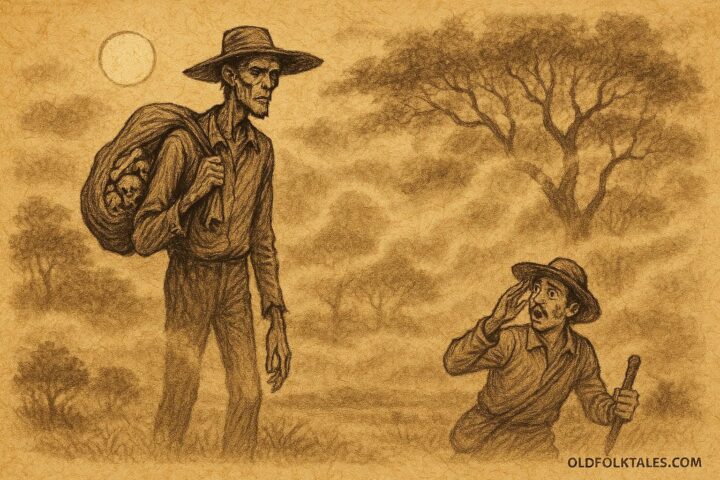
Among these hunters was a man known for his sharp eyes and steady hands. He rarely returned empty-handed and took pride in his ability to read the forest floor. Over time, his confidence grew into certainty, and certainty into hunger. He began to believe that no path was beyond him and no warning meant for someone else.
One morning, just after the mist lifted, the hunter found fresh tracks along a narrow trail. The impressions were deep and clear, suggesting large, plentiful game. The path led toward a section of forest the elders had marked as forbidden, not because it was empty, but because it was watched.
The hunter hesitated only briefly.
He remembered the old signs placed along the boundary: twisted vines tied deliberately, feathers hanging low from branches, stones arranged in careful patterns. These were not obstacles but messages, telling hunters to turn back. The forest beyond belonged to spirits who guarded balance and punished excess.
But the tracks were fresh. And they were many.
Driven by desire, the hunter stepped past the signs and followed.
The deeper he went, the quieter the forest became. Birds ceased their calls. Insects vanished. Even his own footsteps sounded muted, as though the ground itself was listening. Still, the tracks remained, always just ahead, always promising success.
Hours passed. The sun shifted, yet the hunter could not tell in which direction he traveled. The tracks curved strangely, looping where no animal should walk. Trees he remembered passing appeared again, unchanged. Slowly, unease replaced confidence.
He tried to turn back, but the trail behind him looked unfamiliar.
The hunter realized he was walking in circles.
Fear crept in, heavy and cold. He called out, but his voice was swallowed by the trees. Hunger gnawed at him. His feet ached. Still, the tracks continued, pulling him forward with the illusion of reward.
At last, exhausted and ashamed, he dropped to his knees and admitted what the forest already knew: he had followed greed instead of wisdom.
That was when the spirits acted.
Without sound or form, they redirected his steps. The trees parted. The ground softened. When the hunter finally stumbled out of the forest, he found himself at the edge of his village, empty-handed, days later than expected.
The elders said nothing. They did not need to.
From that day on, hunters learned to read more than tracks. They learned to listen.
Click to read all South American Folktales — timeless stories from the Andes to the Amazon.
Moral Lesson
This folktale teaches that greed blinds awareness and leads to loss. True wisdom comes from reading both the path ahead and the warnings meant to protect balance.
Knowledge Check
1. Why was the forest territory considered forbidden?
It was guarded by spirits who protected balance.
2. What warning signs did the hunter ignore?
Arranged stones, hanging feathers, and twisted vines.
3. What happened when the hunter followed the tracks?
He became lost, walking in endless circles.
4. How did the spirits respond to his actions?
They returned him home empty-handed and ashamed.
5. What lesson did the elders want hunters to learn?
To read warnings, not just tracks.
6. What does the forest symbolize in the story?
A living presence that observes and responds to intention.
Source: Indigenous hunting folklore; recorded in Upper Amazon oral narratives
Cultural Origin: Amazon Basin (Indigenous folklore)