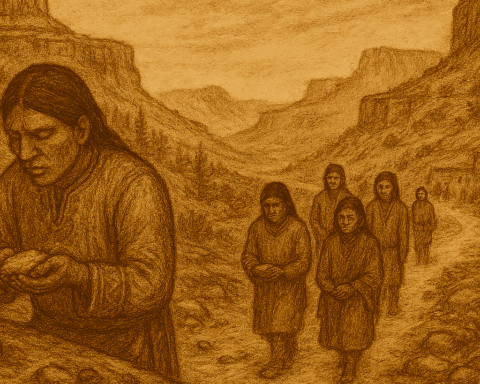
In the rugged Sierra Madre Occidental mountains of western Mexico, where pine forests give way to deep canyons and the air shimmers with spiritual presence, the Wixárika people known to outsiders as Huichol have maintained their ancient traditions with remarkable continuity. Among their most distinctive practices is the creation of sacred art: intricate yarn paintings and beaded objects that are not mere decoration but visual prayers, maps of cosmology, and containers of spiritual power earned through ritual, vision, and proper relationship with the divine forces that animate the world.
These sacred designs are not invented casually or created for aesthetic pleasure alone. They come through visions received during pilgrimages to sacred sites, through peyote ceremonies conducted with proper preparation and guidance, through dreams given by the gods to those who have earned the right to receive them. Each symbol, each color combination, each pattern arrangement carries specific meaning and power. To create these designs is to work with forces that demand respect, preparation, and permission. The elders teach that sacred knowledge is not simply information to be acquired but relationship to be earned, and that using such knowledge without proper readiness invites serious consequences.
In one Wixárika community high in the Sierra Madre, there lived a young man named Tayau, perhaps seventeen years old, standing at that restless edge between boyhood and the adult responsibilities he was eager to claim. Tayau had grown up surrounded by the brilliant sacred art of his people the yarn paintings that adorned the temple, the beaded gourds and masks used in ceremonies, the intricate designs that represented deer spirits, peyote visions, corn deities, and the journeys between worlds that shamans undertook on behalf of the community.
He had watched the elders and trained artists work, had observed their careful preparation before beginning any sacred piece, had heard them speak of receiving designs in visions. But to Tayau’s young eyes, impatient with the slowness of traditional learning, it seemed that the creation of these beautiful objects was primarily a matter of technical skill. He saw the patterns, understood the color combinations, recognized how yarn was pressed into beeswax coating wooden boards, how tiny beads were painstakingly applied to create shimmering surfaces. Why, he wondered, should he wait years for visions and ritual permission when he already possessed the artistic ability to recreate what he observed?
Tayau was talented with his hands, possessed of genuine artistic skill. When he worked with ordinary materials on ordinary subjects, his creations showed sophistication beyond his years. This ability fed his confidence and his impatience. He began to think that the warnings about requiring permission and preparation were less about spiritual necessity than about elder control, about keeping young people from advancing too quickly, about maintaining traditional hierarchies rather than genuine spiritual laws.
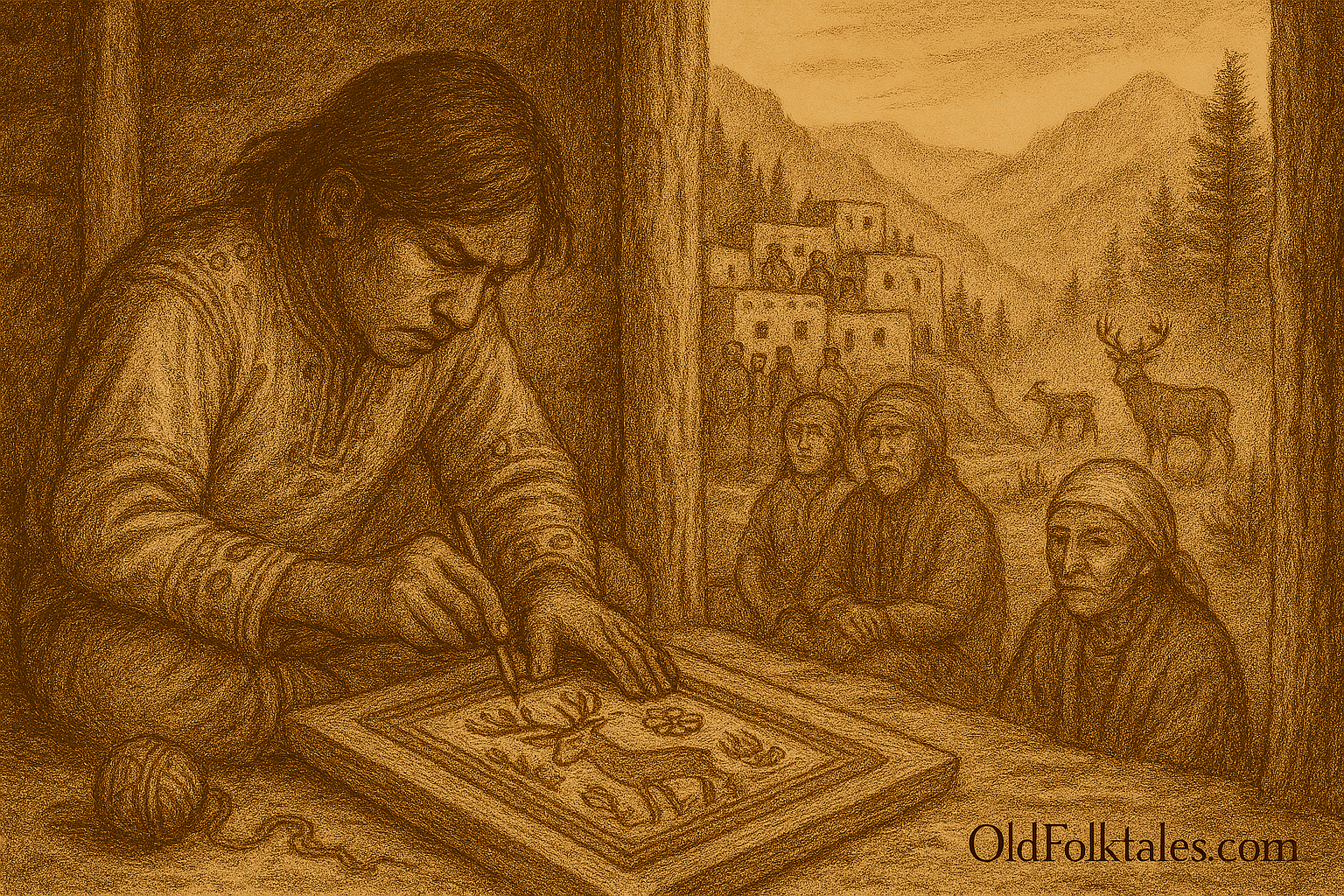
Without telling anyone, without seeking guidance or permission, Tayau decided to create his own version of the sacred yarn paintings. He obtained materials yarn, beeswax, a wooden board and began to work in secret. He copied designs he had seen in the temple, sacred symbols representing the deer spirit Kauyumari, the peyote cactus Hikuri, the journey to Wirikuta where the first peyote was found. He worked skillfully, his talented hands recreating patterns with impressive accuracy. When finished, his piece looked remarkably similar to the sacred art created by initiated artists who had received these designs through proper means.
Tayau felt a surge of pride as he examined his work. He had proven, at least to himself, that the creation of sacred art was primarily about skill and observation, not about mysterious visions or lengthy preparation. He hid the piece in his dwelling, taking it out periodically to admire, considering whether to show it to others and demonstrate his capabilities.
But within days, Tayau began to feel unwell. At first, it seemed like ordinary illness headache, fatigue, a sense of being slightly feverish. But the symptoms persisted and grew stranger. He experienced vivid, disturbing dreams where he was pursued by beings with deer heads and human bodies, where he became lost in a landscape that shifted and changed around him, where he tried to speak but found his mouth full of beads and yarn that choked him. During the day, he felt disoriented, as if the world around him was not quite solid, as if he was trapped between waking and sleeping, between the ordinary world and someplace else he was not prepared to navigate.
His family grew concerned. His mother noticed his listlessness, his lack of appetite, the way his eyes seemed to focus on things not visible to others. She consulted with his father, and together they approached one of the community’s elder shamans, a woman named Tatei who had decades of experience navigating the spiritual realms that the Wixárika understand as intimately real as the physical world.
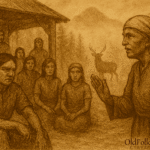
Tatei came to observe Tayau. She watched him for some time in silence, then asked to see his dwelling. There she found the hidden yarn painting. She examined it carefully, her weathered face growing grave. When she emerged, she spoke quietly to Tayau’s parents, then called Tayau himself to sit with her.
“Tell me how you came to create this,” she said, gesturing to the yarn painting.
Tayau, frightened now by his deteriorating condition, confessed everything. He explained his impatience with traditional restrictions, his belief that skill was sufficient, his decision to copy sacred designs without seeking permission or undergoing preparation.
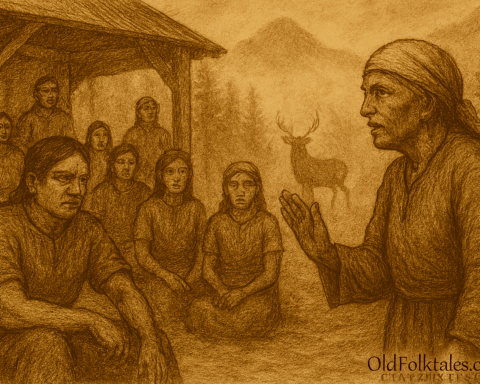
Tatei nodded slowly, without anger but with deep seriousness. “You have done something very dangerous, child. Not because you broke a rule, but because you engaged forces without understanding or readiness. These designs are not decorations. They are doorways, connections, containers of power. When created properly by someone who has received them through vision, who has prepared through fasting and ceremony, who has earned permission from the deities these symbols represent they are beneficent, helping to maintain balance and relationship between our world and the sacred realms. But when created without permission, without preparation, without the spiritual grounding necessary to handle what you are invoking, they become dangerous openings through which things can pass that you are not equipped to manage.”
She explained further: “When an initiated artist paints the deer spirit Kauyumari, they do so from relationship. They have journeyed to sacred sites, have made offerings, have received acknowledgment from that deity. The design then represents and honors that relationship. But when you copied these symbols without relationship, without permission, you essentially called out to these powers without introduction, without preparation, without the spiritual protection that proper initiation provides. And they responded but not in ways you were ready to experience.”
Tayau’s illness, Tatei explained, was not punishment but consequence. By opening doors he was not prepared to walk through, by invoking forces without proper grounding, he had become caught between worlds, experiencing spiritual realities his consciousness was not yet trained to navigate safely. The disturbing dreams, the disorientation, the sense of being pursued these were real encounters with the spirits he had summoned through symbols but lacked the preparation to properly engage with.
“Sacred knowledge is not kept from young people out of possessiveness,” Tatei continued. “It is protected and given gradually because spiritual power is real, and engaging it without readiness is genuinely dangerous. Would you let a child play with fire? Would you send an untrained person to climb the most dangerous cliff? No, because physical danger is obvious. But spiritual danger is just as real, even though you cannot see it with ordinary eyes.”
The healing process was complex. Tatei conducted ceremonies to help close the openings Tayau had inadvertently created, to establish proper relationship with the deities he had invoked without permission, to apologize on his behalf and seek forgiveness for his presumption. Tayau himself had to undergo purification fasting, making offerings, participating in ceremonies that helped reground him in his body and the ordinary world. The yarn painting he had created was ceremonially disposed of in a way that respectfully released the energies it had contained.
Gradually, over several weeks, Tayau recovered. The dreams ceased, the disorientation faded, his strength returned. But he was fundamentally changed. He understood now, through direct experience that no amount of verbal teaching could have conveyed as powerfully, that sacred knowledge is not simply information but relationship, and that the traditional requirement for preparation and permission is not arbitrary control but necessary protection.
He began his training properly, with humility replacing his earlier arrogance. He learned to fast, to make offerings, to participate in ceremonies as a quiet observer before ever attempting to create sacred art. He understood now that he was learning not just techniques but relationships, not just patterns but the proper way to engage with forces far greater than himself. Years later, when he finally received his own visions and created sacred art with proper permission and preparation, the experience was entirely different from his earlier copying because now he worked from genuine relationship rather than presumptuous imitation.
The story of Tayau’s illness and recovery became a teaching tale, told to warn other impatient young people about the dangers of engaging sacred knowledge without proper readiness. It was shared not to frighten but to convey an essential truth: that some doors should not be opened until you are prepared for what lies beyond them, and that the traditional requirements for earning sacred knowledge exist not to limit human potential but to protect those who would engage powers they do not yet understand.
Click to read all South American Folktales — timeless stories from the Andes to the Amazon.
The Moral Lesson
This Wixárika tale teaches that sacred knowledge and spiritual practices carry real power and require genuine preparation, permission, and relationship not out of arbitrary tradition but because engaging spiritual forces without readiness invites serious consequences. Tayau’s error was treating sacred designs as mere information that could be copied with technical skill, failing to understand that these patterns are doorways to spiritual realities that demand respect and proper approach. The story reminds us that some knowledge is dangerous when acquired prematurely, that traditional restrictions on accessing sacred practices exist to protect practitioners, and that spiritual power is as real as physical danger, even though it operates on dimensions not immediately visible. In indigenous worldviews, learning sacred arts is not about acquiring techniques but about developing relationships with spiritual forces, and rushing this process out of impatience or arrogance bypasses essential preparation that makes such engagement safe and beneficial.
Knowledge Check
Q1: What is the significance of sacred art in Wixárika (Huichol) culture?
A1: In Wixárika culture, sacred art including yarn paintings and beaded objects is not mere decoration but visual prayer, cosmological mapping, and containers of spiritual power. These designs are received through visions during pilgrimages to sacred sites, peyote ceremonies, or dreams given by deities to those who have earned the right to receive them. Each symbol, color combination, and pattern carries specific meaning and power. Creating sacred art is understood as working with spiritual forces that demand respect, proper preparation, and explicit permission, making it a relationship-based practice rather than simply an artistic technique.
Q2: Why did Tayau decide to create sacred designs without permission?
A2: Tayau, a talented seventeen-year-old artist, was impatient with the slowness of traditional learning and convinced himself that creating sacred art was primarily about technical skill rather than spiritual preparation. He observed the patterns and techniques used by initiated artists and believed he could recreate them through his natural artistic ability. His confidence in his technical skills and frustration with what he saw as unnecessary restrictions led him to think that warnings about requiring permission and preparation were about elder control rather than genuine spiritual necessity.
Q3: What happened to Tayau after he created the unauthorized sacred artwork?
A3: Within days of creating the unauthorized yarn painting, Tayau became seriously ill with symptoms that went beyond ordinary sickness. He experienced persistent headaches, fatigue, fever, and disturbing dreams where deer-headed beings pursued him, where he became lost in shifting landscapes, and where his mouth filled with beads and yarn. During waking hours, he felt disoriented, as if trapped between the ordinary world and spiritual realms he wasn’t prepared to navigate. His condition deteriorated until the elder shaman Tatei was consulted and discovered his hidden artwork.
Q4: How did the elder shaman Tatei explain what had happened to Tayau?
A4: Tatei explained that sacred designs are not decorations but doorways and connections to spiritual powers. When created properly by someone who has received them through vision, undergone preparation, and earned permission from the deities the symbols represent, they are beneficent. However, when created without permission or preparation, they become dangerous openings through which spiritual forces can pass that the unprepared person cannot manage. Tayau’s illness resulted from calling out to these powers without introduction or protection, opening doors he wasn’t ready to walk through, causing him to become caught between worlds without the spiritual training to navigate them safely.
Q5: What was required to heal Tayau from his spiritual illness?
A5: Healing required multiple ceremonial steps conducted by Tatei: ceremonies to close the spiritual openings Tayau had inadvertently created, establishing proper relationship with the deities he had invoked without permission, and apologizing on his behalf seeking forgiveness for his presumption. Tayau himself underwent purification through fasting, making offerings, and participating in ceremonies that helped reground him in his body and the ordinary world. The unauthorized yarn painting was ceremonially disposed of in a way that respectfully released the energies it contained. Recovery took several weeks.
Q6: What cultural values about sacred knowledge does this Sierra Madre story convey?
A6: The story embodies Wixárika values emphasizing that sacred knowledge is relationship rather than mere information, that spiritual power is genuinely real and requires proper preparation to engage safely, and that traditional restrictions on accessing sacred practices exist for protection rather than arbitrary control. It teaches that learning sacred arts is a gradual process requiring humility, proper initiation, and earning permission from spiritual forces through ceremony and vision. The tale reflects indigenous understanding that some knowledge is dangerous when acquired prematurely, that rushing spiritual development out of impatience bypasses essential preparation, and that respecting the boundaries around sacred practices protects practitioners from forces they are not yet equipped to handle.
Source: Adapted from Wixárika (Huichol) oral traditions documented by Norwegian ethnographer Carl Lumholtz in his extensive fieldwork among the Huichol people of the Sierra Madre Occidental, published in works including Unknown Mexico and Symbolism of the Huichol Indians.
Cultural Origin: Wixárika (Huichol) people, Sierra Madre Occidental Highlands, Mexico