In a time when the Guaraní villages were scattered across the forests and grasslands of Paraguay, when disputes between communities sometimes flared into violence and the forests offered both refuge and danger, there lived two young people who loved each other with a devotion that would transcend death itself. Their names have been lost to time, but their story lives on in every sweet guavira fruit that grows in the Paraguayan wilderness.
The young woman came from a village along one of the great rivers, a place where her family had lived for generations. She was known for her gentle spirit and her skill with medicinal plants, often accompanying the village healers as they gathered herbs from the forest. The young man came from a different village, one that had a long history of conflict with her people. Old grievances stretched back beyond living memory, disputes over hunting grounds and fishing rights, feuds that had been passed down from grandparents to parents to children until no one could quite remember how the animosity had begun.
Click to read all South American Folktales — timeless stories from the Andes to the Amazon.
Despite the enmity between their communities, the two young people met by chance one day at a neutral territory where both villages came to collect a particular type of clay used for pottery. Their eyes met across the clay pit, and something profound passed between them, a recognition that seemed to bypass all the taught hatred and inherited conflict. They began to find excuses to return to that place, at first just to glimpse each other from a distance, then to exchange a few words, and finally to meet in secret in the forest between their villages.
Their love grew like a vine, quick and strong, wrapping itself around both their hearts until they could not imagine life without each other. They would meet whenever they could slip away unnoticed, in hidden clearings deep in the forest where the canopy was so thick that even in midday it felt like twilight. There they would talk for hours, sharing their dreams and fears, imagining a future where they could be together openly, where their love might bridge the divide between their peoples.
But they knew such dreams were dangerous. When a young woman from the man’s village discovered them together and reported what she had seen, both communities erupted in fury. To the young woman’s family, she had betrayed her people by consorting with the enemy. To the young man’s family, he had dishonored himself by pursuing a woman from a hostile village. The elders on both sides agreed that the relationship must end immediately and that the young people must be kept apart.
The young woman was confined to her family’s dwelling, watched constantly to ensure she could not slip away. The young man was assigned to hunting parties that took him far from the territory where they had met, keeping him under the eyes of older warriors who had been instructed to prevent any attempt to see the girl.
But love finds ways even through the most carefully constructed barriers. Through sympathetic friends who took pity on their situation, the young people managed to send messages to each other. They learned that both families were planning arranged marriages for them, unions that would cement alliances and put an end to this dangerous romance once and for all.
Faced with the prospect of being forced to marry others and never seeing each other again, the young couple made a desperate decision. They would run away together, flee into the deep forest where neither village held sway, and build a new life far from the hatred and conflict that had defined their people’s relationship.
On a moonless night when darkness lay thick over the land, they both escaped their watchers. The young woman slipped out while her family slept, leaving behind everything she owned except the clothes on her back and a small bundle of food. The young man waited until his hunting party had settled into sleep, then crept away from the camp with nothing but his knife and the knowledge that he was leaving his entire world behind.
They met at their secret clearing and immediately began to run, heading deeper into the forest than either had ever ventured before. They knew that once their absences were discovered, hunters from both villages would pursue them. Their only hope was to get so far away, so deep into the wilderness, that the search parties would give up or lose their trail.
For days they traveled through increasingly unfamiliar territory. They survived on forest fruits, roots, and whatever small game the young man could catch. They walked until their feet bled, pushed through thorny undergrowth that tore at their skin and clothes, forded streams swollen with recent rains. Behind them, they could sometimes hear the distant calls of the search parties, the sounds growing fainter as they penetrated deeper into regions where even experienced hunters rarely ventured.
But the forest that offered them refuge also tested them severely. The young woman fell ill, weakened by the harsh conditions, the inadequate food, and the exhaustion of constant flight. The young man tried desperately to care for her, finding medicinal plants she had taught him to recognize, building shelters to protect her from rain and cold, holding her through the nights when fever made her delirious.
She grew weaker despite his efforts. One morning, in a small clearing where shafts of sunlight broke through the canopy to illuminate the forest floor, she could no longer rise. The young man held her in his arms, tears streaming down his face, as she looked up at him with eyes that still held all her love despite the shadow of death approaching.
“I don’t regret running away with you,” she whispered, her voice barely audible. “These days with you, free and together, were worth everything. I would choose this again, even knowing how it ends.”
“Don’t leave me,” he pleaded. “I can’t survive without you.”
“You carry me in your heart,” she said. “We will not truly be separated.”
Those were her last words. She died in his arms as the morning sun climbed higher, illuminating the clearing with golden light that seemed cruelly beautiful in the face of such loss.
The young man held her body for a long time, rocking back and forth, making sounds of grief that echoed through the forest like the cries of a wounded animal. When he finally laid her gently on the ground, covering her with leaves and flowers, he knew he could not continue without her.
He lay down beside her in the clearing, his hand holding hers, and closed his eyes. His heart, already broken by grief, simply stopped beating. Whether he willed himself to death or whether his body, pushed beyond its limits by the ordeal of flight and the agony of loss, simply gave up, no one can say. But he died there beside his love, their hands still clasped, their bodies side by side on the forest floor.
The search parties from both villages eventually gave up and returned home. The two young people were never found, their fate unknown. Their families mourned them, though that mourning was mixed with anger at the choice they had made. Over time, the story faded into the realm of tragic memory, another casualty of the old conflicts.
But the forest remembered.
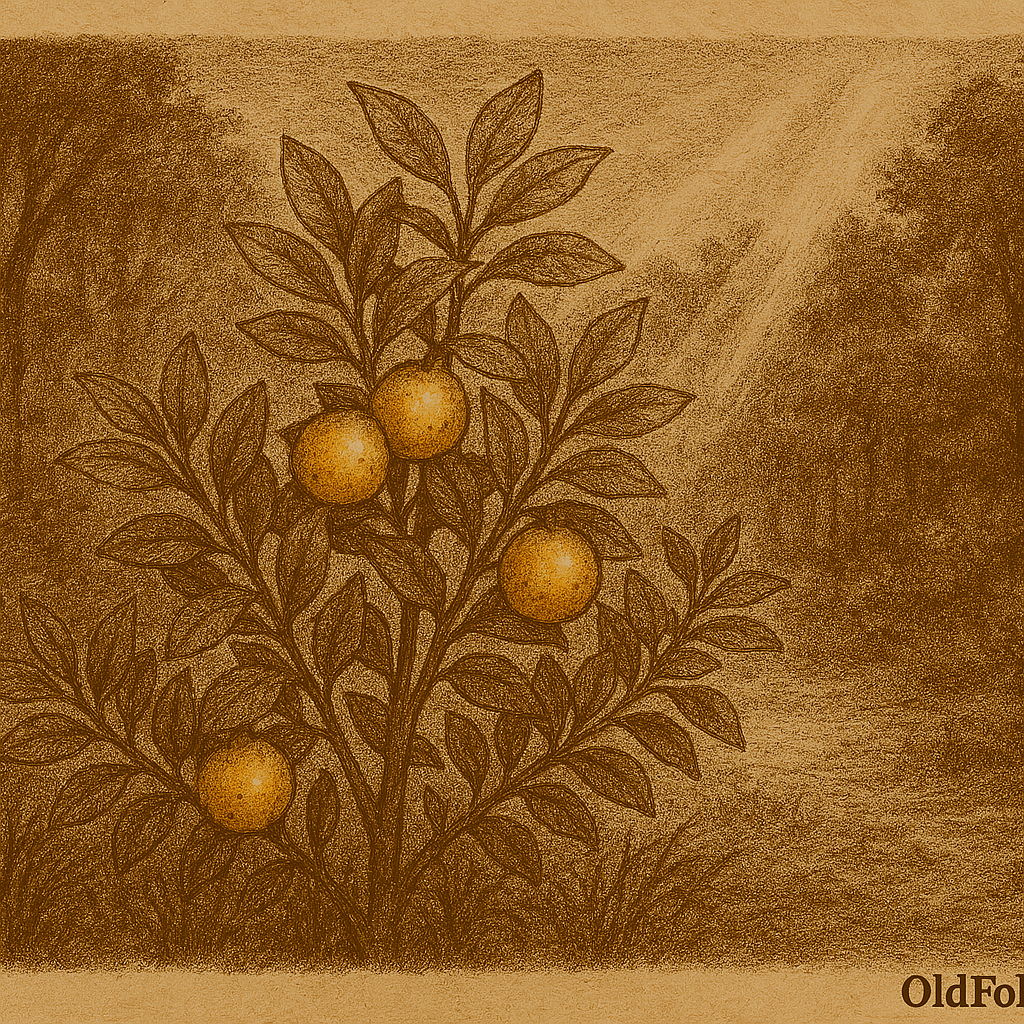
In the clearing where the young couple had died, something new began to grow. A small shrub emerged from the exact spot where their bodies had lain, pushing up through the leaf litter, reaching toward the light. It grew with unusual vigor, spreading into a dense bush covered with small, glossy leaves. And when it matured, it produced fruit unlike any that grew in that part of the forest.
The fruits were small and round, with thin skins that ranged from yellow to orange when ripe. Inside, the flesh was incredibly sweet, with a flavor that seemed to carry hints of honey and citrus and something indefinable, something that tasted like pure joy distilled into physical form. The fruits grew in such abundance that the bush seemed to offer them freely to anyone who passed by.
Birds discovered the bush first, feasting on the sweet fruits and carrying the seeds throughout the forest. Other plants grew from those seeds, spreading the species until guavira bushes began appearing throughout the region. Animals and humans alike learned to seek them out, treasured for their exceptional sweetness and the way eating them seemed to lift the spirit and ease sorrows.
When Guaraní people eventually found the bushes growing wild, they recognized something special about them. The fruits tasted like love, they said, like the sweetness of devotion that persists even through hardship. They began to tell stories about the guavira, and eventually, someone made the connection to the legend of the two young lovers who had disappeared into the forest years before.
The elders confirmed it. The guavira had grown from the place where the couple had died, they said. The sweetness of the fruit was the love the young people had shared, transformed into something that could nourish and bring joy to others. The resilience of the plant, its ability to thrive in harsh conditions and produce abundant fruit even when other plants struggled, was the strength and determination the couple had shown in choosing love over obligation, freedom over security.
To this day, when Paraguayans eat guavira fruit, whether picked fresh from wild bushes or bought in markets where rural people bring them to sell, they remember the legend of the young couple whose love was so strong that it transformed into something sweet and nourishing that would feed generations. The fruit carries within it a reminder that love, even when it seems to end in tragedy, has the power to create something beautiful that outlasts those who first felt it.
Discover the sacred tales of llamas, condors, and gods who guard the Andes
The Moral Lesson
This touching Guaraní legend teaches that true love and devotion have the power to transcend death and create lasting beauty in the world. The transformation of the young couple into the guavira fruit shows that sacrifice made for love is never truly wasted but becomes something that nourishes and brings joy to others. The story reminds us that sweetness can emerge from tragedy and that resilience in the face of persecution or hardship can leave a permanent legacy that benefits future generations.
Knowledge Check
Q1: Why were the young couple in this Guaraní legend unable to be together openly? The young couple came from different Guaraní villages that had a long history of conflict and animosity. Old grievances over hunting grounds and fishing rights had been passed down through generations. When their secret relationship was discovered, both communities reacted with fury, viewing the romance as a betrayal. Their families confined them and planned forced marriages to others to end the relationship.
Q2: What desperate decision did the young lovers make to stay together? Faced with forced marriages that would separate them forever, the young couple decided to run away together into the deep forest. On a moonless night, they both escaped their watchers and fled into wilderness territory, leaving behind their families, possessions, and entire world, hoping to build a new life far from the hatred between their peoples.
Q3: What challenges did the couple face during their flight into the forest? During their flight, the couple faced constant pursuit from search parties, harsh wilderness conditions, inadequate food consisting only of forest fruits and roots, physical exhaustion with bleeding feet, thorny undergrowth that tore their skin and clothes, and swollen streams. The young woman eventually fell ill from the harsh conditions and exhaustion, growing weaker despite her companion’s desperate efforts to care for her.
Q4: How did both members of the couple die in this Paraguayan tale? The young woman died first from illness, weakened by the harsh conditions of their flight. She died in her lover’s arms in a forest clearing, telling him she didn’t regret their choice. The young man, heartbroken and pushed beyond his limits by grief and the ordeal of flight, lay down beside her and died as well, whether by willing himself to death or simply because his body gave up.
Q5: What grew from the place where the young couple died? From the exact spot where the young couple’s bodies lay, a new shrub emerged that produced the guavira fruit. The fruits were small, round, and incredibly sweet with a flavor described as pure joy. The bush grew with unusual vigor and produced fruit abundantly, and birds carried the seeds throughout the forest, spreading the species until guavira bushes appeared throughout the region.
Q6: What do the guavira fruit and plant symbolize in Guaraní culture? In Guaraní tradition, the guavira fruit symbolizes the transformative power of true love and devotion. The exceptional sweetness represents the love the young couple shared, transformed into something that nourishes and brings joy to others. The plant’s resilience and ability to thrive in harsh conditions symbolizes the strength and determination the couple showed in choosing love over obligation and freedom over security.
Source: Adapted from Portal Guaraní and Paraguayan oral tradition compilations
Cultural Origin: Guaraní Indigenous Peoples, Paraguay