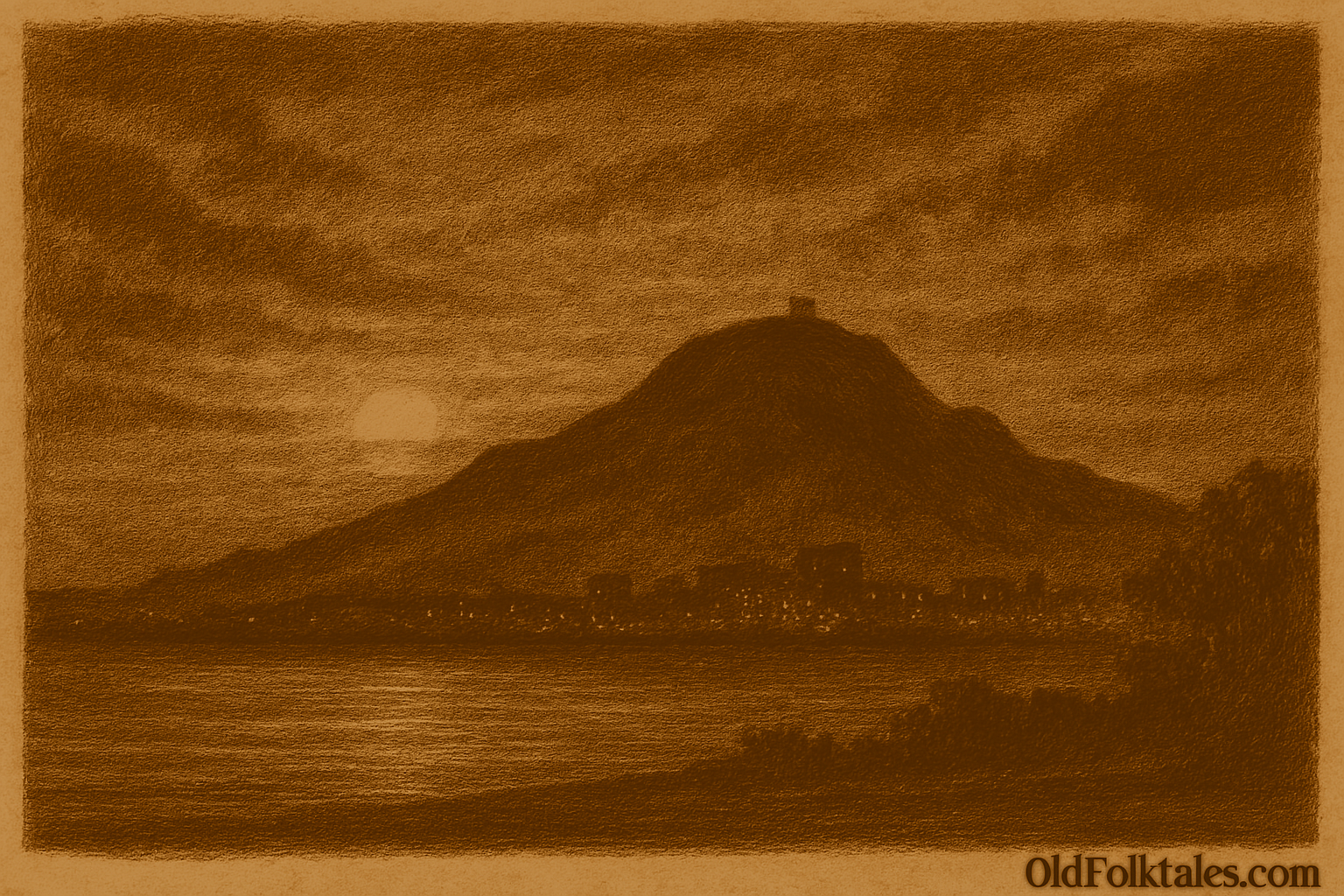
Long before the Spanish ships arrived on the shores of the Río de la Plata, long before the city of Montevideo spread its streets across the coastal plains, the land belonged to the Charrúa people. They knew every hill, every valley, every secret the earth held close. And of all the places in their territory, none was more sacred, more mysterious, than the hill that rose above the waters, the place they called the Cerro.
The elders would gather the young ones around the fire as the sun dipped below the horizon, painting the sky in shades of amber and crimson. There, with the Cerro silhouetted against the fading light, they would tell the story that had been passed down through countless generations, a story so old that no one could remember when it first began.
Click to read all South American Folktales — timeless stories from the Andes to the Amazon.
In the time before time, when the world was still taking shape and the spirits walked freely among mortals, there lived a giant of immense power and wisdom. He was not like the monsters of other tales, creatures of malice and destruction. No, this giant was a guardian, a protector whose heart beat in rhythm with the land itself. His skin was the color of rich earth, his hair flowed like the grasses of the pampas, and his eyes held the deep, endless blue of the sky.
The giant wandered the land for ages, watching over the people who lived there, ensuring their safety, guiding them through hardships. When droughts threatened to parch the earth, he would call the rain clouds. When floods rose to sweep away the villages, he would divert the waters. The people loved him, and he loved them in return with a devotion that transcended words.
But the giant grew weary. The weight of protecting an entire people, of bearing witness to generations rising and falling like the tide, began to press upon his shoulders. He had walked the earth for so long that his footsteps had carved valleys, his resting places had become hills. One day, he climbed to the highest point overlooking the great river, the place that would become the Cerro, and he made a decision.
“I cannot leave you,” he told the people who had gathered at the base of the hill, their faces turned up toward him with love and concern. “But I am tired, so very tired. I need to rest, to sleep and dream of all the beauty I have seen, all the joy I have known walking among you.”
The people wept, for they could not imagine their world without their gentle giant watching over them. But the giant smiled, a smile as warm as summer sunshine, and he spoke words that would echo through the centuries.
“Do not fear,” he said, his voice like distant thunder rolling across the plains. “I will not truly leave you. I will lie down here, beneath this hill, and I will sleep. But my sleep will not be like death. I will remain here, always, protecting you even in my dreams. When danger threatens, when the earth itself trembles with fury, I will shift in my sleep. I will move to shield you from harm. You need only remember that I am here, resting beneath your feet, and you will never be alone.”
With those words, the giant lay down upon the earth. The soil rose to embrace him, covering him like a blanket woven from the essence of the land itself. Grass grew over him, trees took root in the earth that held him, and the hill that became the Cerro was formed, a natural monument to the sleeping guardian below.
Time passed, as it always does. The Charrúa people remembered the story, teaching it to their children, who taught it to theirs. When the gauchos came, riding across the pampas with their cattle and their songs, they too learned of the sleeping giant. The tale wove itself into the fabric of the land, becoming part of the soil and stone, the wind and water.
And the giant kept his promise. When storms rolled in from the Atlantic, dark and furious, shaking the ground with their power, the people would feel the tremors and know that the giant was shifting in his sleep, repositioning himself to bear the brunt of nature’s fury. The storms would break against the Cerro, their strength diminished, and the city that grew at its base remained safe.
Even after Montevideo rose, with its buildings of brick and stone, its busy streets and modern ways, the old story persisted. Grandmothers still told their grandchildren about the giant beneath the hill. When earthquakes rippled through the region, rare but unforgettable, people would look toward the Cerro and whisper, “He’s moving. The giant is protecting us still.”
On quiet nights, when the city sleeps and the stars shine bright above, some say you can feel it if you climb the Cerro and place your hand upon the earth. A slow, steady pulse, like a heartbeat. Deep and eternal. The rhythm of a guardian who has never broken his promise, who continues to watch over the land and its people, even in dreams that span centuries.
The hill stands today as it has always stood, a silent sentinel overlooking Montevideo. Tourists climb its slopes to admire the view, unaware that beneath their feet lies something far more precious than rock and soil. They walk upon the sleeping form of an ancient protector, a giant whose love for his people was so profound that not even the deepest sleep could break the bond.
And when the earth trembles, when storms rage and the ground shakes, the people of Montevideo remember. They remember the promise made long ago, when the world was young and giants walked the earth. They remember that they are protected, that they are loved, and that beneath the Cerro de Montevideo, their guardian sleeps on, eternal and faithful.
Discover the sacred tales of llamas, condors, and gods who guard the Andes
The Moral Lesson
The legend of the Sleeping Giant of Cerro de Montevideo teaches us about the enduring power of protection, devotion, and sacrifice. The giant’s choice to remain with his people, even in eternal sleep, demonstrates that true guardianship never abandons those in need. The story reminds us that we are never truly alone, that the love and protection of those who came before us continues to shape and shelter our present. It speaks to the sacred relationship between people and the land they inhabit and teaches that the greatest strength lies not in domination but in quiet, steadfast dedication to the wellbeing of others.
Knowledge Check
Q1: Who was the sleeping giant of Cerro de Montevideo and what was his role?
A1: The sleeping giant was an ancient protector and guardian who watched over the indigenous Charrúa people and the land that would become Montevideo, Uruguay. Unlike destructive monsters from other legends, he was a benevolent being who helped the people through droughts, floods, and other hardships. His role was to ensure the safety and wellbeing of the people and the land itself.
Q2: Why did the giant choose to sleep beneath the Cerro de Montevideo?
A2: The giant grew weary after ages of walking the earth and protecting the people. Rather than abandon them, he chose to lie down and sleep beneath the hill, promising to continue protecting them even in his dreams. His rest created the Cerro de Montevideo, a hill that became a natural monument to his eternal guardianship and devotion to the people.
Q3: What happens when storms and earthquakes shake Montevideo according to the legend?
A3: According to the legend, when storms rage or earthquakes tremor through the region, the giant is shifting in his sleep beneath the Cerro. These movements are his way of repositioning himself to protect the city from harm, bearing the brunt of nature’s fury. The tremors are seen as evidence that the giant continues to fulfill his ancient promise of protection.
Q4: What cultural groups are associated with the Sleeping Giant legend?
A4: The legend originates with the indigenous Charrúa people who inhabited the region before European colonization. Later, the gaucho culture of the pampas also adopted and preserved the story. The tale has been passed down through generations and remains part of Uruguayan folklore, connecting indigenous traditions with later cultural influences.
Q5: What is the symbolic meaning of the Cerro de Montevideo in this legend?
A5: The Cerro de Montevideo symbolizes the physical embodiment of protection, sacrifice, and the sacred bond between people and land. The hill itself is formed from the earth that rose to embrace the sleeping giant, making it a living monument to his eternal guardianship. It represents the idea that love and protection can transcend time and physical form.
Q6: What lesson does the Sleeping Giant legend teach about protection and devotion?
A6: The legend teaches that true protection and devotion are eternal and selfless. The giant’s choice to remain with his people even in sleep, continuing to guard them through dreams, demonstrates that genuine care never abandons those in need. It shows that the greatest acts of love often require sacrifice and that faithful guardianship endures beyond physical presence or conscious action.
Source: Adapted from regional Charrúa and Gaucho folklore collections and oral traditions from Montevideo, Uruguay.
Cultural Origin: Indigenous Charrúa and Gaucho folklore, Montevideo region, Uruguay, South America.