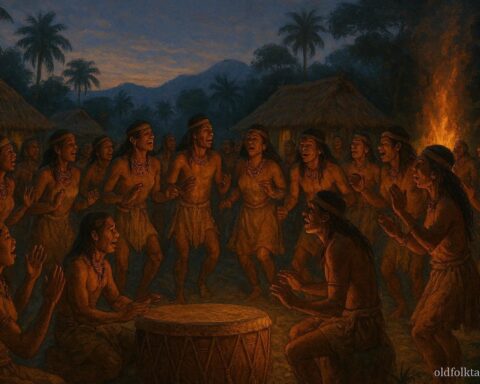
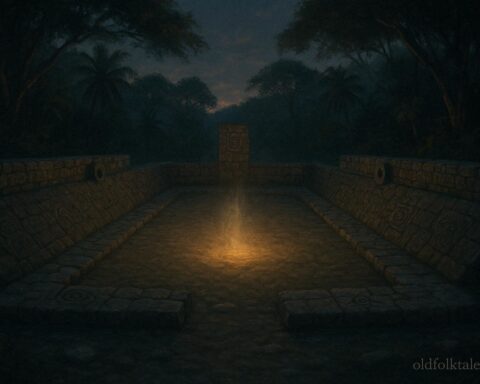
In the heart of Paraguay, where the jungle whispers secrets older than memory, there stand the crumbling remains of what were once magnificent Jesuit missions. These ruins, overgrown with vines and weathered by centuries of tropical rain, hold more than just stones and memories they harbor spirits that refuse to let their sacred ground be forgotten.
The Jesuit missions flourished in Paraguay during the 17th and 18th centuries, when Spanish priests came to convert the indigenous Guaraní people to Christianity. These weren’t mere churches, but entire communities where two worlds attempted to merge European faith meeting indigenous tradition. The missions became centers of art, music, and learning, where the haunting melodies of baroque chants blended with the rhythms of the forest.
Click to read all South American Folktales — timeless stories from the Andes to the Amazon.
But all empires fade, and when the Jesuits were expelled from the Spanish colonies in 1767, these magnificent settlements were abandoned almost overnight. The missions that had once echoed with prayers and song fell silent. The indigenous converts who had made these places their spiritual home were left without their teachers, without their protectors. Many scattered back into the forest, but some say that the spirits of those most devoted remained behind, eternally bound to the sacred spaces they had loved.
Local villagers who live near these ancient ruins tell stories passed down through generations. They speak of nights when the moon hangs heavy and full over the broken bell towers, when something inexplicable stirs among the shadows. Those brave or foolish enough to venture near the ruins after darkness falls report seeing soft, golden lights floating between the crumbling walls, lights that move with purpose, as if carried by invisible hands through familiar corridors.
But it is the sound that truly chills the blood.
From deep within the roofless chapels, where trees now grow where altars once stood, comes the unmistakable sound of voices raised in sacred song. The chants are old, achingly beautiful, sung in Latin and Guaraní both, the liturgical music that the Jesuit fathers taught their indigenous congregations centuries ago. The melodies drift through the night air, clear and pure, as if the choir stands just beyond the next wall, just around the next corner.
Those who have heard these phantom voices say they are filled with both reverence and melancholy, a profound devotion mixed with eternal longing. Some claim to have seen shadowy figures kneeling in prayer among the ruins, their forms translucent in the moonlight, their lips moving in silent supplication.
The local people do not speak of these spirits with fear, but with respect, even a kind of sorrowful pride. These are not malevolent ghosts seeking to harm the living. They are the faithful departed, the indigenous souls who embraced Christianity so completely that not even death could separate them from their chosen faith or their beloved mission grounds. They are guardians now, watching over what remains of the sacred spaces where they once worshipped, learned, and built lives that bridged two vastly different worlds.
One particularly persistent tale tells of a traveler who sought shelter in the ruins during a fierce storm. Drenched and exhausted, he huddled in what had once been the mission church, hoping the partial walls would protect him from the driving rain. As lightning illuminated the interior, he saw them, rows upon rows of figures, dressed in the simple garments of centuries past, their faces turned toward where the altar had once stood. They did not acknowledge him, did not even seem aware of his presence. They simply knelt in eternal prayer, their lips forming words he could not hear over the thunder.
When morning came and the storm passed, the traveler found himself alone among the silent stones. But near where he had slept, someone had placed a woven mat and left a small bundle of food, provisions he desperately needed for his continued journey. He took these gifts with gratitude and whispered a prayer of thanks to whatever benevolent spirits watched over these forgotten walls.
The ruins remain, slowly surrendering to the jungle’s embrace, while modern Paraguay grows and changes around them. But on certain nights, when conditions are just right, the past refuses to stay buried. The lights appear. The chants echo. And the spirits of the faithful continue their eternal vigil, guarding the sacred ground where their earthly lives found meaning, where two cultures met, and where devotion proved stronger than death itself.
Click to read all Andean Highland Folktales — echoing from the mountain peaks of Peru, Bolivia, and Ecuador.
Moral Lesson
This legend teaches us that true devotion transcends the boundaries of life and death, and that sacred spaces hold the spiritual imprint of those who honored them. The ghostly guardians of the Jesuit ruins remind us to respect the cultural and religious heritage of those who came before us, recognizing that faith, whether borrowed or native, when embraced with genuine conviction, creates bonds that not even centuries can break. The story also speaks to the enduring legacy of cultural synthesis, where different traditions merged to create something uniquely meaningful, worthy of protection even from beyond the grave.
Knowledge Check
Q1: What are the Jesuit ruins in Paraguay, and why were they abandoned? A: The Jesuit ruins are the remains of 17th and 18th century Spanish missions where Jesuit priests established communities to convert and educate the indigenous Guaraní people. They were abandoned in 1767 when the Spanish crown expelled the Jesuits from their colonies, leaving the missions and their indigenous inhabitants without leadership or protection.
Q2: What paranormal phenomena do people report at the abandoned Jesuit mission sites? A: Witnesses report seeing mysterious golden lights moving through the ruins and hearing ghostly voices singing sacred chants in both Latin and Guaraní. Some have also glimpsed translucent figures kneeling in prayer among the crumbling walls, particularly on nights with a full moon.
Q3: Who are the spirits believed to haunt the Jesuit ruins? A: The spirits are believed to be indigenous Guaraní converts who embraced Christianity so deeply that their souls remained bound to the mission grounds after death. They serve as eternal guardians of the sacred spaces where they once worshipped and lived.
Q4: How do local Paraguayans view these ghostly spirits? A: Locals treat the spirits with respect and reverence rather than fear. They view them as benevolent guardians protecting sacred ground, not as malevolent entities. The spirits represent the faithful departed who cannot be separated from the places they held holy during their lives.
Q5: What cultural significance do the Jesuit missions hold in Paraguayan history? A: The missions represent a unique period of cultural synthesis where European Christianity merged with indigenous Guaraní traditions. They became centers of art, music, education, and community where baroque sacred music blended with native rhythms, creating a distinctive cultural heritage that remains part of Paraguay’s identity.
Q6: What message does the legend of the Jesuit ruins convey about faith and heritage? A: The legend teaches that genuine devotion and cultural heritage transcend death and time. It emphasizes the importance of respecting sacred spaces and the spiritual legacies of those who came before us, showing how deeply held beliefs create enduring connections that survive even the physical destruction of the places that embodied them.
Source: Adapted from Paraguayan historical folklore collections, Portal Guaraní
Cultural Origin: Guaraní Indigenous Peoples and Colonial Spanish Heritage, Paraguay, South America