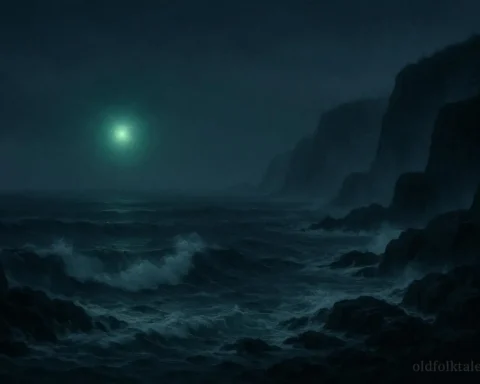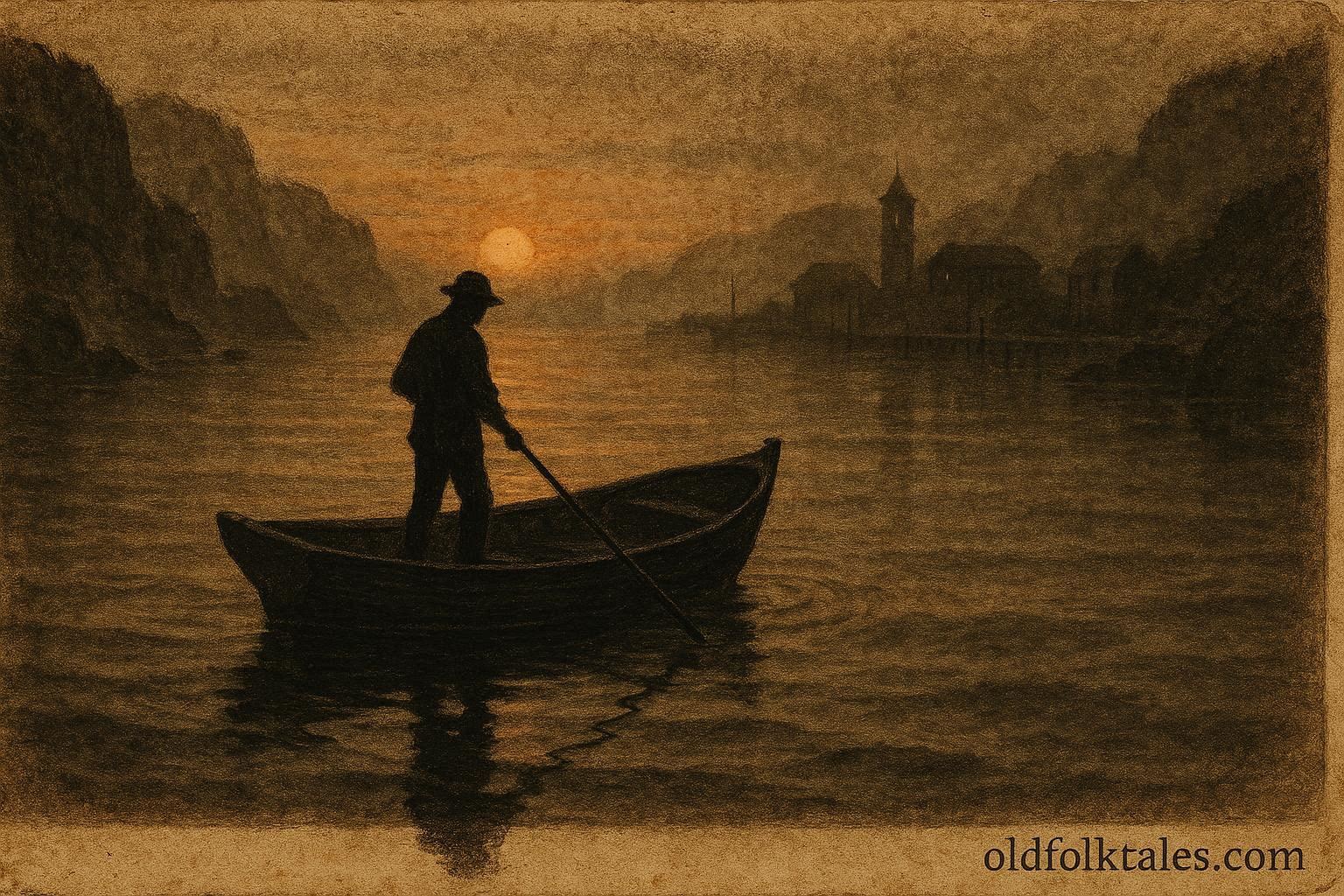
Along the rocky coastline of Newfoundland and Labrador, where the Atlantic crashes endlessly against black stone and fog drifts like a living thing, fishermen have always known that the sea is not merely water. It listens. It remembers. And it responds.
In a small outport village perched above a narrow harbour lived a fisherman named Eamon. He was strong, skilled, and widely known for his success at sea. While others returned with modest catches, Eamon often came back with nets heavy with cod and holds full of promise. Over time, success hardened him. Gratitude faded into pride, and pride became mockery.
The elders warned often. They spoke of tides that punished arrogance and waters that took more than lives. They said the sea demanded respect, not fear, and humility, not boasting. Eamon laughed at such talk. “The sea feeds me,” he said. “It answers to skill, not superstition.”
Discover ancient tales passed down by the Indigenous peoples of the Americas.
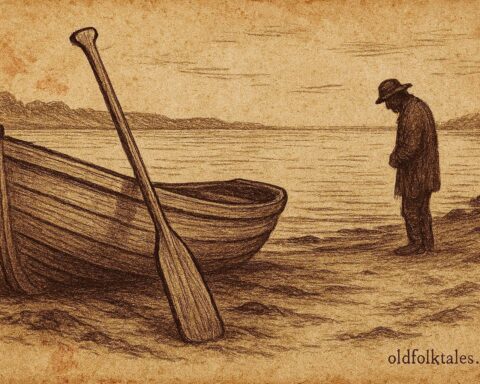
One evening, after a particularly bountiful day, Eamon lingered at the wharf long after others had gone home. The sun hung low, casting long shadows across the planks. His own shadow stretched dark and tall beside him, rippling slightly with the movement of the water below.
Looking down at the harbour, Eamon scoffed. “You take nothing from me,” he said aloud, addressing the sea as if it were a fool. “I take from you, again and again.”
In a moment of careless bravado, he did something no one had ever seen before. He stepped onto the edge of his boat, leaned over the side, and gestured toward the water.
“If you want something,” he said, laughing, “take my shadow. It’s all you’re fit for.”
As the sun dipped behind the hills, his shadow slipped from the deck and vanished into the dark water below.
At first, nothing happened.
Eamon returned home amused by his own joke. But the next morning, something was wrong. When he stepped outside into the early light, he noticed that his shadow did not follow. He moved his hand. No shadow moved with it. He walked across the yard, but the ground remained bare.
Unease crept into his chest.
At sea that day, his nets came up light. The water felt strange, unresponsive. He misjudged currents he had known since childhood. By afternoon, exhaustion overtook him, though he had barely worked. Other fishermen watched him struggle, whispering among themselves.
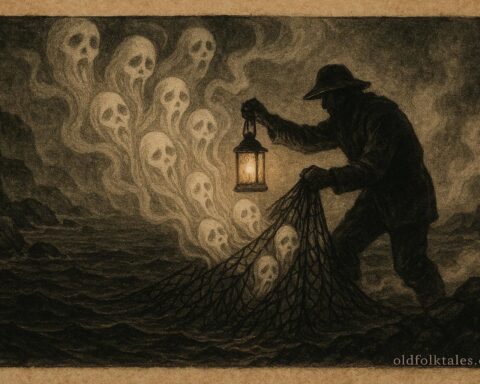
Days passed, and Eamon grew weaker. Without a shadow, he felt less solid, as though parts of him were being quietly erased. He spoke less. His laughter disappeared. At night, he dreamed of dark water folding around him, carrying something heavy and familiar deeper and deeper.
Desperate, he went to the oldest woman in the village, one known for remembering stories others had forgotten. She listened without interruption as Eamon explained what he had done.
“You gave away more than you knew,” she said at last. “A shadow is not just a shape. It is a mark of presence. It proves you belong to the world of the living.”
She told him the sea had accepted his offering, not as a joke, but as a vow. What was given freely could not simply be taken back.
Still, she offered one final instruction. At dusk, when the tide turned and the water lay quiet, Eamon was to return to the exact place where his shadow had fallen. He was to speak no boast, make no demand, and accept whatever the sea chose to return.
That evening, Eamon stood alone at the harbour. The sky burned with fading light. As the sun lowered, the water darkened and stilled. He looked down, ashamed.
“I was wrong,” he said softly. “I forgot who feeds whom.”
The water shifted. A faint darkness rose near the surface, rippling like oil. For a moment, Eamon saw the outline of his shadow drifting just beyond reach. He stepped forward, but the water pulled it back.
The sea did not speak, but its meaning was clear.
When Eamon returned home, his shadow had partially returned. It followed him now, but faintly, thinner than before, always slightly delayed. He was never again the man he had been.
From that day on, Eamon fished carefully. He spoke little. He never mocked the sea, and he warned others not to confuse success with ownership. Those who noticed his shadow said it never fully darkened again, even under the brightest sun.
The elders say the sea kept part of it as a reminder.
Moral Lesson
Arrogance severs a person from balance and belonging. When respect is lost, identity itself can erode. The story teaches that pride invites loss, and that humility is not weakness but protection. What is offered carelessly, especially to forces greater than oneself, may never be fully recovered.
Knowledge Check
- Why did Eamon cast his shadow overboard?
He mocked the sea and believed it held no power over him. - What happened after his shadow vanished?
He lost his success, strength, and sense of self. - What does the shadow symbolize in the story?
Identity, presence, and connection to the living world. - Who helps Eamon understand his mistake?
An elder woman who preserves old coastal knowledge. - Does Eamon fully recover his shadow?
No, it returns only partially as a lasting reminder. - What lesson does the village learn from his story?
That disrespect toward nature leads to lasting consequences.
Source:
Adapted from Memorial University Folklore Archive and Newfoundland coastal narratives.
Cultural Origin:
Newfoundland and Labrador folklore.