In the early age of the islands, when people still learned directly from the land and the spirits walked close to human homes, the Taíno lived with tireless hands. They farmed from sunrise to dusk, fished through long tides, and built villages that grew with every generation. Work was praised, endurance admired, and rest often ignored.
The elders noticed something troubling. Bodies grew strong but spirits grew strained. Tempers shortened. Dreams faded. People slept on hard ground and woke stiff and restless. Even laughter came less easily than before.
One season, after an especially harsh harvest, a woman collapsed while tending cassava. She did not cry out. She simply sank into the soil, exhausted beyond speech. The village gathered, frightened by how easily strength had left her.
That night, the elders lit a ceremonial fire and called upon the zemís, the guiding spirits of the Taíno. They asked why weariness had settled so deeply into the people. The fire crackled softly, and the smoke twisted upward until it shaped itself into a gentle voice.
You have forgotten the rhythm between effort and rest, the voice said. You have honored labor but neglected care.
Before dawn, a stranger arrived from the forest edge. No one saw her come. She carried no basket and wore no ornaments. In her hands was something unfamiliar, a length of woven fiber that curved softly like water held in air.
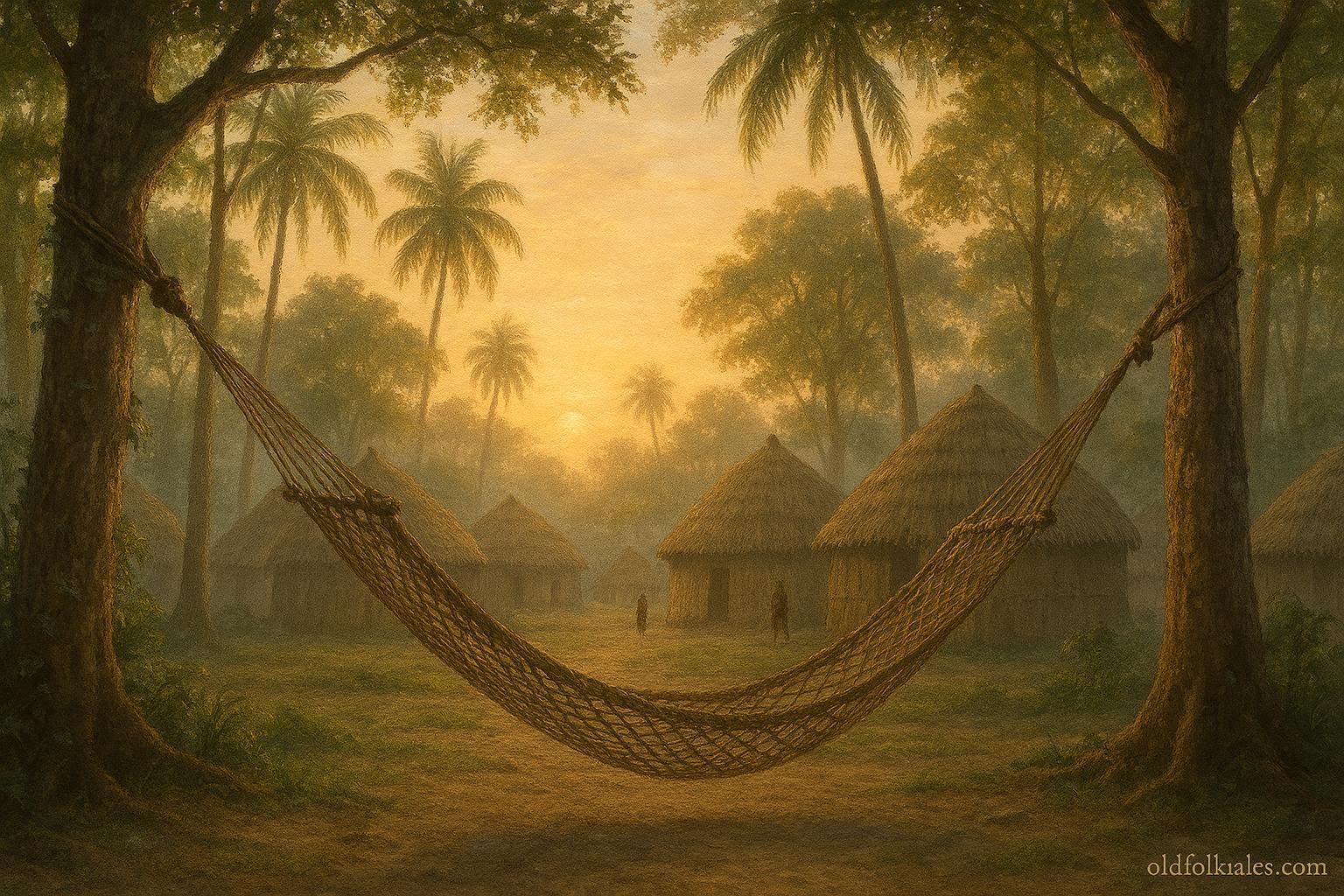
She greeted the village with a calm smile and asked to speak with the elders. When they gathered, she spread the woven fibers between two trees. It formed a cradle that did not touch the ground, swaying lightly with the breeze.
This is a place of rest, she said. Not sleep alone, but balance.
The villagers watched as she lay upon it. The woven surface held her gently, lifting her body so that no single part bore the full weight. She rose moments later, refreshed, as though time itself had softened.
The elders stepped closer. They touched the fibers and felt warmth within them. The stranger explained that the hammock was a gift from the spirits, woven from the same patience used to grow crops and the same care used to raise children.
Rest is not weakness, she said. It is respect for the body that carries your duties.
Some among the village scoffed quietly. They believed strength came from endurance alone. But the elders listened.
The stranger taught them how to weave the fibers from plant threads found near the river. She showed them how to knot without strain and how to hang the hammock where air could move freely. She taught them to lie within it with humility, not as owners of comfort but as receivers of care.
Before leaving, she spoke one final warning. Do not turn this gift into excess. Use it to restore balance, not escape responsibility.
With that, she vanished into the trees.
The elders ordered hammocks to be woven for the village. At first, people hesitated to use them. Lying above the ground felt strange. But gradually, they noticed changes. Rested bodies moved with greater purpose. Arguments faded. Songs returned to evenings.
Children slept deeply and woke laughing. Elders found relief from aching joints. Even hunters returned from the forest with clearer minds and steadier hands.
One man, however, misused the gift.
He spent hours in his hammock while others worked. He boasted of how cleverly he avoided labor. He laughed at those who tired themselves in the fields. Over time, his hammock frayed. The fibers loosened and lost their strength.
One afternoon, while he slept, the hammock gave way. He fell gently but firmly to the ground. He was not injured, but he was shaken.
Ashamed, he approached the elders. They told him the hammock had taught its lesson. Rest supports those who respect balance. It rejects pride.
From then on, the hammock became more than an object. It became a reminder. People hung them near family homes, never in isolation. No one lay in one while others struggled. They rested together, spoke softly, and rose when needed.
As generations passed, the hammock traveled beyond the islands. Others admired its comfort, but the Taíno remembered its deeper meaning. They taught their children that rest was not an escape from duty but preparation for it.
Even when times changed and traditions were tested, the hammock endured. It whispered its lesson with every gentle sway.
Care for yourself so you may care for others. Work with strength. Rest with humility. Balance holds the community together.
Explore the ancestral legends of Canada, Mesoamerica, and South America’s Indigenous tribes.
Moral lesson
True strength comes from balance. Rest is not laziness, and care for the body supports care for the community. Gifts meant to restore harmony must be used with humility and shared responsibility.
Knowledge check
1 Why did the spirits gift the hammock to the people?
To restore balance between work and rest within the community.
2 What made the hammock different from sleeping on the ground?
It supported the body evenly and allowed gentle movement and airflow.
3 Why did one villager fall from his hammock?
He misused rest as avoidance of responsibility and showed pride.
4 What rule did the elders establish about hammock use?
It should never separate a person from communal duty.
5 How did the hammock change village life?
It improved health, reduced conflict, and restored joy.
6 What lesson did the hammock teach beyond comfort?
That humility and balance sustain both individuals and communities.
Source
Adapted from Taíno material culture studies at the National Museum of the American Indian.
Cultural origin
Taíno peoples, Greater Antilles.