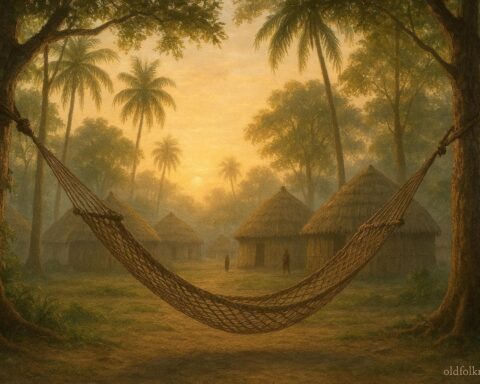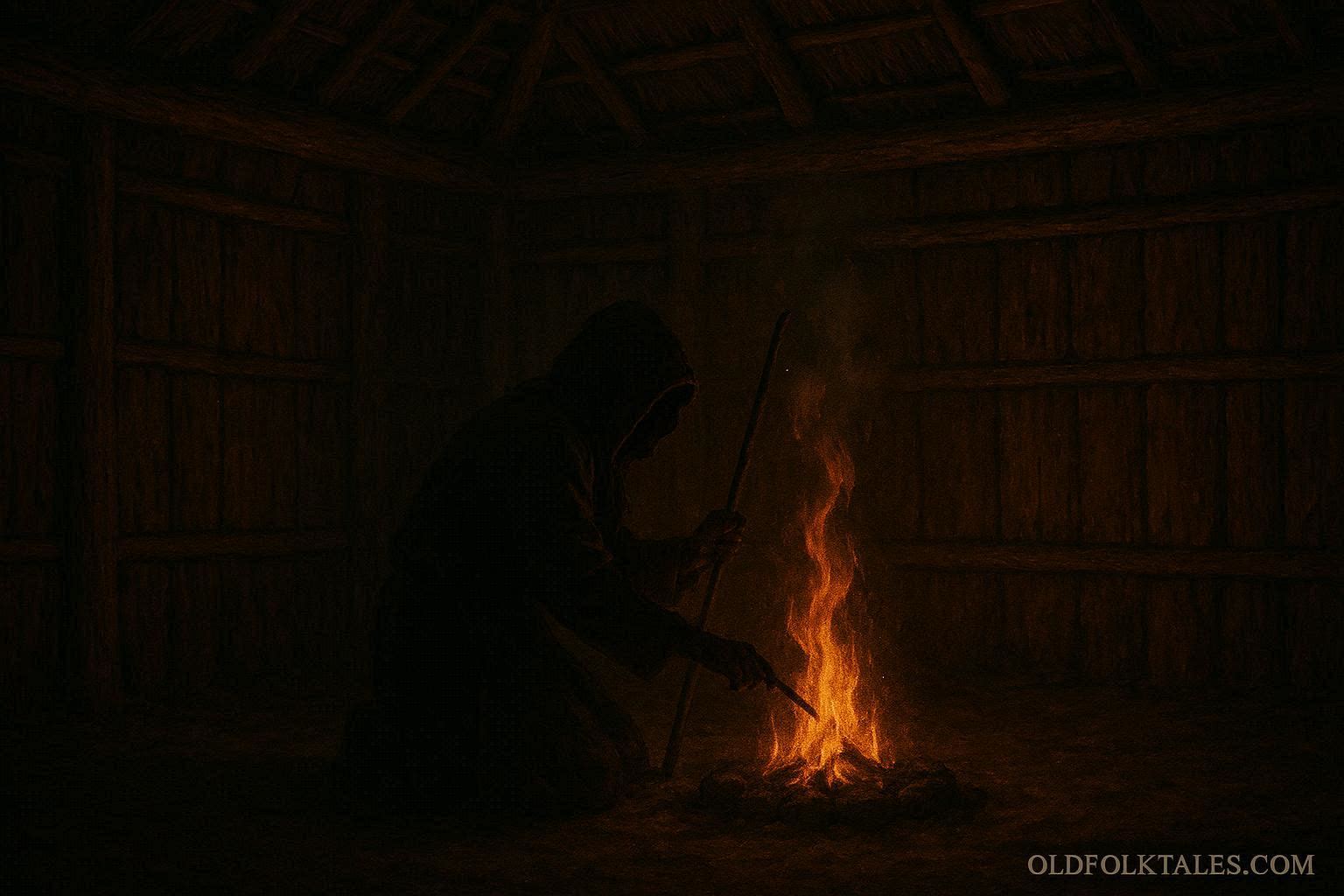
In the heart of the northern forests of Central Canada, within the community of the Cree people, there stood a lodge known for its sacred fire. This fire was unlike any other; it was a living flame, a source of warmth and spiritual energy, connecting the people to their ancestors. The responsibility of tending it fell to one chosen guardian, known as the Fire Keeper.
The Fire Keeper was a person of great devotion, and from the moment they accepted this duty, they relinquished their personal identity. No one in the lodge or the village would know their name. No one would see their face. Their life belonged entirely to the flame, for the flame demanded attention, respect, and an unwavering commitment. The Fire Keeper’s heart beat in rhythm with the crackling embers, their breath synchronized with the rising smoke, and their thoughts became prayerful whispers to the ancestors.
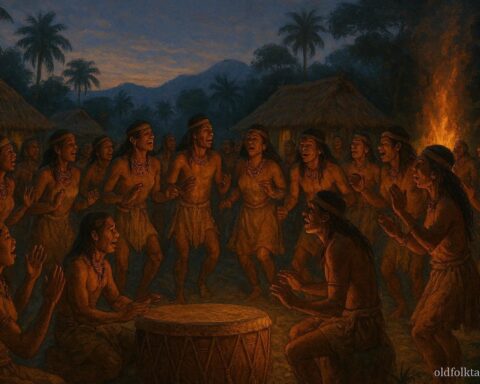
Every evening, villagers would gather near the lodge to share stories, songs, and teachings. They would feel the warmth of the fire and hear its subtle whispers as if the ancestors themselves were speaking. Yet the Fire Keeper remained unseen. While others ate, danced, or sang, the Fire Keeper moved silently among the shadows, stoking the embers, adding wood, and ensuring the fire never faltered.
Journey through Central America’s heartlands and hear its stories of creation, courage, and nature.
The responsibility weighed heavily. Many who wished to take on the role could not endure it. It demanded the suppression of pride, the renunciation of personal glory, and a life of total service. A Fire Keeper could not allow thoughts of self to interfere with their duties. If the fire were neglected even for a single night, it could dim, and the village would feel the loss as a chill in their bones and a heaviness in their hearts.
It was said that one winter, when snowstorms raged for weeks, a young man named Nikan was chosen as Fire Keeper. Though he was honored by the selection, he hesitated, for the thought of abandoning his identity frightened him. His grandmother reminded him, “The fire is older than any one person. It does not belong to a name or a face. You serve it, and in serving it, you serve us all.”
Nikan accepted, and from that moment, he became faceless in the eyes of others. He tended the fire night and day, even as the storms howled outside the lodge. Villagers relied on the fire for warmth, sustenance, and spiritual guidance. They came to offer prayers and thanks, feeling the presence of their ancestors in the smoke and flames.
As time passed, Nikan understood the true lesson of the Fire Keeper. It was not only about tending the flame. The fire tested patience, taught humility, and demanded complete selflessness. The more he gave of himself, the brighter the fire burned. He learned that identity could be sacrificed for the good of the community, and that the warmth of the flame was stronger than any desire for recognition.
One night, a young boy entered the lodge, curious about the Fire Keeper. He asked aloud, “Who tends this fire? I want to know their name!” The villagers hushed him, reminding him of the sacredness of the role. Nikan, unseen, smiled quietly. He added another log to the flame and whispered, “I am only here to serve. The fire is all that matters.”
Weeks later, a harsh cold snap arrived. The villagers worried that even the Fire Keeper might falter under such strain. Yet when they came to the lodge, they found the fire brighter than ever. The smoke rose tall and steady into the night sky, and warmth filled the lodge. The villagers realized that the faceless Fire Keeper had endured, demonstrating that service without expectation, devotion without recognition, and love without claiming reward, could sustain both the flame and the people.
Through this story, generations learned that some roles are meant not for personal glory but for the protection and guidance of the community. True service requires humility, patience, and a willingness to give without asking in return. The Fire Keeper without a face became a legend, a reminder that identity can be set aside for the greater good, and that some responsibilities demand sacrifice beyond the understanding of those who observe.
Explore the ancestral legends of Canada, Mesoamerica, and South America’s Indigenous tribes.
Moral Lesson
The story of the Fire Keeper teaches that selflessness and devotion to duty strengthen the community and honor ancestral wisdom. True service often requires relinquishing personal recognition, embracing patience, and committing fully to the wellbeing of others.
Knowledge Check
- Why does the Fire Keeper give up their identity?
Answer: To serve the fire and community without distraction or personal pride - What does the fire symbolize in the story?
Answer: Spiritual connection, community strength, and ancestral guidance - How do villagers interact with the fire?
Answer: They gather to offer prayers, songs, and thanks, relying on its warmth and guidance - What lesson does Nikan learn while tending the fire?
Answer: That humility, patience, and selflessness are essential for true service - What happens if the fire is neglected?
Answer: It dims, and the village feels cold and spiritually unsettled - How does the story illustrate communal values?
Answer: It shows that personal sacrifice can sustain collective wellbeing and honor tradition
Source:
Adapted from Cree ceremonial teachings, First Nations Cultural Council
Cultural Origin:
Cree First Peoples, Central Canada