Among the Cree people of the central lands, fire was more than warmth or light. It was a witness. It watched gatherings, listened to decisions, and carried prayers upward in thin threads of smoke. A ceremonial fire, once lit, was never treated casually. It marked agreements, welcomed children, honored the dead, and held the community together during times of uncertainty.
Such a fire required a guardian.
The role of Fire Keeper was not inherited through blood, nor claimed through strength or skill. It was accepted quietly, often by someone who did not seek it. The Fire Keeper’s task was simple in appearance but heavy in meaning. They fed the fire at the proper times, protected it from neglect, and ensured it was never used to elevate one person above another.
Long ago, during a period of growing prosperity, the Cree camps gathered near a wide river for a seasonal council. Trade was plentiful. Food stores were strong. With comfort came pride, and with pride came competition. Voices grew louder. People spoke more often of what they owned and less of what they owed one another.
It was during this time that the elders chose a new Fire Keeper.
Immerse yourself in Latin America’s stories of passion, transformation, and spirit.
The chosen one was a quiet adult known only as Wâpikoni. They were not remarkable in appearance. They hunted well enough, worked steadily, and spoke little. When the elders approached Wâpikoni, they did not ask for acceptance. They simply placed a coal in their hands.
Wâpikoni nodded.
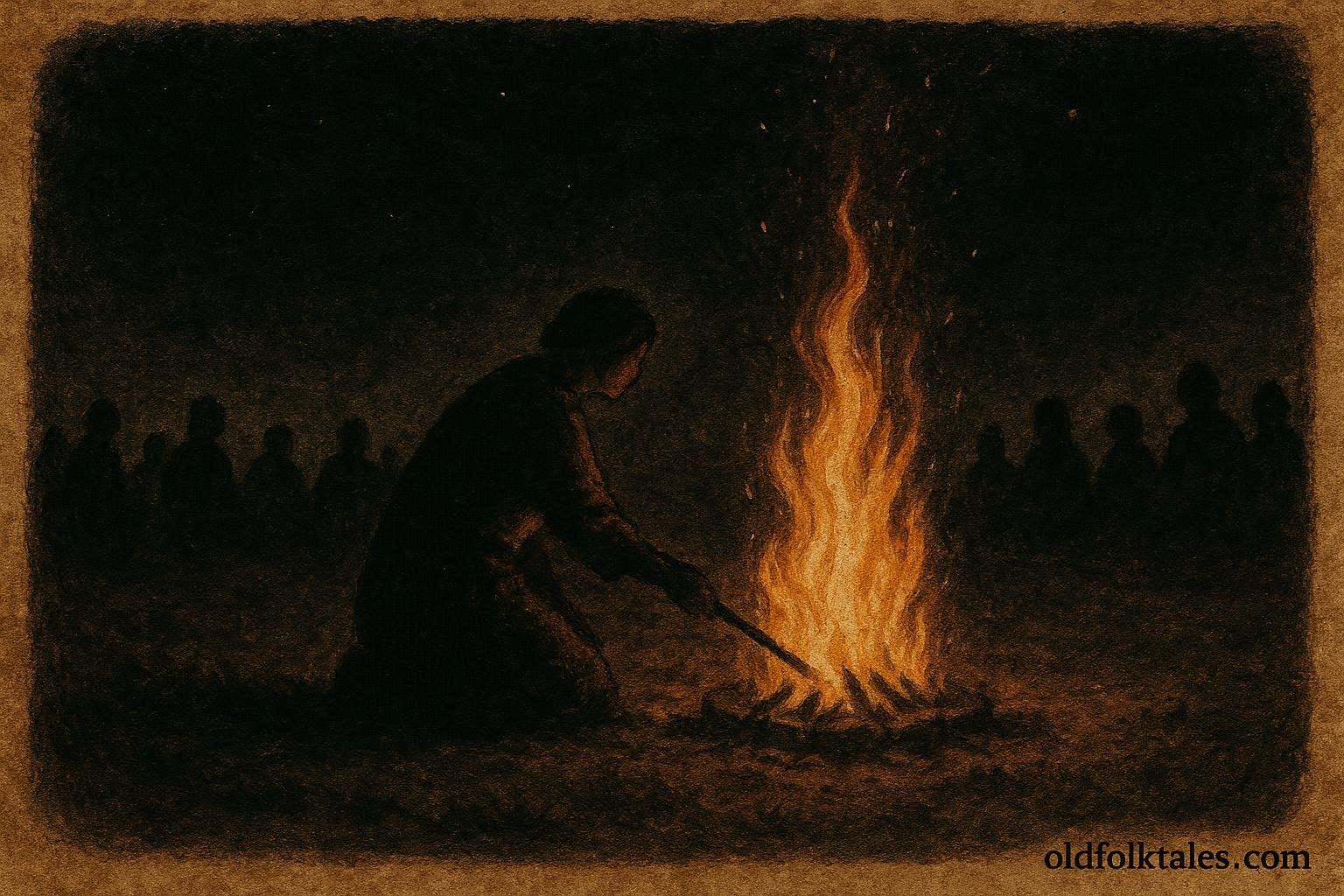
From that day forward, Wâpikoni tended the ceremonial fire. They rose before dawn to feed it. They shielded it during storms. They stayed awake while others slept, watching the embers breathe. People began to associate the steadiness of the fire with Wâpikoni’s presence.
At first, this brought admiration.
Visitors praised Wâpikoni’s dedication. Children pointed and whispered. Adults spoke their name with respect. Slowly, without meaning to, the community began to see the Fire Keeper rather than the fire.
Wâpikoni noticed.
One evening, during a gathering meant to resolve a dispute, voices rose around the fire. People argued over trade routes and responsibilities. Each speaker tried to position themselves closer to the flames, as if its warmth granted authority.
Wâpikoni stood, lifted a piece of wood, and did not place it on the fire.
The flames dimmed slightly.
The people paused.
Wâpikoni spoke for the first time in many days. “The fire listens,” they said. “But it does not choose sides.”
Silence followed. The wood was placed. The fire steadied.
That night, Wâpikoni sat alone and reflected. The role had become tangled with identity. Respect was drifting toward the person rather than the duty. This was dangerous. The fire was meant to unite, not elevate.
The next morning, Wâpikoni went to the elders.
“I will keep the fire,” they said, “but I will no longer keep my name.”
The elders were startled. A name carried lineage, history, and belonging. To release it was no small act.
“If people speak my name,” Wâpikoni continued, “they will look at me instead of the fire. Let the role stand alone.”
After long discussion, the elders agreed.
From that day on, Wâpikoni answered to no personal name. They were called only Fire Keeper. When people asked who tended the fire, the elders replied, “The one who does.”
At first, this unsettled the community. Without a name, the Fire Keeper seemed distant, almost invisible. But slowly, something changed. People stopped praising the keeper and began paying attention to the fire itself. Decisions made near it grew calmer. Arguments shortened. No one could claim closeness to the fire as status.
Years passed.
New children were born who never learned the Fire Keeper’s original name. To them, the role existed without a face. The Fire Keeper aged quietly, body slowing but duty unwavering. On cold nights, they wrapped themselves in simple cloth and watched the flames, content to be unseen.
One winter, illness spread through the camps. Fear returned. People looked again toward the fire, hoping it would choose someone to save. They begged the Fire Keeper to speak, to lead, to decide.
The Fire Keeper shook their head.
“The fire holds us,” they said. “It does not rule us.”
They tended the flames as always. People began to help one another instead.
When the Fire Keeper felt their strength fading, they prepared the fire carefully. They selected another person, young and uncertain, and placed a coal in their hands.
The new keeper hesitated. “What is your name?” they asked.
The old Fire Keeper smiled gently.
“That no longer matters.”
By morning, the old keeper was gone.
The fire continued to burn.
Among the Cree, it is remembered that the strongest guardians are those who step aside so the community can see what truly matters. The fire still burns, and it still listens, but it carries no name.
Explore the ancestral legends of Canada, Mesoamerica, and South America’s Indigenous tribes.
Moral Lesson
This story teaches that true leadership is rooted in selflessness. When identity is placed above duty, harmony weakens. By releasing personal recognition, individuals allow communal values to remain central and enduring.
Knowledge Check
1. What role does the Fire Keeper serve?
They protect and maintain the ceremonial fire for the community.
2. Why does the Fire Keeper give up their name?
To prevent personal identity from overshadowing communal harmony.
3. What danger arises when people focus on the Fire Keeper instead of the fire?
The fire becomes a symbol of status rather than unity.
4. How does anonymity strengthen the role?
It shifts attention from the individual to the responsibility.
5. What does the fire symbolize?
Community, continuity, and shared responsibility.
6. What lesson does the community learn?
That leadership does not require recognition to be effective.
Source
Adapted from Indigenous ceremonial role documentation; First Nations cultural education archives.
Cultural Origin
Cree First Peoples, Central Canada.