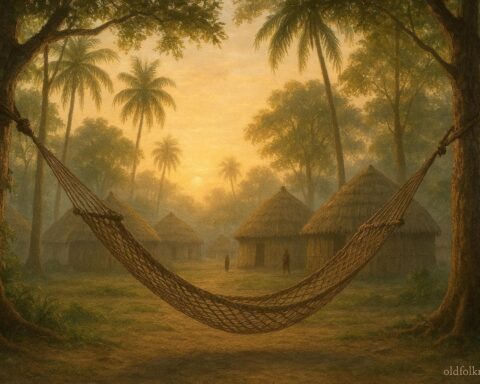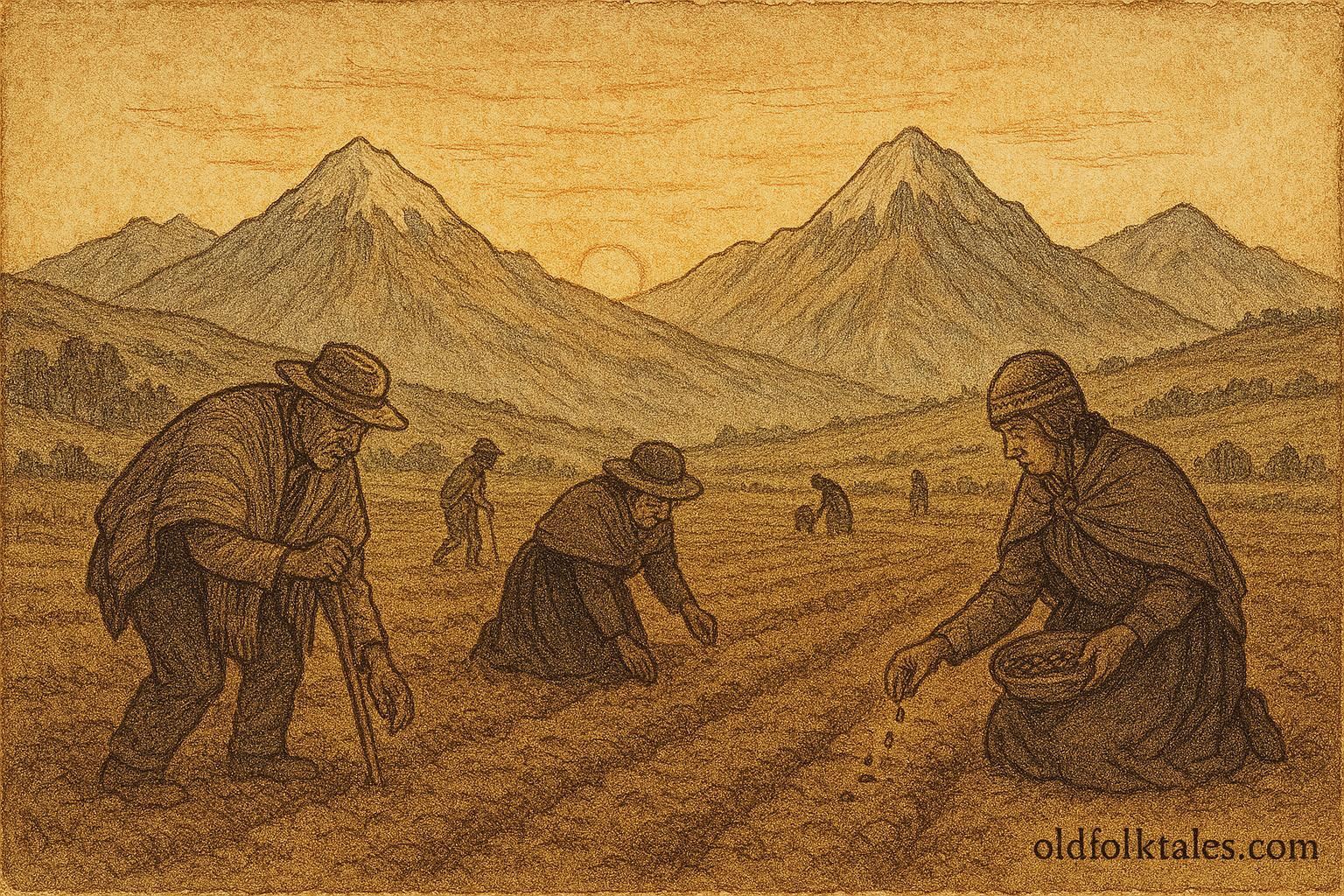
In the high Andes of southern Peru, where mountains rose like ancient witnesses and clouds moved slowly as if thinking, there lay a village called Pukara. The people of Pukara lived by the rhythm of the land. Seasons were not measured by calendars but by soil warmth, wind direction, and the return of certain birds. Among all the fields that fed the village, one was spoken of with special care. It was called Yachay Pampa, the field that remembers.
Yachay Pampa sat on a gentle slope above the river, its soil dark and rich from centuries of careful tending. Elders said the land had been cultivated since the time when the ancestors first learned to farm without breaking the earth’s spirit. Each generation added its own memory to the soil through labor, gratitude, and restraint.
Planting was never done carelessly. Before seeds touched the ground, families gathered to acknowledge the previous harvest. The first potatoes were returned to the soil. Chicha was poured into the earth. Names of ancestors were spoken aloud. These acts were not seen as ceremony alone but as repayment. The land gave food, and the people answered with respect.
Discover ancient tales passed down by the Indigenous peoples of the Americas.
As years passed, life in Pukara began to change. Traders from lower valleys arrived more often. Crops were exchanged for tools, cloth, and salt. Farming became less about survival and more about production. Younger farmers began to speak of efficiency and yield. They respected the elders but quietly believed some practices belonged to the past.
Among these younger farmers was Tupan, a hardworking and ambitious man. He had learned farming from his father, who had never questioned the old ways. When his father died, Tupan inherited responsibility for Yachay Pampa. At first, he followed tradition carefully, out of respect and habit.
But as seasons passed and his harvests grew larger, Tupan began to change. He noticed that skipping small rituals did not immediately harm the crops. He delayed returning offerings to the soil. He kept more produce for trade and less for communal storage. He told himself that prosperity was proof of wisdom.
Other farmers followed his example. Communal harvest debts were postponed. Some families borrowed from shared stores and returned less than they took. No one spoke openly about it, but the balance slowly shifted.
Then came the season when the land fell silent.
The rains arrived on time. The soil was prepared with care. Seeds were healthy and strong. Yet days passed without a single green shoot. Farmers waited, confused but patient. Another week passed. Still nothing.
They planted again. Nothing grew.
Concern turned into fear. Whispers spread through the village. Some blamed bad seed. Others blamed unseen spirits. Tupan argued that the land needed deeper plowing and harder work. He labored from dawn to night, cutting deeper into the soil than ever before. The field remained bare.
As the village argued and worried, an elder woman named Mama Killa walked slowly toward Yachay Pampa. Her hair was white, her back bent, but her eyes were sharp with memory. She knelt at the edge of the field and pressed her palm to the ground. She stayed there a long time, listening.
When she stood, she spoke softly, yet everyone fell silent.
“The field is not empty,” she said. “It is full.”
The villagers looked at one another in confusion. Mama Killa explained that the soil was heavy with memory. Every unpaid harvest debt, every forgotten offering, every act of taking without return had settled into the land. The field was not refusing seeds out of anger. It was refusing because balance had not been restored.
“The land gives,” she said, “but it also remembers.”
Her words struck deeply. Tupan felt heat rise in his chest. He remembered seasons when he had taken pride in abundance but had failed to acknowledge its source. He remembered dismissing his father’s reminders as old-fashioned.
That evening, the village gathered without tools. Instead, they brought baskets of grain, jars of chicha, and objects from past harvests. One by one, families spoke aloud what they had taken and what they had failed to return. There was no accusation, only listening.
When Tupan stepped forward, he placed his finest seeds on the ground but did not plant them. He spoke of his ambition, his impatience, and the debts he had ignored. Then he knelt and pressed his forehead to the soil of Yachay Pampa.
At dawn, Mama Killa instructed them to plant again. This time, they worked slowly. Each seed was placed with intention. Words of acknowledgment were spoken not as ritual performance but as honest recognition of the land’s role in sustaining life.
Within days, green shoots broke through the soil. The harvest that followed was not abundant, but it was steady and sufficient. From that season onward, Yachay Pampa was treated not as property but as a partner. Children were taught that land does not forget, even when people do.
And whenever planting time came, someone would always say, “Let us first remember what we owe.”
Click to read all South American Folktales — timeless stories from the Andes to the Amazon.
Moral Lesson
This story teaches that prosperity without gratitude leads to imbalance. The land is not an endless resource but a living witness to human behavior. True abundance comes from reciprocity, accountability, and respect for both past and present obligations.
Knowledge Check
- What causes the field to refuse new seeds?
Answer: The field refuses planting because past harvest debts and acts of reciprocity were ignored. - Who explains the meaning of the field’s silence?
Answer: Mama Killa, an elder who understands the land’s memory. - What does the field symbolize?
Answer: The field represents land as a keeper of moral balance and communal memory. - How does Tupan change by the end of the story?
Answer: He acknowledges his pride, admits his debts, and restores respect toward the land. - What action restores balance with the land?
Answer: Honest acknowledgment of past neglect and renewed reciprocity. - What central value does the story emphasize?
Answer: Reciprocity between humans, community, and the natural world.
Source: Adapted from Reciprocity and Land Ethics in Andean Farming, Centro Bartolomé de las Casas (1999)
Cultural Origin: Quechua peoples, Peru