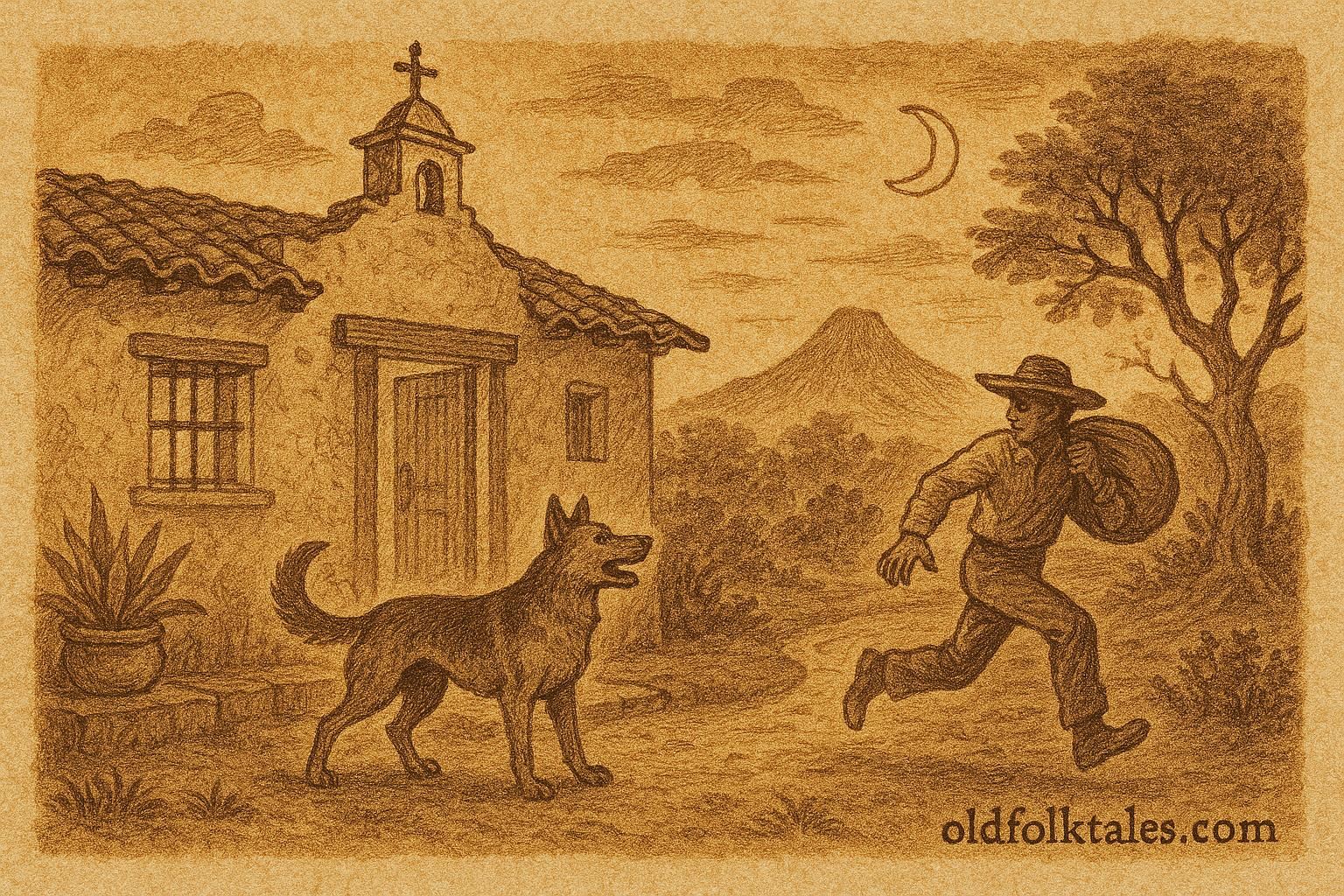
In the early years of Spanish rule in Mexico, when old Indigenous towns lived under new customs and laws, there stood a modest home on the outskirts of Tlaxcala. The house belonged to a humble villager whose life was shaped by the land he worked and the quiet routines of rural living. His most constant companion was not another person, but a strong, keen-eyed dog that never strayed far from his side.
The villager owned little beyond his tools, his small plot of land, and a few carefully saved coins kept inside his home. What he lacked in wealth, he made up for in diligence. Each morning, he went to the fields before sunrise, and each evening he returned with tired limbs and an honest heart. His dog followed him everywhere, alert, attentive, and deeply devoted.
One season, illness struck the villager without warning. Fever confined him to his bed, leaving him too weak to tend his fields or move about his home. As days passed, word of his condition spread through the surrounding area. While some neighbors felt sympathy, others saw opportunity. Knowing the villager lived alone and believing his sickness had made him defenseless, they whispered among themselves about the small savings he was rumored to keep.
Under the cover of darkness, these dishonest neighbors planned to enter his home and take what little he had. They waited until night fell, confident that illness had silenced all resistance. Yet they had forgotten one crucial presence, the dog.
Each night during the villager’s illness, the faithful animal patrolled the yard. He paced slowly and steadily, ears lifted to every sound, nose alert to unfamiliar scents. Though his master lay weak inside, the dog remained vigilant, driven by instinct and loyalty.
When the first intruder crept toward the house, stepping carefully to avoid making noise, the dog sensed him at once. A low growl rose from the darkness, followed by sharp barking that echoed across the quiet land. Startled but determined, the thief pressed forward. In a swift moment, the dog lunged and bit the man’s leg, tearing cloth and flesh before retreating to guard the doorway.
The wounded intruder fled, leaving behind blood-stained fabric and footprints that led away from the house. The dog continued barking until the danger had passed, then returned to his watch, never leaving his post.
The next morning, authorities noticed a man in the village limping with a fresh wound that could not be easily explained. When questioned, his story fell apart. Traces of blood and torn clothing matched what had been found near the villager’s home. Soon, others involved in the plot were revealed, and the truth of their attempted theft came to light.
The villager, though still recovering, was informed of what had happened. He listened quietly as the story was told, his gratitude deepened by the realization that his dog had protected not only his property but his dignity. When his strength returned, he shared the story openly with the community.
He spoke not with bitterness, but with clarity, reminding his neighbors that loyalty and vigilance are priceless virtues. The dog, he said, had shown more honesty and responsibility than those who sought to steal from a sick man.
From that time on, the tale of the faithful dog spread throughout Tlaxcala. The animal came to symbolize trust, moral duty, and the watchful bond between humans and animals, values respected in Indigenous traditions and reinforced through colonial moral storytelling.
Moral Lesson
This folktale teaches that loyalty and vigilance protect what is just. True guardianship comes not from strength alone, but from unwavering responsibility and moral integrity.
Knowledge Check
Q1: Who is the central figure of the story?
A: A loyal dog who protects his ill master in colonial Tlaxcala.
Q2: Why do the neighbors attempt theft?
A: They believe the villager’s illness makes him defenseless.
Q3: How does the dog prevent the crime?
A: By guarding the property and biting the intruder, leaving evidence.
Q4: What role do authorities play in the story?
A: They identify the thieves using the evidence left behind.
Q5: What does the dog symbolize in Mexican folklore?
A: Loyalty, vigilance, and moral responsibility.
Q6: What cultural period does the folktale reflect?
A: The Spanish Colonial era in Mexico.
Source: Mexican oral tradition; documented in colonial-era moral folktales.
Cultural Origin: Mexico (Spanish Colonial period)