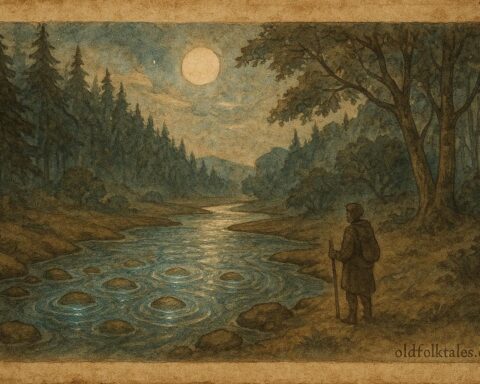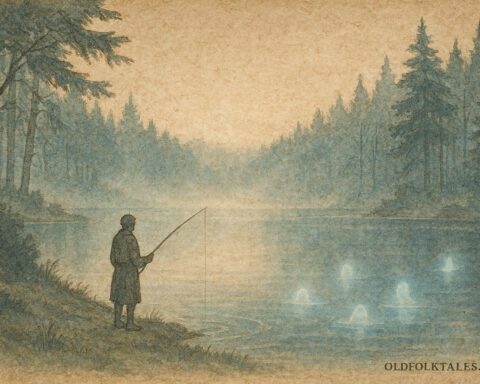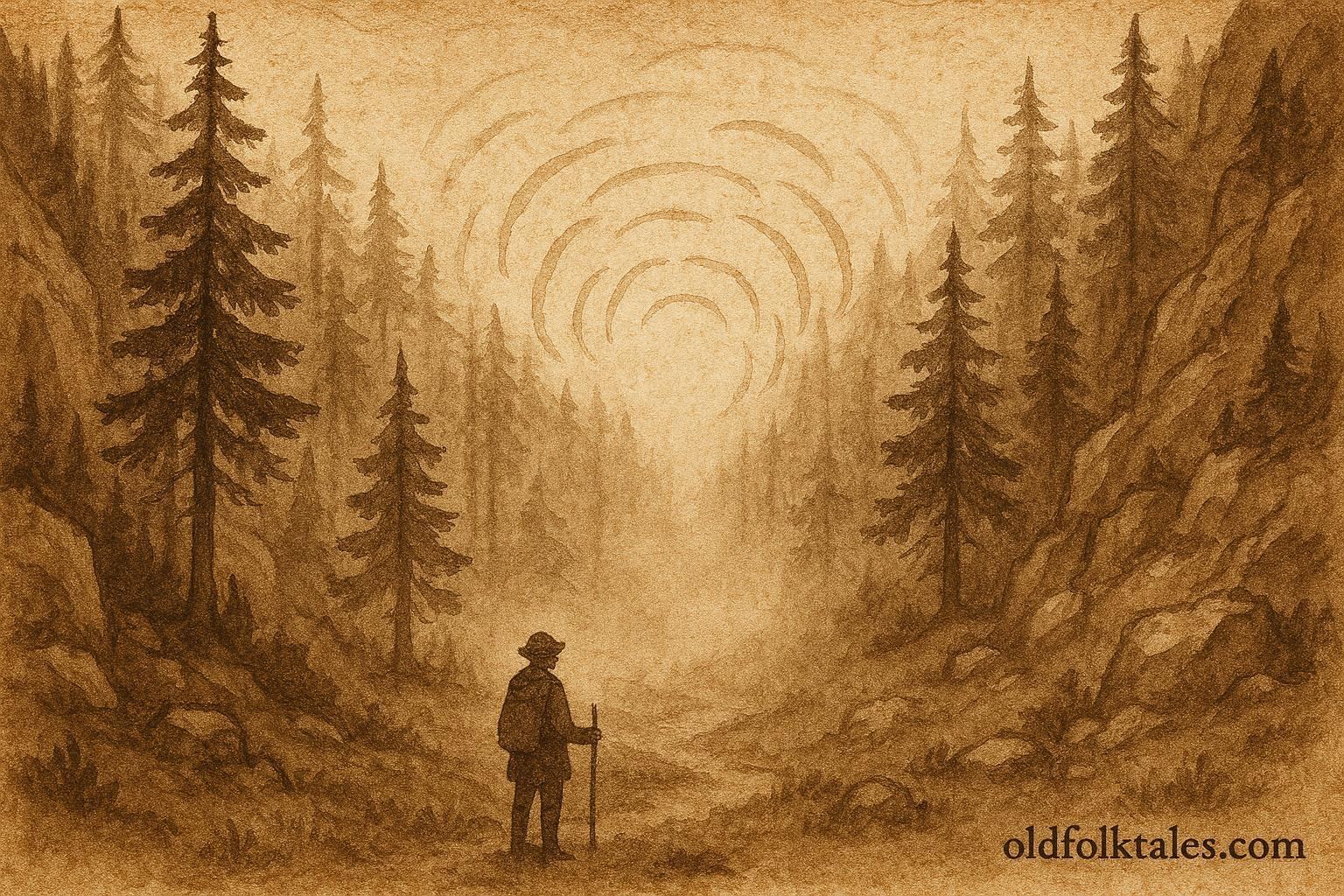
In the deep forests of Quebec, where hills rose and fell like slow waves and pine trees stood so close together that daylight struggled to pass through, there was a valley known for its echo. Travelers passing through noticed it immediately. A single word spoken aloud would return not once, but many times, drifting back from different directions as if the forest itself were answering.
Most people laughed when they heard it. Some shouted their names or sang songs, amused by the sound of their own voices returning to them. But elders warned that the echo of that valley was not like others. They said it listened first, and only then did it speak.
The valley lay along an old forest path once used by hunters, traders, and woodcutters. Over time, fewer people chose to pass that way, partly because of the echo, and partly because the forest felt unusually attentive there. Branches creaked even when there was no wind. Footsteps seemed louder than they should have been. It was said that those who rushed through often left unsettled, while those who paused sometimes learned something unexpected.
Explore the ancestral legends of Canada, Mesoamerica, and South America’s Indigenous tribes.
A young man named Julien was among those who did not believe the stories. He was confident, quick-tempered, and eager to prove himself. When he set out to travel through the forest alone, he chose the valley path deliberately, hoping to mock the tales he had heard since childhood.
As Julien entered the valley, he called out loudly, laughing when his voice returned to him. But the echo did not repeat his words exactly. His laughter came back slower, stretched and uneven, as though the forest hesitated before answering. Julien frowned and shouted again, this time issuing a careless challenge to whatever he believed was playing tricks on him.
The echo returned, softer but clearer, repeating his words with a strange emphasis that made them sound like a warning rather than a boast.
Uncomfortable but unwilling to admit fear, Julien pressed on. Soon, the path narrowed, and the forest grew darker. When he stepped too close to the edge of a rocky slope, he muttered in irritation. The echo answered with the same phrase, but this time slower and lower, drawing his attention to how close he stood to danger.
Julien paused. For the first time, he listened rather than spoke.
Further along the path, he noticed signs he might have ignored before. Broken branches marked unstable ground. Moss-covered stones hinted at hidden water. Each time he spoke aloud, the echo returned with slight changes, sometimes repeating his words, sometimes emphasizing them, sometimes answering with phrases he did not remember saying.
As daylight faded, Julien reached a point where the path split. Unsure which way to go, he spoke his thoughts aloud. The echo returned with a phrase he had heard his grandmother say many times. It was a warning about haste and pride. His heart raced. He had not spoken those words himself.
Julien chose the safer path, moving slowly. When he stumbled, the echo repeated the sound sharply, reminding him to steady himself. When he rested, the echo softened, as though approving his pause.
By the time Julien left the valley, night had fallen. He was exhausted, but unharmed. He no longer laughed at the echo. Instead, he nodded respectfully toward the forest before continuing home.
Other travelers had their own encounters. A merchant rushing to reach town before dark ignored the echo’s repeated warnings and slipped into a ravine, escaping with injuries that slowed him for months. A mother guiding her children through the forest spoke gently and listened closely, and the echo guided them safely when fog rolled in unexpectedly.
Over time, people began to understand. The echo did not speak to everyone in the same way. It responded to how carefully a person moved, how attentively they listened, and how much respect they showed the land. Those who treated the forest as something to rush through heard confusion. Those who treated it as a teacher heard guidance.
Elders explained that the echo was not a spirit separate from the land, but a voice shaped by it. The valley held memory. Every footstep, every warning spoken there, every lesson learned had left its trace. The echo gathered these traces and returned them when needed.
Julien grew older and became known as a guide. When travelers asked him about the echo, he told them not to test it with shouting. He told them to speak only when necessary and to listen even when nothing seemed to answer. Some followed his advice. Others laughed, just as he once had.
The echo still speaks. Those who walk the valley quickly hear only their own voices thrown back at them. Those who walk slowly hear something more. The forest has lessons for those who are willing to listen, and the echo remains, repeating not just sound, but understanding.
Moral Lesson
The natural world teaches those who pay attention. When people slow down, listen carefully, and respect their surroundings, they gain guidance and protection. Ignoring subtle warnings and dismissing quiet signals often leads to unnecessary danger. Wisdom grows not from speaking loudly, but from listening deeply.
Knowledge Check
- What makes the echo in the valley unusual?
It repeats not only sounds but also warnings and lessons. - Why does Julien enter the valley?
To challenge the stories he has heard about the echo. - How does the echo change Julien’s behavior?
It teaches him to slow down and listen. - Does the echo treat all travelers the same way?
No, it responds based on how attentively people behave. - What does the echo represent?
The voice of the land shaped by memory and experience. - What lesson do elders teach about the echo?
That the environment itself can guide and instruct.
Source: Université Laval Folklore Archives; Canadian Encyclopedia.
Cultural Origin: French Canadian folklore, Quebec.