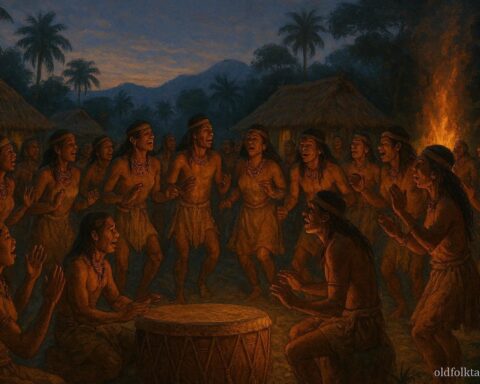
In one Mixtec community high in the Oaxacan mountains, the ceremonial life proceeded as it had for generations. At specific times throughout the year, the ceremonial leaders would gather with the community to perform rituals that affirmed relationships with the natural world. Sacred drums would sound their deep rhythms carrying across the forested slopes, echoing through valleys, reaching into places where humans rarely walked. These drum calls were understood as invitations and reminders, asking animals to maintain their proper roles, affirming the balance, and ensuring that all beings remembered their participation in the larger whole.
Among the deer population in the mountains surrounding this community, there was one particularly large and strong buck a magnificent animal in his prime, with antlers that branched impressively and a bearing that suggested power and independence. This deer had grown accustomed to his dominance among his kind, had never known significant challenge or threat, and had developed what might be called, if deer possessed such things, a sense of superiority and self-sufficiency.
Click to read all South American Folktales — timeless stories from the Andes to the Amazon.
When the ceremonial drums sounded their rhythmic calls across the mountains calls that had always brought a response from the deer, a sense of recognition and participation in the larger pattern this particular buck felt something different. Instead of the usual acknowledgment that pulled at something deep within the animal’s being, he felt resistance. Why should he respond to these human ceremonies? He was strong, independent, successful in his own terms. He needed nothing from humans and their strange rituals. The drum calls, which other deer experienced as invitations to maintain right relationship, struck him as presumptuous demands that he felt no obligation to honor.
And so, when the drums called, this deer deliberately turned away. Where other deer felt the pull of the rhythm and moved in ways that maintained their proper patterns neither approaching too close to human settlements nor retreating too far into inaccessible wilderness, neither overgrazing areas nor abandoning them entirely this buck went his own way. He established his territory in areas that disrupted the traditional patterns, led his does and younger deer away from the routes they had always followed, and generally refused to participate in the balanced relationship the ceremonies were meant to maintain.
At first, the disruption seemed minor. But gradually, consequences began to spread like ripples from a stone dropped in still water. Hunters who went to the traditional areas where deer had always been found returned empty-handed. The deer had moved to different locations, breaking patterns that had been reliable for generations. Without the expected harvest of venison, some families faced genuine hardship. The carefully managed relationship between human hunting and deer population which had sustained both species in healthy balance began to break down.
But the effects extended beyond hunting. The deer, led by the rebellious buck, overgrazed certain areas while abandoning others. Plants that depended on moderate deer grazing to thrive became weakened by overuse. Other areas, which had been kept open and healthy by regular deer presence, began to grow dense and tangled. The balance of vegetation shifted, affecting countless other species insects, birds, smaller mammals that depended on specific plant communities.
Predators, unable to find deer in their usual territories, began to range more widely, sometimes coming dangerously close to human settlements in search of prey. Some predators starved when deer populations concentrated in areas too difficult or dangerous to hunt. The entire ecological web, maintained for generations through the proper participation of all species in their roles, began to fray and distort.
The Mixtec community recognized that something fundamental had shifted. The ceremonial leaders consulted, performed divination, and came to understand that the disruption originated with one of the deer, a powerful buck who had refused the drum’s call, who had rejected his role in the maintained balance, whose rebellion had influenced others of his kind to abandon the patterns that kept everything in proper relationship.
This was a serious matter, not easily resolved. The deer’s refusal was not simply an inconvenience but a genuine threat to the cosmic balance that sustained all life in the region. The ceremonial leaders understood that they could not force the deer to participate balance maintained through coercion was not true balance. But they could try to call more insistently, to strengthen the ceremonies, to make the invitation clearer and more compelling.
They organized an elaborate series of rituals, more extensive than usual, with the participation of the entire community. The drums sounded not for a single ceremony but for days, their rhythms carrying continuously across the mountains. Offerings were made at sacred sites throughout the deer’s range. Prayers were spoken that acknowledged the deer’s importance, honored their role in the balanced whole, and invited them back into proper relationship.
For days, there was no response. The rebellious buck continued his willful independence, ignoring the insistent call of the drums. But the other deer, who had been led astray but who still felt the pull of ancient patterns deep within their nature, began to waver. The continuous drumming, the intensity of the ceremonies, the clear invitation back into balance these began to work on them, pulling against the buck’s influence.
Finally, something shifted. Whether the buck himself relented, or whether he was simply overwhelmed by the return of the other deer to their proper patterns, the disruption began to ease. The deer gradually resumed their traditional movements, reestablishing the patterns that had been abandoned. They returned to familiar ranges, began grazing in ways that maintained rather than disrupted vegetation balance, and once again became present in the areas where hunters expected to find them.
As the deer returned to their proper roles, the larger balance began to restore itself. Hunters found game again. Vegetation patterns stabilized. Predators returned to their usual territories. The ecological web, stretched and stressed by the disruption, relaxed back toward its sustainable configuration. The crisis passed, and harmony returned fragile and requiring ongoing attention, but present once more.
The Mixtec community understood that this restoration was not guaranteed to last without vigilance. The incident with the rebellious deer had taught them something important: balance is not automatic or self-sustaining but requires active, ongoing participation from all beings. Even one powerful individual refusing to fulfill their role can disrupt the entire web of relationships. The ceremonies that called animals to participate in balance were not optional luxuries but necessary reminders, essential invitations that helped maintain the willing cooperation of all species in the patterns that sustained life.
The story of the deer who refused the drum became a teaching tale, told to remind each generation both human and, in ways appropriate to their understanding, animal that balance requires participation from all beings, that no creature is so independent as to be exempt from their role in the larger whole, and that refusing to participate in maintained harmony brings consequences that extend far beyond the individual to affect the entire community of life.
Click to read all Andean Highland Folktales — echoing from the mountain peaks of Peru, Bolivia, and Ecuador.
The Moral Lesson
This Mixtec tale teaches that balance in natural and social systems requires the active participation of all beings in their proper roles, and that even a single powerful individual refusing to fulfill their part can disrupt the entire web of relationships sustaining life. The rebellious buck’s error was believing his strength and independence exempted him from participation in the larger patterns that he could refuse his role in the maintained balance without consequence. The story reminds us that in indigenous worldviews, harmony is not automatic but must be actively sustained through proper conduct and willing cooperation across species boundaries. No being, regardless of power or apparent self-sufficiency, exists in isolation from the intricate relationships that connect all life.
Knowledge Check
Q1: What is the purpose of ceremonial drums in Mixtec tradition as portrayed in this story?
A1: In Mixtec tradition, sacred drums used in certain ceremonies serve as a form of communication across species boundaries, carrying messages in rhythms that animals with proper receptivity can hear and comprehend. These drum calls are not attempts to control or dominate animals but invitations and reminders asking animals to maintain their proper roles in the natural order. The ceremonies affirm reciprocal relationships between species, honor the roles different creatures play in sustaining the whole, and ensure that animals understand and participate in their place in the larger pattern of balance that sustains all life.
Q2: What role do deer play in maintaining balance in Mixtec cosmology?
A2: Deer in Mixtec understanding are not simply resources to be hunted but active participants in a complex ecological system. They maintain important balance as prey animals whose presence feeds both human communities and predator species; they shape vegetation patterns through their grazing; and they move between forest and field in ways that connect different ecological zones. Their numbers, behavior, and relationship with humans need to remain in proper proportion for the entire ecosystem to function harmoniously. They are understood as having responsibilities in the larger web of relationships, not just as passive elements.
Q3: Why did the powerful buck refuse to respond to the ceremonial drum calls?
A3: The magnificent buck, accustomed to his dominance and never having faced significant challenge, developed a sense of superiority and self-sufficiency that made him resistant to the drum calls. Where other deer experienced the rhythms as invitations to maintain right relationship, he interpreted them as presumptuous demands. He believed his strength and independence meant he needed nothing from humans and their ceremonies, that he had no obligation to honor their rituals, and that he could go his own way without participating in the balanced relationships the ceremonies were meant to maintain.
Q4: What consequences resulted from the deer’s refusal to participate in the balanced order?
A4: The buck’s rebellion created cascading disruptions: hunters found no deer in traditional areas, causing food hardship for families; the carefully managed relationship between hunting and deer population broke down; deer overgrazed certain areas while abandoning others, disrupting plant communities; vegetation imbalances affected insects, birds, and smaller mammals dependent on specific plant communities; predators ranging more widely came dangerously close to human settlements or starved when deer became inaccessible; the entire ecological web maintained through proper participation of all species began to fray and distort, threatening the region’s sustained balance.
Q5: How did the Mixtec community attempt to restore balance after the deer’s rebellion?
A5: The ceremonial leaders organized elaborate, extended rituals more extensive than usual, with full community participation. The drums sounded continuously for days rather than a single ceremony, their rhythms carrying persistently across the mountains. Offerings were made at sacred sites throughout the deer’s range, and prayers were spoken acknowledging the deer’s importance, honoring their role, and inviting them back into proper relationship. The approach was not coercive but intensively invitational, recognizing that balance maintained through force is not true balance, it required the deer’s willing return to participation.
Q6: What cultural values about interconnection, balance, and responsibility does this Oaxacan highland story convey?
A6: The story embodies Mixtec values emphasizing that balance is not automatic but requires active, ongoing participation from all beings in their proper roles; that no creature is independent enough to be exempt from responsibility to the larger whole; that individual refusal to participate in maintained harmony brings consequences extending far beyond oneself to affect the entire community of life; and that ceremonies serve essential functions in reminding all beings of their interconnected roles. It reflects indigenous understanding that humans, animals, plants, and spirits exist in reciprocal relationships requiring willing cooperation, that power and strength do not equal exemption from responsibility, and that harmony must be actively sustained through proper conduct and ceremonial practice rather than assumed as a permanent state.
Source: Adapted from Mixtec oral traditions recorded in regional ethnographic studies of Mixtec cosmology, ceremonial practices, and understanding of human-animal relationships in the Oaxacan mountain communities.
Cultural Origin: Mixtec people, Oaxacan Highlands, Mexico