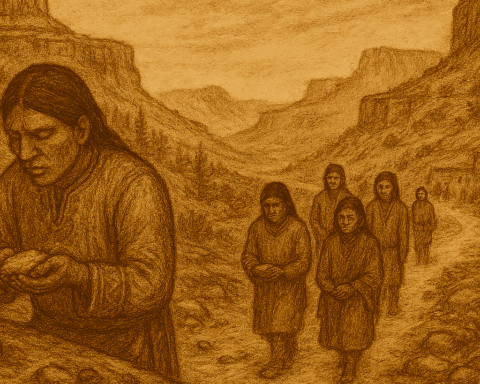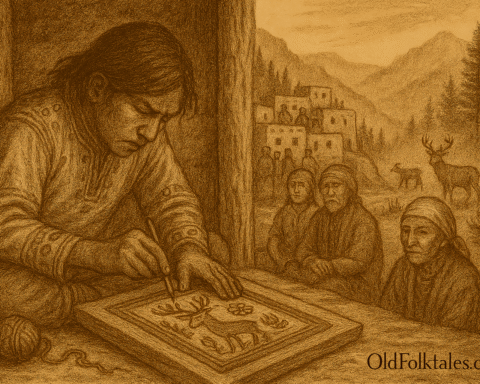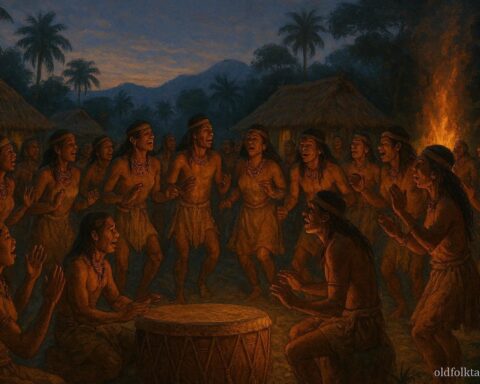
In the cloud-draped mountains of Oaxaca, where the air hangs thick with moisture and ancient forests cling to steep slopes, the Mixe people have lived for countless generations, maintaining a relationship with the land and its creatures that goes far deeper than simple subsistence. In Mixe cosmology, animals are not mere resources but beings with their own consciousness and agency, connected to spiritual forces that observe human behavior and respond accordingly.
Among the many animals that inhabit these highland forests, the deer held particular significance. Deer provided meat, hides, tools from their bones and antlers essential resources for survival in the mountains. But the Mixe understood that successful hunting depended on more than skill with weapons or knowledge of trails. It depended on maintaining proper relationship with the deer themselves and with the spiritual guardians who watched over them. The elders taught that there existed a sacred deer, a spirit being who moved unseen among the mortal herds, observing human actions and listening to human words, especially those spoken by leaders.
Click to read all Andean Highland Folktales — echoing from the mountain peaks of Peru, Bolivia, and Ecuador.
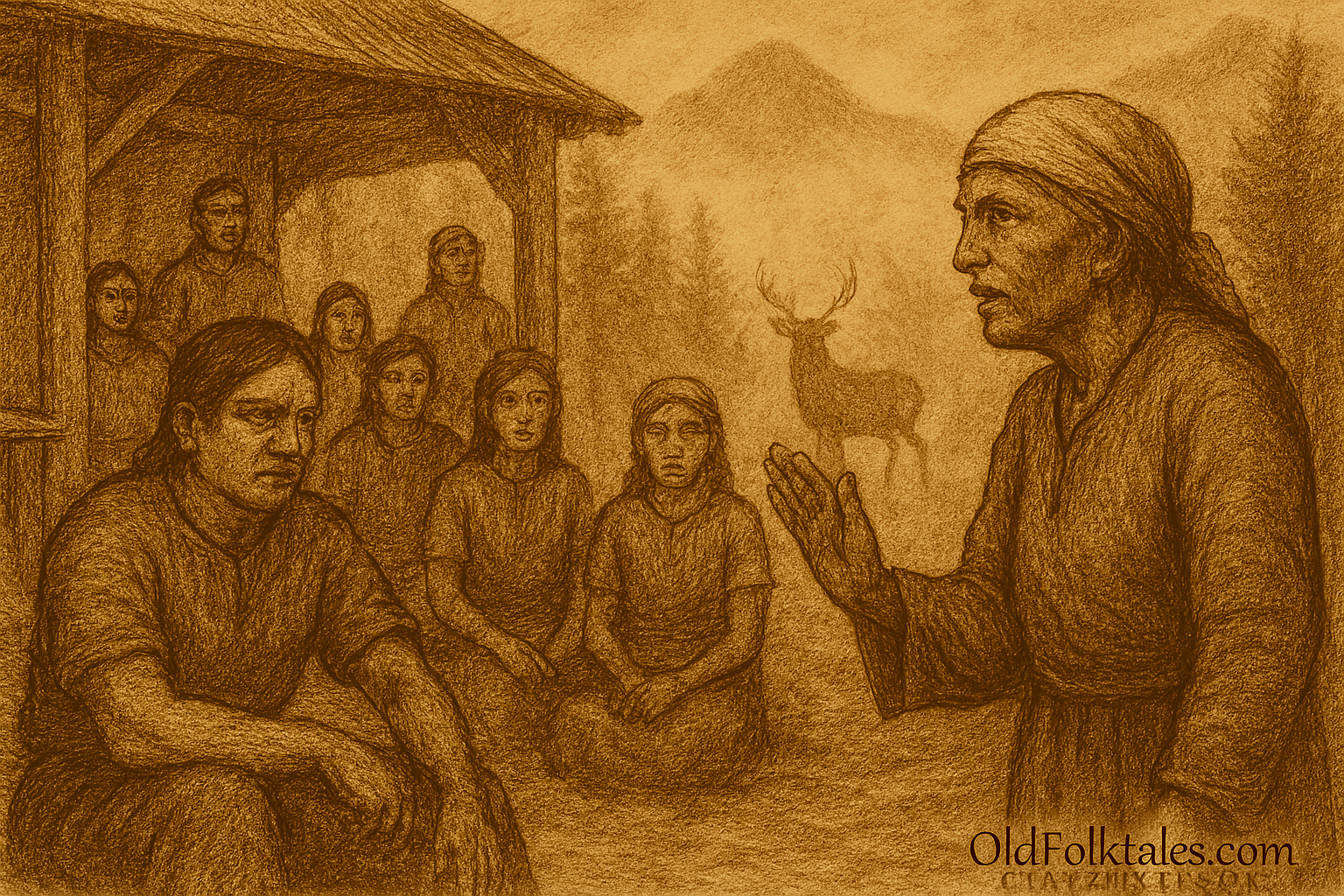
In one Mixe community nestled high in the Oaxacan mountains, the council of elders met regularly to make decisions affecting the village. These gatherings dealt with matters both practical and profound when to hunt, how to manage common lands, how to resolve disputes, how to maintain relationships with neighboring communities. The council met in a traditional structure on the village edge, a place considered liminal, standing between the human settlement and the wild forest where spirits moved freely.
The elders had always taught that these meetings were witnessed by forces beyond the visible participants. “The sacred deer watches the council,” they would remind younger leaders. “It hears what we say. It knows whether we speak with honesty and concern for the community or with selfish intent. And what it hears, it carries to the guardians of the forest. The deer we hunt are given or withheld based on the character of our leadership.”
For many years, the council had functioned with integrity. Leaders spoke honestly about challenges facing the community. They debated openly but with respect. When making decisions about resource use, they considered not just immediate benefits but long-term sustainability and the wellbeing of the entire community, including those not present the young, the yet unborn, the creatures of the forest who shared the land. And during these years, hunting was successful. Deer were plentiful. The community ate well, and hunters returning from the forest spoke of how game seemed to present itself, as if offered rather than taken by force.
But gradually, as is sometimes the way with human institutions, the quality of leadership began to change. Several of the elder council members passed away, and those who replaced them were less formed by the old teachings, less convinced that invisible forces watched and listened, more focused on immediate practical concerns and personal advantage.
One man in particular, named Teo, rose to prominence on the council. He was articulate and confident, capable of persuasive argument, and he used these skills to advance his own interests and those of his family and close allies. When the council met to decide hunting territories, Teo argued forcefully that the best grounds should be allocated to certain families always including his own using justifications that sounded reasonable but served private benefit rather than communal good.
When discussions arose about managing common resources forest areas where firewood could be gathered, sections of river where fish spawned, hilltops where medicinal plants grew Teo consistently steered decisions toward outcomes that advantaged those loyal to him while disadvantaging others. The spoke of efficiency and productivity, of rewarding the hardest workers, of not coddling those who contributed less. But underneath the reasonable-sounding rhetoric was a pattern of self-serving manipulation.
Other council members, intimidated by Teo’s forceful personality or swayed by his arguments, went along. Some genuinely believed his reasoning. Others recognized the selfishness but lacked the courage to challenge him openly. The council meetings became less about discerning the best path for the entire community and more about Teo dominating discussions and engineering outcomes that served his faction.
An old woman named Luz, one of the few remaining council members formed in the traditional ways, repeatedly reminded the others: “The sacred deer watches the council. Be careful what words you speak here. Be careful what intentions you bring to this space.” But Teo would wave away her warnings with condescending patience. “Grandmother, those are beautiful old stories, but we live in practical times and must make practical decisions. There is no magical deer listening to our meetings. We answer to the community, not to forest spirits.”
Then the hunting began to fail. At first, it seemed like normal variation some seasons are less productive than others. But as months passed, the pattern became undeniable. Hunters would spend days in the forest and return empty-handed. Deer that had been plentiful seemed to have vanished from territories where they had always been found. Tracks would lead hunters in circles. Animals that should have been easy targets would somehow sense approaching hunters and flee before any shot was possible.
The community began to face real hardship. Meat became scarce. The protein deficiency affected health, especially among children and elders. Hunters returned frustrated and bewildered. “It’s as if the deer have abandoned us,” they reported. “As if they refuse to be caught.”
Luz called for a special council meeting. When the members gathered, she spoke with the authority of age and traditional knowledge. “The hunting fails because we have failed. The sacred deer watches the council, and what it has witnessed is selfishness, manipulation, and disregard for the community’s true wellbeing. The forest guardians know what happens in this room. The deer we hunt are connected to the sacred deer that listens to our words and judges our intentions. When leadership is corrupt, even in small ways, even when disguised with reasonable words, the consequences extend beyond this room.”
Teo tried to dismiss her words. “This is superstition. The hunting fails because of weather patterns, or because we’ve over-hunted certain areas, or because of natural population cycles. To blame it on some spirit deer judging our council meetings is to avoid addressing real practical problems.”
But other council members were less certain. The correlation between the deterioration of their meetings and the failure of hunting was too clear to ignore. And in their hearts, even those who had gone along with Teo’s manipulations felt the truth of what Luz was saying. They had known the meetings were becoming corrupt. They had felt uncomfortable with the selfishness disguised as practicality. They had sensed they were violating something, even if they couldn’t articulate exactly what.
A younger council member, a woman named Elena who had remained mostly silent during the recent meetings, finally spoke. “I have felt wrong in these gatherings for months. I have watched decisions made that serve some at the expense of others, have heard arguments that sound reasonable but feel dishonest. If Grandmother Luz says the sacred deer watches us, I believe her. And if the hunting fails because we have corrupted our leadership, then we must return to integrity.”
One by one, other members began to acknowledge what they had allowed to happen. They described specific decisions they now regretted, moments when they had remained silent when they should have spoken, times when they had prioritized personal benefit over communal good. Even some of Teo’s closest allies admitted they had felt uncomfortable but lacked the courage to challenge his dominance.
Teo himself, seeing the consensus forming against him and perhaps feeling the weight of accumulated guilt, finally broke down. “I wanted to provide well for my family,” he said, his voice rough with emotion. “I told myself I was being practical, being smart. But you’re right. I used this council for personal advantage. I manipulated outcomes. I dismissed sacred teachings as superstition because it was convenient to do so. I’m sorry.”
The council committed to fundamental change. They reestablished ground rules about how meetings would be conducted with explicit attention to speaking honestly, considering all community members in decision-making, and remaining conscious that their words and intentions had effects beyond the immediate room. They revisited recent decisions and corrected those that had been unjustly self-serving. They invited elders like Luz to attend every meeting and explicitly granted them authority to call out when discussions veered toward manipulation or selfishness.
Most importantly, they renewed their collective awareness that leadership is accountable not just to those physically present but to broader forces community members absent from meetings, future generations, the land and its creatures, and spiritual witnesses like the sacred deer that embodies the principle of unseen accountability.
Within weeks of these changes, the hunting began to improve. Deer reappeared in traditional territories. Hunters reported that the strange sense of animals avoiding them had lifted. A successful hunt brought meat back to the village, and the community celebrated not just the food but the restoration of right relationship.
The story of those months became a teaching tale, repeated by Luz and other elders to each new generation of leaders. “The sacred deer watches the council,” they would remind them. “Your words and intentions are witnessed, even when you think no one sees. Leadership is accountable not just to those who can vote or complain, but to invisible standards of integrity that the cosmos itself enforces. Speak with honesty. Act with genuine concern for the whole community. Remember that you are watched, and that the consequences of corrupt leadership extend far beyond the meeting room.”
Click to read all South American Folktales — timeless stories from the Andes to the Amazon.
The Moral Lesson
This Mixe tale teaches that leadership carries accountability beyond immediate human observation those in positions of authority are responsible to broader moral standards that cannot be evaded simply because no one seems to be watching. The sacred deer represents the principle of unseen witness, the idea that our words and intentions have consequences whether or not they’re immediately visible. Teo’s error was believing that if he could construct persuasive arguments and dominate discussions, he could use leadership for personal benefit without consequence. The story reminds us that corrupt leadership, even when disguised with reasonable-sounding justifications, damages the entire community and that integrity in governance is not an optional luxury but essential to collective wellbeing. In indigenous worldviews, humans exist within networks of relationship that extend beyond the human sphere, and maintaining these relationships through ethical behavior is fundamental to community survival and prosperity.
Knowledge Check
Q1: What was the significance of the sacred deer in Mixe highland culture?
A1: In Mixe cosmology, the sacred deer was a spirit being believed to observe human behavior, particularly the conduct and words of community leaders during council meetings. This spiritual deer was thought to listen to what was said in leadership gatherings and carry that information to the guardians of the forest, who would respond by either providing or withholding game animals. The sacred deer represented the principle of unseen accountability that leadership is witnessed and judged by forces beyond immediate human observation, and that the character of governance affects the community’s relationship with nature.
Q2: How did the council’s leadership begin to deteriorate in the Mixe community?
A2: The deterioration began when elder council members who had been formed by traditional teachings passed away and were replaced by leaders less convinced that invisible forces watched their meetings. Teo, an articulate and forceful man, rose to prominence and used his persuasive skills to manipulate decisions for personal and factional advantage. He steered discussions about hunting territories, resource allocation, and communal matters toward outcomes that benefited himself and his allies, disguising self-interest with reasonable-sounding arguments about efficiency and productivity while dismissing traditional warnings about the sacred deer as superstition.
Q3: What consequences followed the council’s corrupt leadership practices?
A3: Following the council’s decline into self-serving manipulation, hunting became increasingly unsuccessful. Deer that had been plentiful seemed to vanish from traditional territories. Hunters would track animals fruitlessly, spending days in the forest and returning empty-handed. Game appeared to actively avoid hunters in ways that seemed almost intentional. The community faced genuine hardship as meat became scarce, affecting health especially among children and elders. The correlation between deteriorating council integrity and hunting failure was so clear it could not be dismissed as coincidence.
Q4: What did Luz mean when she said “the sacred deer watches the council”?
A4: Luz was reminding the council that their meetings were witnessed by spiritual forces, specifically the sacred deer that observed their words and intentions and carried that information to the forest guardians who controlled whether hunting would be successful. She meant that leadership is accountable not just to physically present community members but to broader moral and spiritual standards. Even when leaders thought no one was watching or could hold them accountable, their corruption was witnessed and had real consequences. The phrase embodied the Mixe understanding that humans exist within networks of relationship extending beyond the human sphere.
Q5: How did the council restore integrity and successful hunting?
A5: The council restored integrity through multiple steps: members acknowledged their failures and specific instances where they had prioritized personal benefit over communal good; they reestablished ground rules about conducting meetings with honesty and considering all community members; they revisited and corrected unjust recent decisions; they invited elders like Luz to attend every meeting with explicit authority to call out manipulation; and most importantly, they renewed collective awareness that leadership is accountable to forces beyond the immediate room. After these changes, hunting began to improve within weeks.
Q6: What cultural values about leadership and accountability does this Oaxacan highland story convey?
A6: The story embodies Mixe values emphasizing that leadership carries moral accountability beyond human observation, that words and intentions have consequences in the broader web of relationships connecting humans to nature and spiritual forces, and that integrity in governance is essential to community wellbeing. It reflects the indigenous understanding that humans are not separate from or superior to nature but exist within networks of reciprocal relationship where ethical behavior is required for survival and prosperity. The tale teaches that corrupt leadership, even when disguised with rational justifications, damages these relationships and that maintaining right conduct requires consciousness of unseen witnesses and accountability to standards that transcend immediate practical considerations.
Source: Adapted from Mixe highland oral traditions recorded in regional ethnographic studies of Mixe cosmology and governance practices in the Oaxacan mountain communities (various anthropological collections, 1980s-2000s).
Cultural Origin: Mixe people, Oaxacan Highlands, Mexico