In a grand colonial household built of stone and shaded by wide verandas, there lived a master whose wealth was great and whose temper was cruel. His land stretched far beyond sight, worked by servants and laborers who feared his voice more than hunger itself. Among them was one servant of no title or privilege, a man whose clothes were plain and whose position placed him at the bottom of the household order.
From dawn to nightfall, the servant endured sharp words and harsher commands. The master delighted in humiliation, assigning tasks not to be completed, but to disgrace. If the servant failed, laughter followed; if he succeeded, the goalposts were moved. Yet the servant did not argue, nor did he rebel. He listened carefully, bowed respectfully, and stored every word in his mind.
Discover the vibrant legends of Guatemala, Honduras, and Costa Rica in our folktale collection.
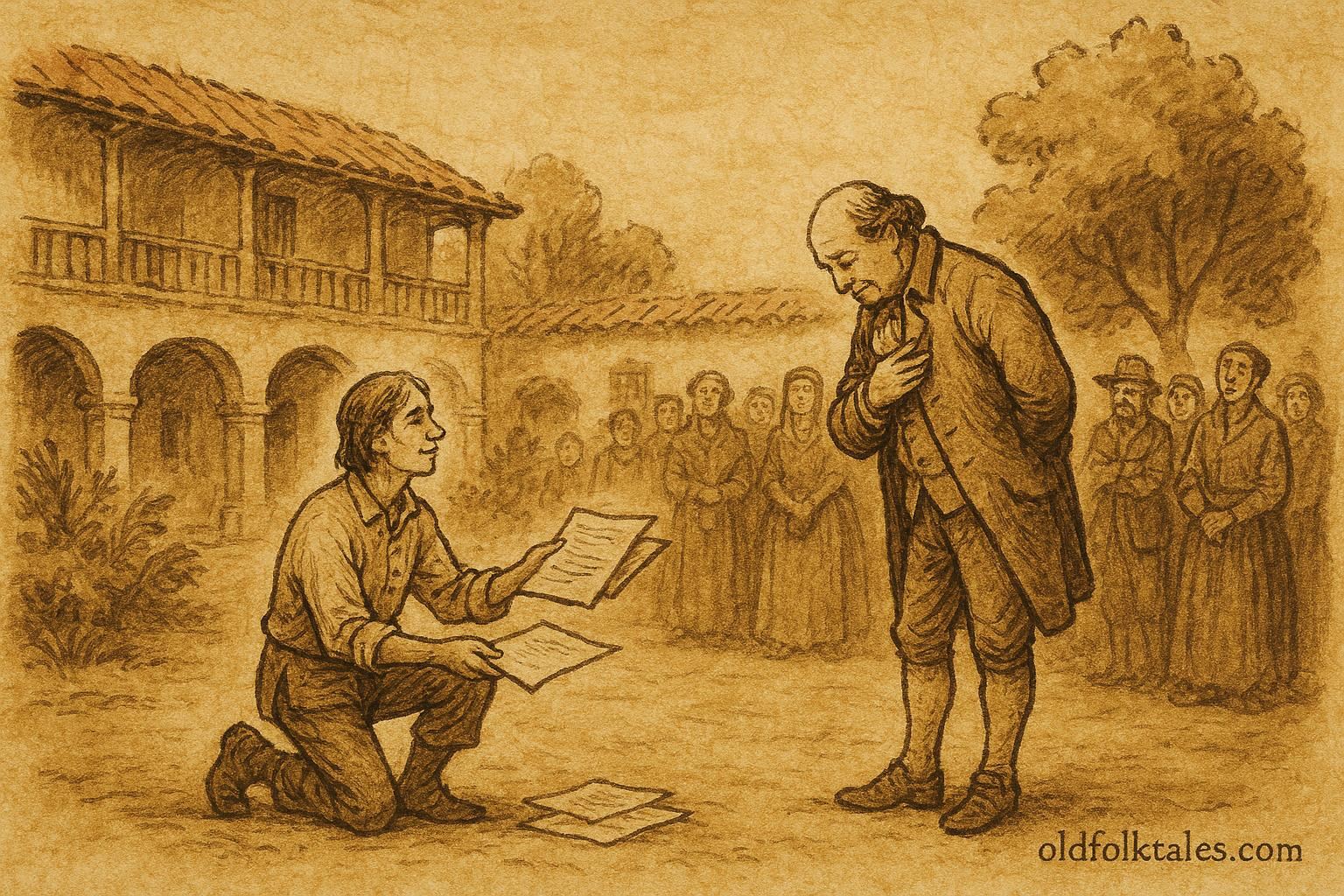
One morning, before guests gathered in the courtyard, the master issued a command meant to mock. He demanded that the servant complete an impossible task using nothing but what had already been given to him. The household waited, expecting failure. Instead, the servant studied the wording of the order, considered its limits, and carried it out exactly as spoken, no more, no less. When the result was presented, the guests murmured in surprise. The servant had obeyed perfectly, while exposing the foolishness of the command itself.
Annoyed but unwilling to admit fault, the master devised another challenge, this one more public and more elaborate. Again, the servant listened without interruption. He asked no questions, gave no excuses, and showed no frustration. Using careful logic and gentle wordplay, he completed the task in a way that followed the master’s instructions precisely, yet revealed the greed and arrogance behind them.
Each success drew quiet admiration from the onlookers. They saw not defiance, but intelligence. The servant never raised his voice or accused his master. He allowed the master’s own words to betray him. With every task, the master’s authority weakened, not through force, but through exposure.
At last, the master’s greed led him too far. In his desire to shame the servant completely, he spoke hastily and publicly. The servant carried out the command in front of witnesses, fulfilling it so literally that the master himself became the object of laughter. What had been meant as humiliation turned inward, and the master stood speechless, trapped by his own careless pride.
The servant did not celebrate. He bowed as he always had and returned to his duties. Yet the household had changed. Whispers of respect followed him, and the master, though still powerful, was more cautious. The servant had not overthrown authority, but he had proven that wisdom could survive beneath it.
Immerse yourself in Latin America’s stories of passion, transformation, and spirit.
Moral Lesson
This folktale teaches that patience and intelligence can quietly challenge injustice. True power lies not in cruelty or rank, but in clarity of thought and moral restraint.
Knowledge Check
1. Who is the main character of the story?
A lowly servant living under a cruel colonial master.
2. How does the servant respond to mistreatment?
With patience, careful listening, and clever obedience.
3. What tools does the servant use to succeed?
Logic, wordplay, and precise interpretation of commands.
4. Why does the master become embarrassed?
His greed and careless words expose him publicly.
5. Does the servant seek revenge or authority?
No, he seeks dignity and survival, not power.
6. What social reality does the story reflect?
Colonial hierarchies where servants relied on wit to endure injustice.
Source: Colonial moral folktales; Spanish-American oral tradition
Cultural Origin: Mexico and Central America (Spanish Colonial Latin American folklore)