In the central highlands of Mexico, where volcanic mountains rise above fertile valleys and morning mist clings to ancient agricultural terraces, the Otomí people have cultivated maize for thousands of years. This relationship with corn is not simply agricultural but profoundly spiritual—the golden grain is not merely food but a sacred gift, the substance that sustains life, the center around which the entire world turns. In Otomí cosmology, as in many Mesoamerican traditions, maize was given to humanity by divine forces, and maintaining this gift requires more than skillful farming, it demands gratitude, respect, and proper acknowledgment of the sacred relationship between people and the plant that feeds them.
The Corn Mother, known in various Otomí communities by different names but always understood as the spiritual essence of maize itself, was believed to watch over the crops and the people who depended on them. She was not a distant deity but an intimate presence, as close as the fields themselves, responsive to how humans treated the corn and whether they approached their relationship with the plant with proper reverence. The traditional teachings emphasized that maize was not taken but given, not owned but received, and that this gift required constant acknowledgment through ritual, prayer, and grateful conduct.
Click to read all South American Folktales — timeless stories from the Andes to the Amazon.
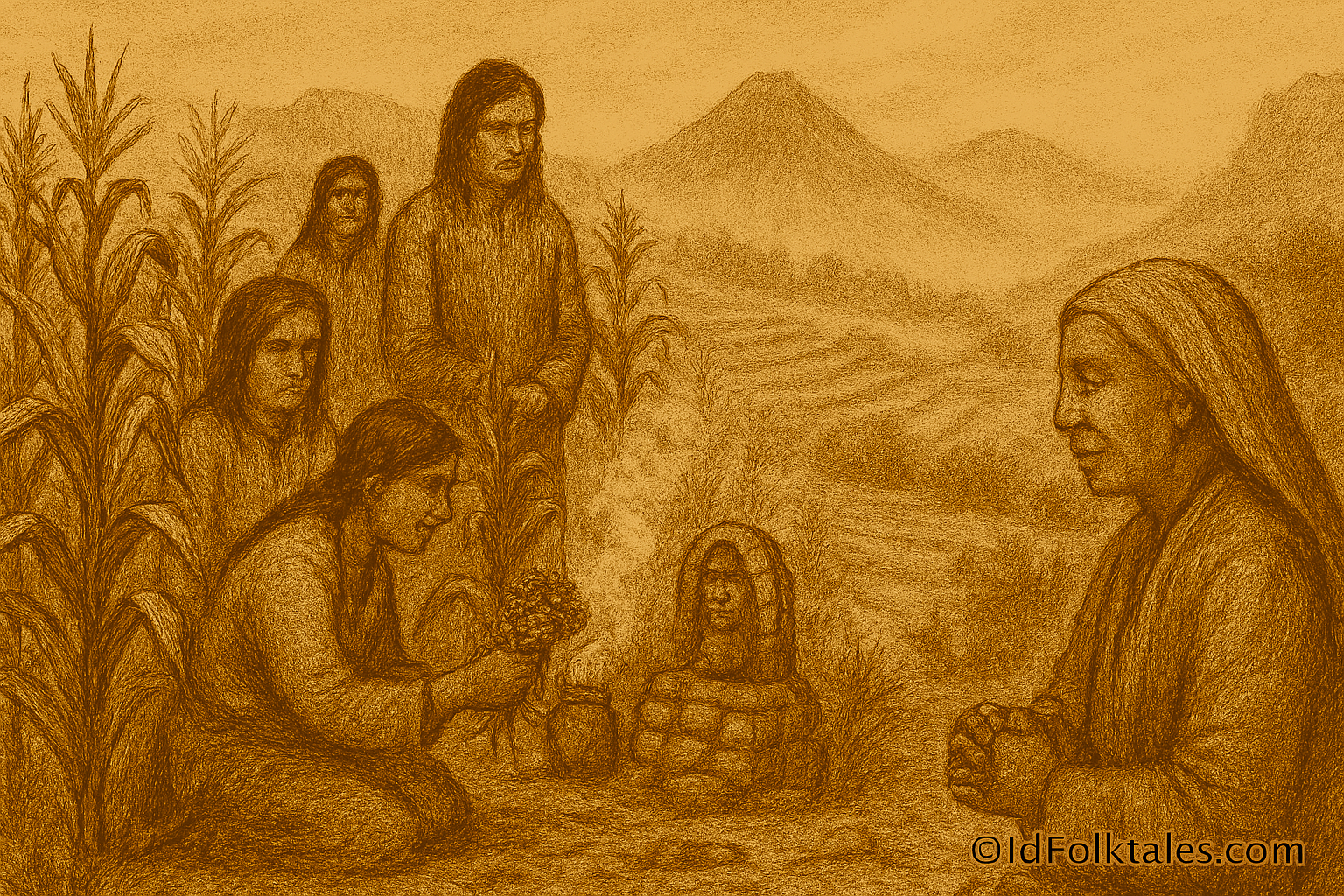
In one Otomí village nestled in a mountain valley where terraced fields climbed the hillsides in neat rows, the people had maintained these traditions faithfully for generations. Before planting, they performed ceremonies asking the Corn Mother’s blessing and permission to place seeds in the earth. During the growing season, they made regular offerings at small shrines in the fields copal incense, flowers, prayers spoken in their native tongue. At harvest time, the first ears were not consumed but offered back with elaborate thanksgiving rituals that acknowledged the sacred cycle of giving and receiving. The corn was never wasted or treated carelessly, and even the humblest kernel was recognized as bearing the Corn Mother’s gift.
And during those generations, the crops flourished. Even in years when neighboring villages struggled with drought or pests, this village’s maize grew strong and abundant. The stalks stood tall and green, the ears developed full and heavy, the kernels shone like captured sunlight. People understood that this abundance was not merely the result of good farming technique or favorable weather, but evidence of maintained relationship the Corn Mother’s response to proper respect and gratitude.
But gradually, as sometimes happens when abundance becomes routine and memory grows short, the village began to take their prosperity for granted. Perhaps it started with those who had not directly experienced hardship and therefore did not viscerally understand how precarious the gift of food truly is. Perhaps it was influenced by contact with those who saw maize as merely a crop rather than a sacred being. Or perhaps it was simply human forgetfulness, the way attention naturally drifts when things go well and vigilance seems unnecessary.
The ceremonies began to be performed less carefully. What had once been elaborate rituals conducted with full community participation became abbreviated affairs attended by only the most traditionally-minded elders. The offerings in the fields, once made regularly with genuine devotion, became occasional gestures done more from habit than authentic gratitude. At harvest, the thanksgiving ceremonies were shortened or skipped entirely after all, people reasoned, they had worked hard in the fields, had earned their harvest through labor, and could surely consume their crops without elaborate rituals that took time away from other activities.
Some villagers began to speak of the corn as if it were merely their possession, the product of their own efforts, with no acknowledgment of the sacred gift dimension. “My maize,” they would say with pride, “that I grew with my own hands.” When corn was wasted dropped carelessly, fed to animals without thought, allowed to spoil through neglect there was no longer the traditional sense of offense against the sacred. It was just corn, just food, just a crop like any other.
The elders watched these changes with growing alarm and warned that forgetting gratitude would have consequences. “The Corn Mother sees all,” they reminded people. “She knows whether we approach her gift with reverence or take it for granted. When gratitude dies, the gift withdraws. This has always been so.” But their warnings were dismissed by many as old superstitions, unnecessary fears about metaphorical spirits when what mattered was practical farming knowledge and hard work.
Then the corn began to fail. It happened gradually at first a slight reduction in yield that could be attributed to normal variation. But the decline continued year after year, becoming more pronounced and more troubling. The stalks that had once grown tall and strong now struggled to reach half their former height. The leaves yellowed prematurely. The ears that formed were smaller, with gaps where kernels should have been, and many plants produced no ears at all.
Pests that had rarely been problems suddenly became devastating. A disease that neighboring villages managed to control spread unchecked through these fields. The soil itself seemed to lose its vitality, becoming hard and unresponsive even with the same cultivation techniques that had worked for generations. The abundant harvests that the village had taken for granted dwindled to barely enough to sustain them, and then to less than enough. Families who had always had surplus corn found themselves rationing, then hungry, then facing genuine starvation.
The community tried everything they knew from a practical standpoint. They adjusted planting times, tried different seed varieties, modified irrigation methods, fought pests with every technique available. But nothing worked. The corn continued to fail, and the village faced a crisis unlike anything in living memory. The abundance they had assumed would always continue had disappeared, and with it came the terrifying recognition that they had lost something essential they didn’t know how to restore.
Finally, in desperation, the community turned to the eldest among them, those who still remembered and honored the old ways. One ancient woman, a keeper of traditional knowledge whose grandmother had taught her the proper ceremonies when she was young, spoke with the authority of one who has seen the patterns repeat across generations.
“The Corn Mother has turned away,” she said simply. “Not in anger, but in response to being forgotten. You treated her gift as if it were merely yours, as if your labor alone created the maize, as if gratitude and acknowledgment were unnecessary superstitions. The corn did not fail because of pests or disease or poor soil these are merely the visible symptoms of broken relationship. When you stopped approaching the maize with reverence, when you ceased making proper offerings and speaking prayers of thanks, when you allowed gratitude to die in your hearts, the Corn Mother withdrew her blessing. What you see dying in your fields is the physical manifestation of spiritual neglect.”
The truth of her words struck the community like a blow. They recognized, with the clarity that crisis sometimes brings, how far they had drifted from proper relationship. They had treated as dispensable exactly what was most essential the gratitude and reverence that maintained the sacred bond between themselves and the sustenance that kept them alive.
The restoration began not in the fields but in the hearts and practices of the people. The ancient woman guided them in relearning the ceremonies many had forgotten or never properly learned. They prepared elaborate offerings copal incense carefully gathered and blessed, flowers grown specifically for this purpose, the best remaining corn from their diminished stores offered back with acknowledgment that it had never been truly theirs to begin with.
The entire community participated in ceremonies of apology and renewed commitment. They addressed the Corn Mother directly, acknowledging how they had taken her gift for granted, confessing their neglect of proper gratitude, asking not for automatic restoration but for the opportunity to rebuild right relationship through consistent reverent conduct. These were not quick rituals performed to manipulate a result, but genuine expressions of changed understanding they had learned through loss what they had failed to grasp through teaching.
The restoration did not happen instantly. But in the following planting season, approached with renewed ceremonies and authentic gratitude, the corn began to respond. The seeds that were planted with proper prayers and offerings germinated more strongly. The young plants that were tended with reverent attention grew straighter and greener. Slowly, season by season, as the village maintained their restored practices regular offerings in the fields, proper thanksgiving at harvest, careful treatment of every kernel as sacred gift the abundance began to return.
But something fundamental had changed in the people themselves. They would never again take the corn for granted, would never forget that what sustained them was a gift requiring gratitude. The ceremonies were no longer performed as obligation or habit but as genuine expression of thankfulness. When they ate, they remembered. When they planted, they asked permission. When they harvested, they gave thanks. The Corn Mother had not truly gone away she had simply withdrawn her blessing until her people remembered to acknowledge the relationship that sustained them.
The story of those hungry years became a teaching tale, told to each new generation to ensure they understood what their ancestors had learned through painful experience: that sustenance requires acknowledgment, that gifts unrecognized eventually withdraw, and that gratitude is not optional decoration on practical life but essential practice that maintains the relationships upon which all life depends.
Click to read all Andean Highland Folktales — echoing from the mountain peaks of Peru, Bolivia, and Ecuador.
The Moral Lesson
This Otomí tale teaches that sustenance whether food, resources, or any essential gift requires acknowledgment and gratitude to be maintained. The village’s error was treating maize as merely the product of their own labor, forgetting that it was fundamentally a sacred gift requiring reverence and thanksgiving. When gratitude died and corn was approached as simple possession rather than received blessing, the relationship broke and abundance withdrew. The story reminds us that in indigenous worldviews, practical success and spiritual relationship are inseparable you cannot maintain one while neglecting the other. The failure of crops was not supernatural punishment but natural consequence of broken relationship. More broadly, the tale teaches that taking gifts for granted, whether from nature, community, or any source, endangers their continuation, and that gratitude is not mere politeness but essential practice that maintains the bonds sustaining our lives.
Knowledge Check
Q1: Who is the Corn Mother in Otomí spiritual tradition and what is her significance?
A1: In Otomí cosmology, the Corn Mother is the spiritual essence of maize itself not a distant deity but an intimate presence as close as the fields, watching over crops and the people who depend on them. She is understood as responsive to how humans treat corn and whether they approach their relationship with the plant with proper reverence. In Mesoamerican traditions like the Otomí, maize is not merely food but a sacred gift given to humanity by divine forces. The Corn Mother embodies this gift and the relationship between people and the plant that sustains them, requiring gratitude, respect, and proper acknowledgment to maintain the blessing of abundant harvests.
Q2: What traditional practices did the Otomí village maintain to honor their relationship with maize?
A2: The village maintained multiple reverential practices: before planting, they performed ceremonies asking the Corn Mother’s blessing and permission to place seeds in earth; during growing season, they made regular offerings at field shrines including copal incense, flowers, and prayers in their native language; at harvest time, the first ears were not consumed but offered back with elaborate thanksgiving rituals acknowledging the sacred cycle of giving and receiving; corn was never wasted or treated carelessly, with even the humblest kernel recognized as bearing the Corn Mother’s gift. These practices reflected understanding that maize was not taken but given, not owned but received.
Q3: How did the village’s attitude toward corn gradually change?
A3: The village began taking prosperity for granted as abundance became routine. Ceremonies were performed less carefully and with diminishing participation; offerings became occasional gestures from habit rather than authentic devotion; thanksgiving rituals were shortened or skipped entirely with reasoning that hard work had earned the harvest without need for elaborate ceremony. People began speaking of corn as their possession “my maize that I grew” rather than acknowledging the sacred gift dimension. Wasted corn no longer carried traditional sense of offense against the sacred, being viewed as just food rather than sacred substance.
Q4: What happened when the village neglected proper gratitude and reverence?
A4: The corn began to fail progressively over multiple years: stalks that once grew tall and strong struggled to reach half their former height; leaves yellowed prematurely; ears were smaller with gaps where kernels should be, and many plants produced no ears at all. Previously minor pests became devastating, disease spread unchecked, and soil lost vitality despite unchanged cultivation techniques. Abundant harvests dwindled to barely sufficient, then inadequate, leading families from surplus to rationing to hunger and facing genuine starvation. Practical interventions adjusted planting times, different seed varieties, modified irrigation all failed to restore productivity.
Q5: How did the elder explain the crop failure to the desperate community?
A5: The elder explained that the Corn Mother had turned away not in anger but in response to being forgotten. She taught that the visible problems (pests, disease, poor soil) were merely symptoms of broken relationship. When the community stopped approaching maize with reverence, ceased proper offerings and prayers of thanks, and allowed gratitude to die, the Corn Mother withdrew her blessing. The crops failed not due to agricultural problems but as physical manifestation of spiritual neglect. The elder emphasized that treating the gift as mere possession created by labor alone, dismissing gratitude as unnecessary superstition, had severed the sacred bond sustaining abundance.
Q6: What cultural values about gifts, gratitude, and relationship does this central Mexican highland story convey?
A6: The story embodies Otomí values emphasizing that essential gifts require acknowledgment and gratitude to be maintained, that practical success and spiritual relationship are inseparable, and that sustenance is received rather than simply produced. It reflects Mesoamerican understanding that maize and humanity exist in sacred reciprocal relationship requiring constant attention through ritual and reverent conduct. The tale teaches that taking gifts for granted endangers their continuation, that gratitude is not optional politeness but essential practice maintaining life-sustaining bonds, and that consequences of broken relationship manifest in tangible, material ways. It conveys that what appears as practical failure often has spiritual roots, and restoration requires not just technical solutions but renewed reverence and authentic acknowledgment of gifts received.
Source: Adapted from Otomí oral traditions preserved in central highland folklore records and ethnographic documentation of Otomí agricultural rituals and spiritual relationship with maize .
Cultural Origin: Otomí people, Central Mexican Highlands, Mexico