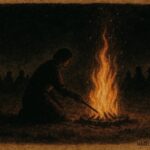
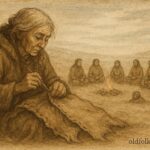
In the far north of Arctic Canada, winter stretched endlessly, and the sun often disappeared for weeks at a time. The darkness was heavy and cold, blanketing the land in silence. Inuit communities endured this long night by relying on one another, sharing warmth, and telling stories to keep hope alive. Among these tales was one that spoke of a remarkable child who, for a brief moment, borrowed daylight from the spirits to bring light to the people.
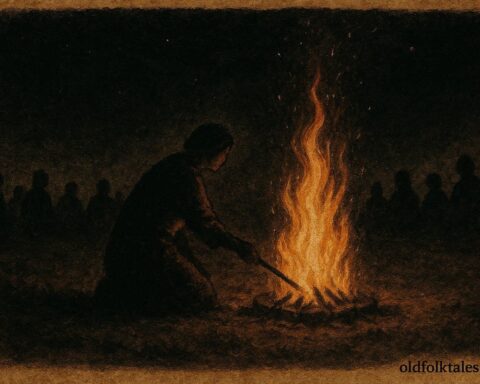
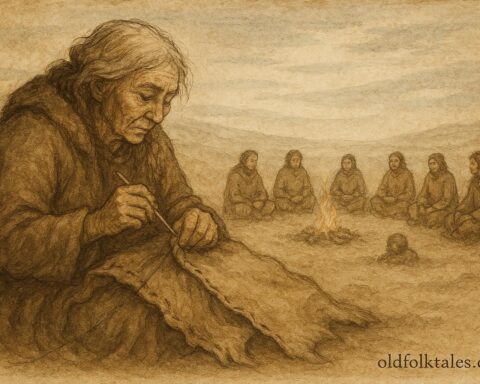
The story begins in a small village nestled along the frozen coastline. Families lived in tightly clustered snow shelters, with smoke rising from their fires. Inside, the elders told stories to the children, recounting the ways of the land, the sea, and the spirits who watched over them. Winter nights were long, and fear often accompanied the cold. The darkness seemed endless, and even the strongest hunters felt the weight of the sunless days.
Among the children was a young girl named Anana. She was small but quick, with eyes bright as the northern stars. Anana loved to watch the faint glow of twilight that appeared for only a few brief hours each day, and she longed for a time when the light might linger. She noticed how the elders worried about their supplies, how the hunters moved cautiously, and how even the children grew tired and restless under the unbroken darkness.
Explore the ancestral legends of Canada, Mesoamerica, and South America’s Indigenous tribes.
One night, while the village slept, Anana wandered alone toward the edge of the frozen tundra. She felt a strange energy in the air, as if the spirits of the land were awake and moving. The wind whispered secrets, and the snow glimmered under the faint starlight. Anana’s small heart filled with hope. She called out softly, asking the spirits to lend the village some light, just enough to lift their spirits and help them through the long night.
At first, nothing happened. The snow swirled around her, and the stars twinkled silently. But then, a gentle warmth began to touch her cheeks, and a faint glow appeared along the horizon. The spirits had heard her plea. From the darkness, a ribbon of daylight stretched across the sky, soft but clear, illuminating the village in a golden shimmer. The children and elders awoke, sensing the unusual glow. Windows of the snow shelters reflected the light, and the whole camp seemed alive with quiet amazement.
Anana ran back to the village, laughing and calling out to everyone. Families stepped outside, feeling the unusual warmth on their faces. For a short time, the darkness seemed less oppressive. Hunters ventured toward the ice with renewed courage, and children ran along the frozen paths without fear. The village shared food and stories more eagerly than ever, as if the borrowed daylight had reminded them of the value of togetherness and hope.
But the spirits’ gift was temporary. As dawn approached, the ribbon of light began to fade, and Anana realized she could not hold it forever. The elders watched her with gentle understanding, knowing that balance was essential. Even the smallest miracle required respect for natural order. Anana returned to her snow shelter, grateful for the chance to have helped her community, understanding that true survival relied on hope, patience, and harmony with the world around them.
The following days were still cold and dark, but the village carried a new sense of optimism. The memory of the borrowed daylight lingered, reminding everyone that even in the harshest conditions, small acts of courage and kindness could illuminate the darkest times. The story of Anana spread to neighboring camps, and children learned that the land, the spirits, and even the sky itself responded to humility, respect, and heartfelt intentions.
In the years that followed, elders told the story again and again. They reminded the young that the Arctic winter was long, that the sun would always return, and that light could be borrowed but not owned. Each retelling emphasized that hope was a gift, strengthened by community, guided by respect, and shared with those in need. Anana’s courage became a lesson in perseverance: even the smallest person could bring warmth and brightness to an entire village if guided by care and humility.
The story also taught that balance was central to life in the far north. Darkness and light were equally important. The sun would return naturally, in its own time, and the people learned to wait patiently and prepare carefully. Borrowing light from the spirits was a sacred act, a reminder that the natural world required respect, and that humans were part of a larger cycle of life. Anana’s experience was a reminder that survival, like hope, depended not just on skill or strength but on heart and understanding.
And so, for generations, Inuit children were told of the child who borrowed daylight. It was a story meant to inspire courage, teach humility, and emphasize the importance of working together. Families gathered to recount the tale each winter, ensuring that even when the sun vanished, the village remembered the warmth and light that could emerge from hope, gratitude, and respect.
Moral Lesson
Hope and survival are sustained through courage, humility, and respect for the natural order. Even the smallest person can make a difference. Temporary gifts, like borrowed daylight, teach that balance, patience, and care are essential. True endurance in harsh conditions comes from shared effort, kindness, and gratitude.
Knowledge Check
- How did Anana bring light to the village?
By asking the spirits for a temporary gift of daylight. - Why was the daylight temporary?
Because the natural balance required that light could only be borrowed, not kept. - What does the borrowed daylight symbolize?
Hope, courage, and the power of intention in the Arctic winter. - How did the village react to the borrowed daylight?
Families felt warmth, shared food and stories, and acted with renewed courage. - What cultural lesson does the story teach?
Respect, humility, and cooperation are essential for survival. - Why is this story important in Inuit folklore?
It emphasizes the harmony between humans, spirits, and nature in extreme environments.
Source:
Adapted from The Canadian Encyclopedia and Inuit seasonal lore archives.
Cultural Origin:
Inuit folklore, Arctic Canada.