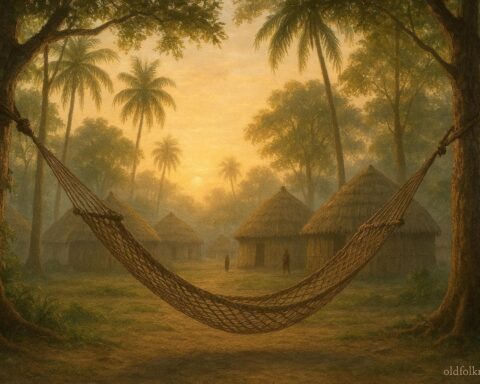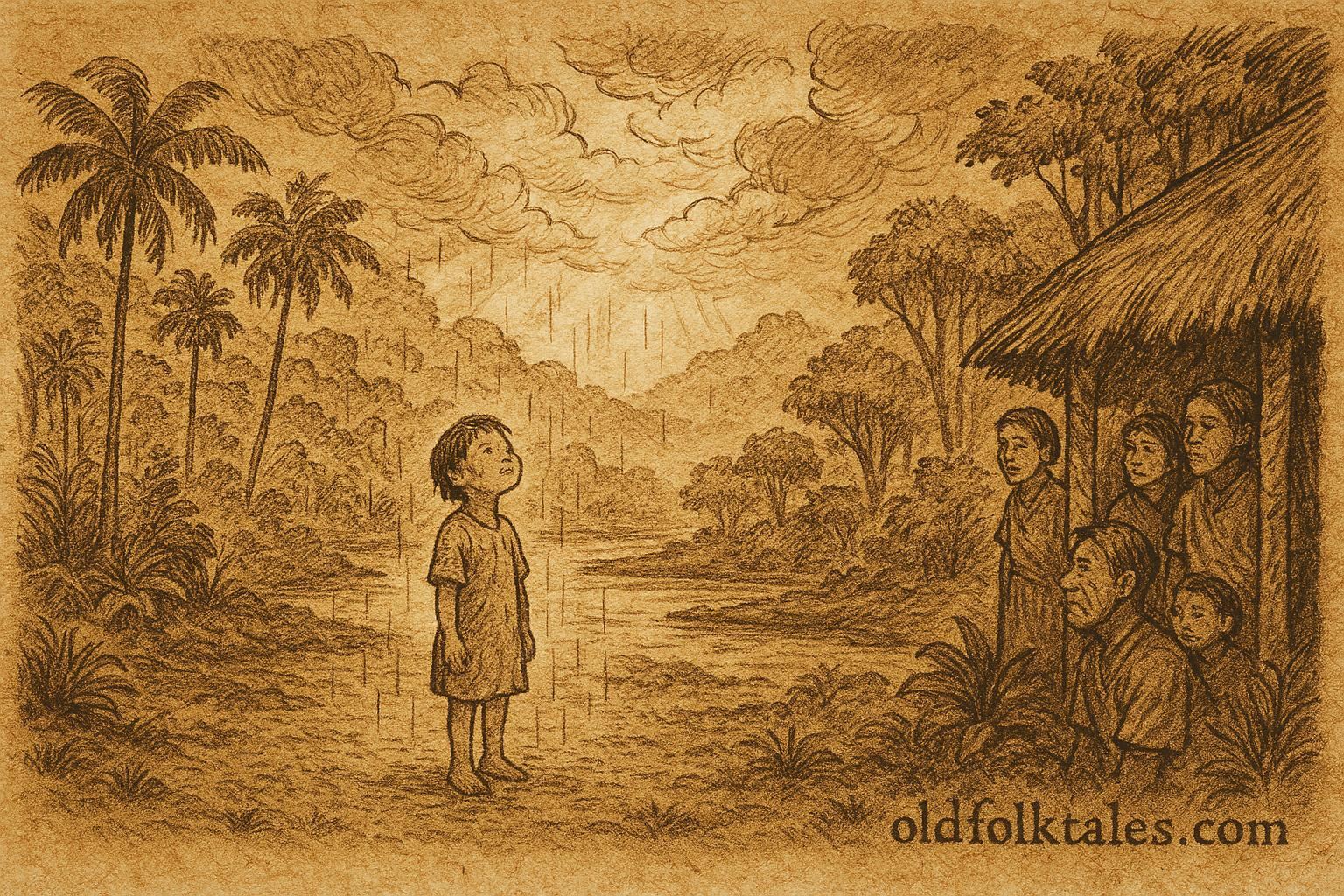
In the heart of the Central Amazon, where the forest breathes with the rhythm of rain and sunlight, there was a season unlike any other. The clouds gathered each day without fail, and rain fell in long, steady curtains over the canopy. Rivers swelled, leaves gleamed with moisture, and the earth drank deeply. It was during this unending rainfall that a child was born, quiet, observant, and marked by the sound of rain upon the roof at the moment of his arrival.
The elders watched the skies and whispered among themselves. Children born under such conditions were rare, and the people believed the rain had chosen him. As the boy grew, the rains continued. Seasons passed without the expected return of dry days. Crops struggled in flooded soil, and paths dissolved into mud. The villagers began to look at the child differently, not with fear, but with expectation.
They believed the child was bound to the rain.
As the boy learned to walk and speak, the rain followed him. When he wandered near the river, clouds gathered. When he slept, rain softened into mist. The elders said he did not command the rain, but lived in harmony with it. Yet the villagers, weary of endless storms, began to hope he could be made to change the skies.
“Ask him to stop the rain,” they said. “Our crops are failing. Our homes cannot dry.”
The child listened quietly. He had never known a world without rain. To him, the sound of water on leaves was as natural as breath. Still, seeing the hardship around him, he agreed to try.
When he focused his will and asked the rain to stop, the skies obeyed.
The clouds scattered suddenly, and harsh sunlight fell upon the forest. The rivers shrank too quickly. Fish died in shallow pools. Plants wilted under unfamiliar heat. The forest, once balanced by steady rain, began to suffer.
The people rejoiced at first, but the elders knew something was wrong.
They warned the villagers that balance cannot be rushed. Rain and sun must follow their own rhythm. The child, sensing the forest’s distress, grew uneasy. He withdrew his effort and allowed the rain to return slowly, gently, day by day.
Over time, the rivers found their proper levels. Crops adapted. The forest healed.
From that moment on, the villagers no longer demanded control. They learned to wait, to plant with patience, and to listen to the cycles older than any human life. The child of the rain grew into a quiet guardian, not of weather, but of understanding.
Click to read all South American Folktales — timeless stories from the Andes to the Amazon.
Moral Lesson
This folktale teaches that harmony with nature requires patience, and that forcing balance for convenience leads to greater harm.
Knowledge Check
1. Why was the child considered special?
He was born during endless rain and believed to be connected to it.
2. What problem did the villagers face?
Continuous rainfall disrupted crops and daily life.
3. What happened when the rain stopped suddenly?
The forest suffered from imbalance and drought.
4. What role did the elders play?
They warned against forcing nature’s rhythm.
5. What does the rain symbolize?
Natural cycles and balance beyond human control.
6. What lesson did the villagers learn?
Patience and respect are necessary for harmony.
Source: Indigenous oral folklore; documented in Central Amazon studies
Cultural Origin: Amazon Basin (Indigenous folklore)