In the windswept grasslands of what is now Uruguay, long before borders carved up the land, the Charrúa people lived as fierce warriors and skilled hunters. They were a proud nation, known throughout the region for their courage in battle and their intimate knowledge of the pampas, those endless plains that stretched beneath the vast South American sky. But for all their strength and bravery, the Charrúa understood that their survival depended not only on their weapons and their will, but on forces far greater than themselves, forces that demanded respect and reverence.
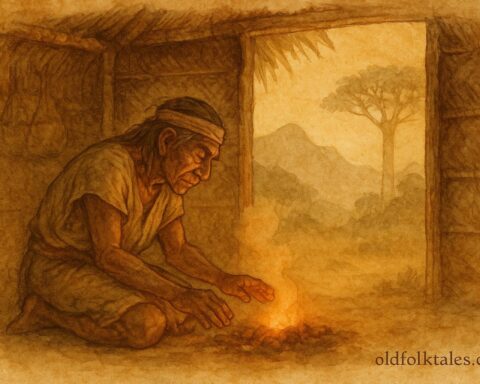
Among the most sacred of these forces was fire itself, that gift from the heavens that brought warmth on cold nights, cooked their food, and held back the darkness and the predators that lurked within it. But the Charrúa knew that fire was more than mere flame and fuel. Fire was alive, possessed of its own spirit, its own will. And watching over every fire that burned in every Charrúa camp was a guardian, an invisible presence that the people called the Fire Keeper.
Click to read all South American Folktales — timeless stories from the Andes to the Amazon.
The Fire Keeper was not like other spirits. It did not appear in dreams to deliver prophecies, nor did it manifest in animal form to guide lost hunters home. The Fire Keeper’s presence was felt rather than seen, sensed in the way flames danced with particular grace, in the warmth that seemed to embrace rather than simply radiate, in the sense of protection that settled over a camp when the fire burned bright and steady. The Fire Keeper asked for little, only respect, only mindfulness, only that those who benefited from the fire’s gifts remember that they were receiving a sacred blessing.
The elders taught the young ones how to approach fire with proper reverence. They showed them how to gather wood thoughtfully, thanking the trees for their sacrifice. They demonstrated how to kindle flames with patience and care, speaking words of gratitude as the first sparks caught and grew. They explained that a fire should never be started carelessly or extinguished thoughtlessly, for the Fire Keeper was always watching, always present, always aware of how its charge was being treated.
But as with all sacred knowledge, there were those who forgot, those who grew complacent, those who believed themselves above such concerns. And when fire was treated with disrespect, when it was extinguished carelessly or contemptuously, when its gifts were taken for granted, the Fire Keeper withdrew its protection. And misfortune inevitably followed.
There was a story, whispered among the Charrúa camps and passed down through generations, of a hunting party that made camp one evening as storm clouds gathered on the horizon. They built their fire quickly, more concerned with filling their bellies than with honoring the ancient customs. They ate their meal without offering thanks, then argued loudly over some trivial dispute. When one warrior, angry and reckless, kicked dirt and water onto the flames to end the argument and force everyone to sleep, the fire died with a hiss that sounded almost like a gasp of pain.
That night, the storm that had been brewing descended upon them with unexpected fury. Rain fell in blinding sheets, turning the ground to mud. Wind tore at their shelters, scattering their belongings across the grassland. Lightning struck a tree nearby, causing it to crash down perilously close to where they huddled in miserable darkness. In the morning, they discovered that their horses had panicked and fled, their weapons were damaged or lost, and several of the men had fallen ill with fever.
When they finally made their way back to the main camp, weak and humbled, the elders listened to their story with grave faces. “You disrespected the fire,” they said simply. “You drove away the Fire Keeper with your carelessness and your anger. The spirit that protects us cannot dwell where it is treated with contempt. You have learned a hard lesson, but perhaps it will serve you well.”
From that time forward, those warriors never again approached fire without reverence. They taught their children what they had learned through suffering, that respect for sacred things is not merely tradition or superstition, but a fundamental understanding of the forces that sustain life itself.
The Charrúa people understood that the Fire Keeper’s demands were not burdensome. The spirit asked only for mindfulness, for gratitude, for the simple acknowledgment that fire was a gift rather than a right. When fires were tended with care, when they were lit with proper intention and extinguished with appropriate ritual, the Fire Keeper remained present, and the camp thrived under its invisible protection.
Even when the fire had burned down to embers, the Charrúa would not simply abandon it or scatter it thoughtlessly. They would speak words of thanks, acknowledge the warmth and protection they had received, and carefully ensure that the last coals died naturally or were respectfully covered with earth. To do otherwise was to invite the Fire Keeper’s absence, and with that absence came vulnerability to all the dangers that haunted the night and the wilderness.
The Fire Keeper never revealed itself in physical form, never spoke in words that human ears could hear. Yet its presence was unmistakable to those who paid attention, those who approached the sacred flames with the proper spirit. In the crackle and pop of burning wood, in the steady glow that pushed back darkness and fear, in the circle of safety that formed around each campfire, the Fire Keeper made itself known through the very essence of the fire it protected and sustained.
The tradition lived on through generations of Charrúa people, a reminder that the natural forces upon which human life depends are not simply resources to be exploited, but sacred gifts attended by their own guardians, deserving of respect, gratitude, and reverence. To honor the fire was to honor the Fire Keeper. To honor the Fire Keeper was to ensure the protection and prosperity of the entire community.
Discover the sacred tales of llamas, condors, and gods who guard the Andes
Moral Lesson
The legend of the Charrúa Fire Keeper teaches us that sacred gifts, whether from nature or spirit, must be treated with respect and gratitude. The story emphasizes that carelessness, disrespect, and taking blessings for granted inevitably lead to the withdrawal of protection and the arrival of misfortune. This tale reminds us that mindfulness and reverence in our interactions with the forces that sustain us are not mere rituals but essential practices that maintain harmony between humans and the spiritual world. The Fire Keeper’s simple requirements of respect and proper treatment reflect a deeper truth that our survival and wellbeing depend on honoring the sacred in all its forms, understanding that what appears to be merely physical often carries profound spiritual significance.
Knowledge Check
Q1: Who were the Charrúa people and where did they live? A: The Charrúa were a fierce warrior nation and skilled hunters who inhabited the grasslands and pampas of what is now Uruguay in South America. They were known throughout the region for their courage in battle and their deep knowledge of the land they called home.
Q2: What was the Fire Keeper in Charrúa tradition? A: The Fire Keeper was a guardian spirit believed to watch over and protect every fire that burned in Charrúa camps. It was an invisible presence felt rather than seen, manifesting through the way flames danced, the warmth they provided, and the sense of protection that settled over camps when fire burned properly.
Q3: How did the Charrúa people show respect for fire and the Fire Keeper? A: The Charrúa showed respect by gathering wood thoughtfully and thanking trees for their sacrifice, kindling flames with patience while speaking words of gratitude, never starting fires carelessly or extinguishing them thoughtlessly, and performing proper rituals when allowing fires to die, including speaking thanks and ensuring coals died naturally or were respectfully covered.
Q4: What happened when fire was disrespected according to Charrúa belief? A: When fire was extinguished carelessly or treated with contempt, the Fire Keeper would withdraw its protection, and misfortune would inevitably follow the camp. This could manifest as natural disasters, loss of possessions, illness, or other calamities that left the people vulnerable and suffering.
Q5: What lesson did the hunting party learn from their experience with the Fire Keeper? A: The hunting party that carelessly extinguished their fire in anger experienced a devastating storm, lost their horses, had their weapons damaged, and fell ill. They learned that disrespecting sacred things has real consequences and that the Fire Keeper’s protection cannot dwell where there is carelessness and contempt.
Q6: What does the Fire Keeper legend teach about the relationship between humans and nature? A: The legend teaches that natural forces like fire are not merely resources to be exploited but sacred gifts attended by spiritual guardians. It emphasizes that human survival and prosperity depend on maintaining respectful, mindful relationships with these forces through gratitude, reverence, and proper treatment, recognizing the spiritual significance in what appears physical.
Source: Adapted from Charrúa oral tradition as preserved in collections at Museo del Indio y de la Tradición, Tacuarembó, Uruguay
Cultural Origin: Charrúa Indigenous People, Uruguay, South America