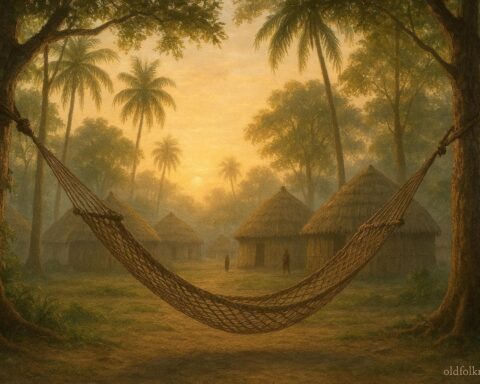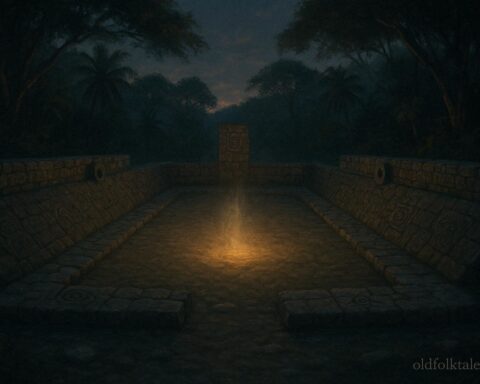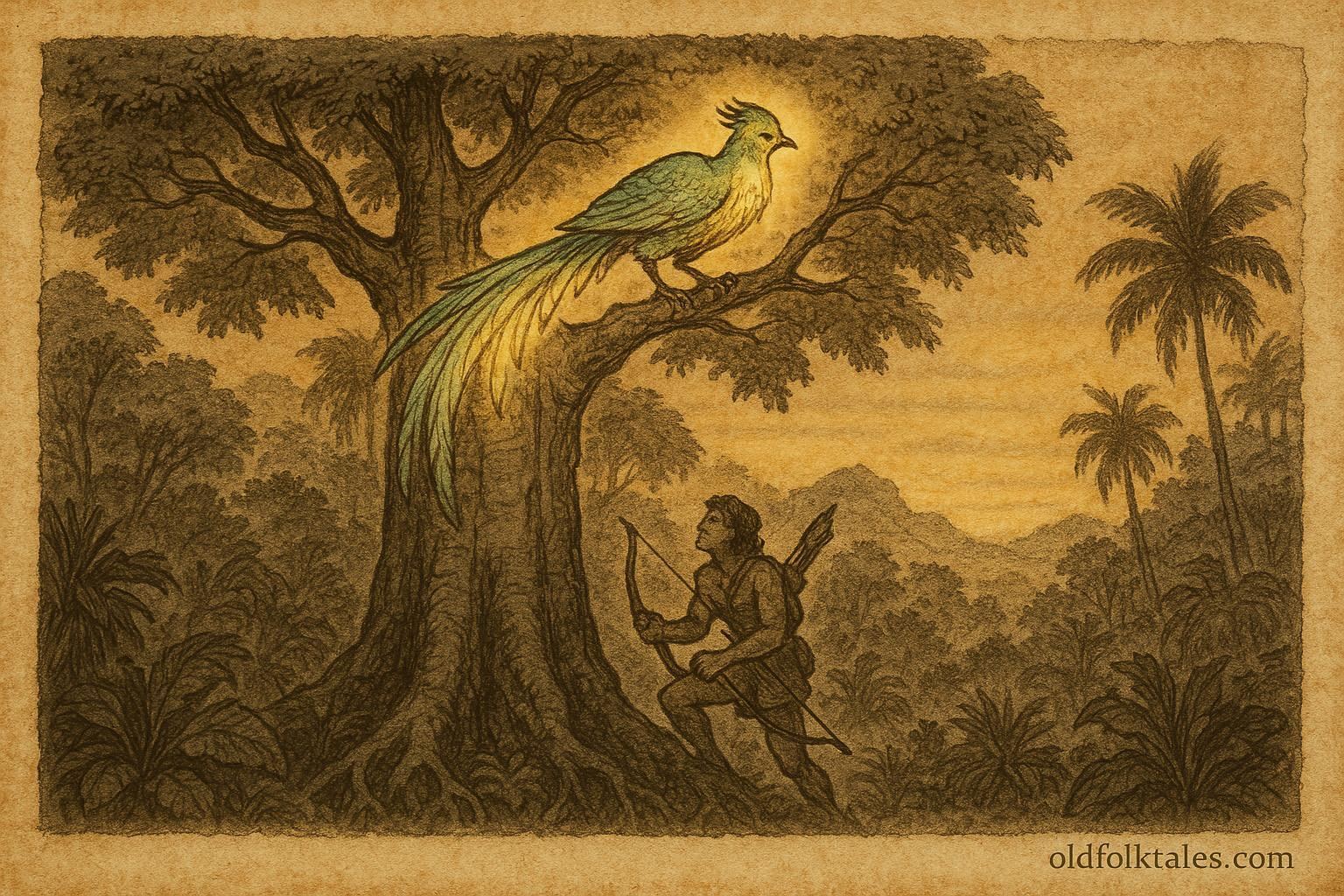
Long ago, when the world was still young and the boundaries between the realms of gods and mortals were thin, there stood a ceiba tree so vast that its roots pierced the underworld, its trunk rose through the human world, and its crown reached into the heavens. The Maya called it Yaxche, the sacred ceiba, the tree of life that held together the sky, the earth, and the underworld. Its branches were said to shine with light that never faded, for at its highest bough perched a bird unlike any other, the Celestial Bird.
Its feathers shimmered like the dawn, with hues of turquoise, jade, and gold. When it spread its wings, the air filled with the scent of blooming flowers, and when it sang, the stars seemed to tremble in rhythm. The bird was a guardian, a spirit placed by the gods to protect the harmony between the three worlds. No mortal was permitted to touch it, nor to climb the ceiba that linked heaven and earth.
Discover the vibrant legends of Guatemala, Honduras, and Costa Rica in our folktale collection.
But among the villages beneath the tree, there lived a man, a hunter renowned for his skill with bow and arrow. His eyes were keen, his steps silent, and his pride fierce. He had brought down jaguars and harpy eagles, and word of his hunts spread far beyond his own people. Yet with every story told of his greatness, a seed of greed grew deeper in his heart.
One day, the hunter heard an elder speak of the Celestial Bird, whose feathers could light up the night. “It perches at the top of the ceiba,” the elder said, eyes clouded with reverence. “Its song calls to the gods themselves. No man has ever seen it closely, and none ever should.”
The hunter’s heart stirred with envy.
“If its feathers shine brighter than gold,” he thought, “then they should belong to me. I would be the greatest hunter who ever lived.”
That night, as the moon cast silver light over the forest, the hunter took his bow and set out toward the ceiba tree. The jungle was alive with whispers, frogs croaked like hidden drums, owls hooted softly from shadowed branches, and the wind carried the scent of rain and earth. But the hunter’s mind was set. He pushed through vines and roots until he reached the towering ceiba.
The tree loomed before him like a living mountain. Its trunk was as wide as a house, and its roots twisted into the ground like giant serpents. Looking up, the hunter could barely see the faint shimmer of feathers among the clouds.
He began to climb.
The bark scraped his hands, and his muscles burned as he pulled himself upward. Strange lights flickered between the leaves, spirits of the underworld watching silently from the shadows. The higher he climbed, the thinner the air became, until even the sounds of the earth below faded into stillness.
At last, he reached the highest branch, where the Celestial Bird sat upon a nest woven from strands of starlight.
“Why have you come here, mortal?” the bird asked, its voice both song and thunder. Its eyes gleamed like twin suns.
“I seek your feathers,” the hunter said boldly. “They belong to no one, so they shall belong to me.”
The bird spread its wings, and a wave of light washed over him. “You speak of ownership,” it said, “yet you stand upon what you do not own, the roots that cradle your ancestors, the air that fills your lungs, the light that warms your days. You take, but you do not see. The ceiba connects all things, and still, you think yourself apart.”
But the hunter raised his bow.
“If I cannot have your feathers by asking,” he said, “then I shall take them by skill.”
He drew his arrow and let it fly. The shaft gleamed through the air, but before it could strike, the bird vanished into a burst of golden light. The arrow passed through empty space and fell into the endless depths below.
Then came a voice, cold and echoing like the wind through the roots of the world:
“You have wounded not me, but the balance itself.”
A great rumble shook the tree. The hunter lost his footing and clung to the branch as thunder rolled above him. The ceiba groaned, its leaves shimmering like spirits in pain. From the light where the bird had vanished, a single feather drifted down, and as it touched his hand, it burned like fire.
He cried out and looked at his arm. The skin shimmered with strange patterns, like the markings of the gods. But instead of glory, he felt the weight of shame. His heart filled with dread as he realized what he had done. The Celestial Bird’s voice whispered one final time:
“Let this mark remind you, divine beauty is not to be owned, only revered. You sought light for yourself and found only darkness.”
When dawn came, the villagers found the hunter lying at the roots of the ceiba, his bow shattered beside him. His eyes gazed upward, forever open, reflecting the light of the bird that no longer sang in the heavens. From that day on, the people of the Maya built shrines to the ceiba tree, offering prayers and smoke to honor the balance between all worlds. And though the Celestial Bird was never seen again, sometimes, when the night is still and the stars shimmer faintly above the jungle, the echo of its song can still be heard, carried by the wind between heaven and earth.
Discover Mexico’s timeless tales blending Indigenous roots and Spanish tradition
Moral Lesson
The tale of the Celestial Bird teaches that sacred beauty and divine power are not possessions to be claimed but gifts to be honored. True wisdom lies in reverence, not conquest, and harmony is lost when greed blinds the soul.
Knowledge Check
- Who guards the sacred ceiba tree in this Mayan folktale?
The Celestial Bird guards the ceiba tree, symbolizing divine protection and the connection between the heavens, earth, and underworld. - What does the ceiba tree represent in Mayan mythology?
It represents the cosmic bridge uniting the spiritual realms, the underworld, earth, and sky. - What lesson does the hunter learn from his encounter with the Celestial Bird?
He learns that divine beauty is not meant to be owned; greed disrupts the balance of nature and spirit. - Why was the Celestial Bird angered by the hunter?
Because the hunter tried to capture what was sacred, showing arrogance instead of reverence. - What is the symbolic meaning of the hunter’s burn or mark?
It represents the spiritual consequence of violating sacred harmony, a permanent reminder of human folly. - What moral value does the story promote?
It promotes humility, respect for nature, and awareness of humanity’s place within a greater spiritual order.
Source: Mayan Folklore: The Gods and Heroes of the Maya by Mary Sharp (1930).
Cultural Origin: Itzá Maya (Northern Guatemala and Southern Mexico).