Along the winding banks of the Wolastoq (Saint John River), long before bridges spanned the waters and steamboats plied their course, travelers depended on canoes for communication, trade, and survival. Among the Wolastoqiyik (Maliseet) people, every journey on the river was more than a mere passage from one point to another, it was a test of cooperation, patience, and respect for the currents and the canoe that carried them.
It was said that the river itself watched those who crossed it. It could sense quarrels, selfishness, and impatience. When travelers were at odds, the canoe would not behave as they expected. It might drift sideways, float backward, or linger in the middle of the river until harmony returned.
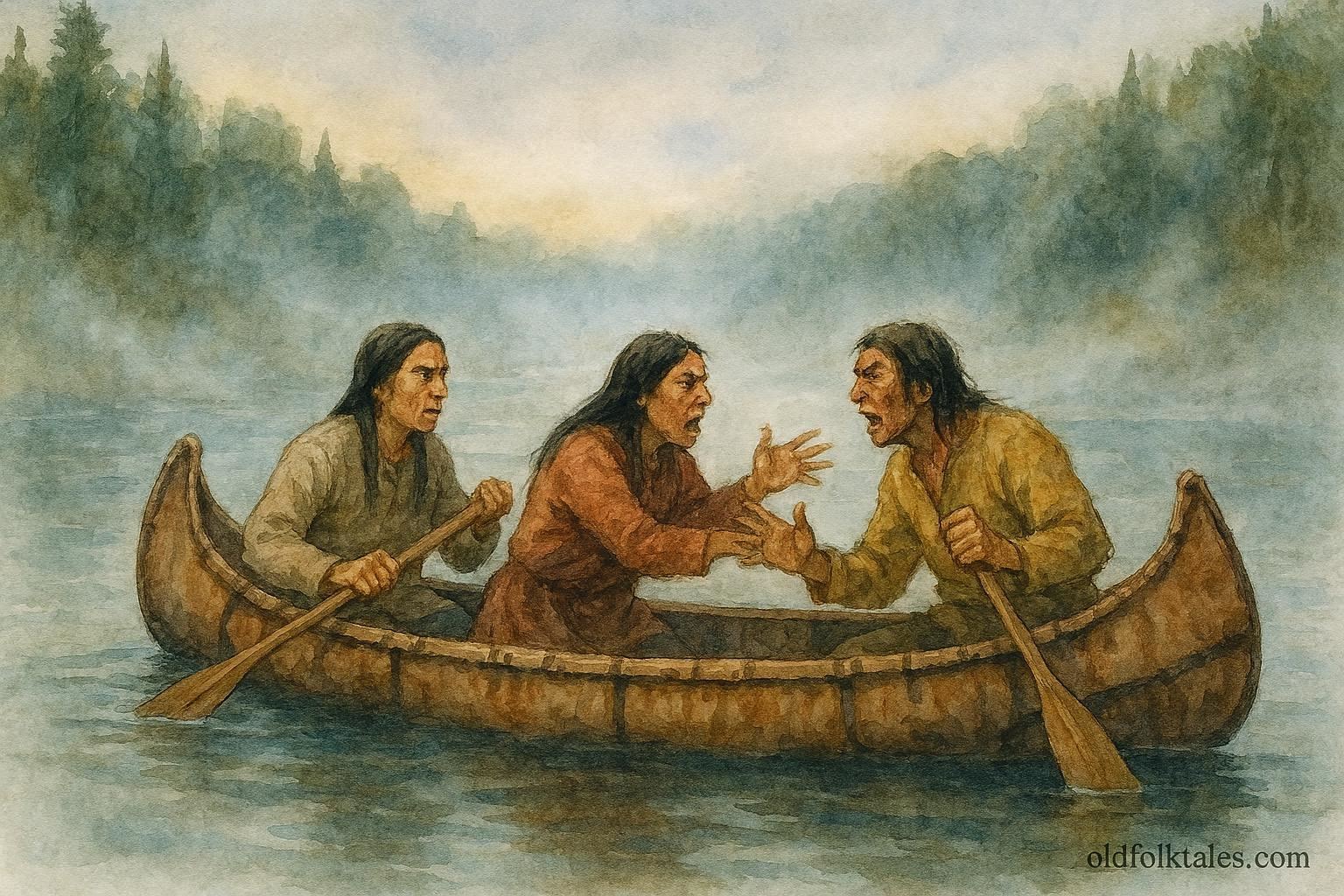
One season, a group of young men and women prepared to paddle upstream to visit a neighboring settlement. They loaded the canoe with furs, baskets of gathered foods, and small tools for trade. Excitement filled the air, but so did old grievances. Two of the young men argued over who would steer, while a young woman scolded another for not packing the canoe evenly. Voices rose, fingers pointed, and laughter turned sharp. The elders watching from the riverbank murmured among themselves but said nothing, the river would teach the lesson.
When the canoe touched the water, the quarreling continued. The moment the paddles entered the river, the current seemed to turn against them. Despite their frantic efforts, the canoe would drift away from the shore, catching the wind in unpredictable ways. Each paddle stroke seemed to require twice the effort, yet progress was slow.
One elder, who had accompanied previous crossings, called out calmly: “The river will not serve anger. Quiet your hearts and work together, or you will remain adrift.”
The group ignored the warning, each insisting on their own way. The canoe spun slightly as they tried to pull in different directions at once. In frustration, someone shouted, “It will not move! The river is cursed!” The elder shook his head. “The river is not cursed. It reflects your quarrels.”
Hours passed. The sun arched high over the trees, and the travelers grew tired, wet, and anxious. Arguments faded into silence, replaced by a growing sense of fear and awe. The canoe had not overturned, nor had it capsized, but it remained stubbornly midstream, refusing to cooperate with the paddlers’ disunity.
Eventually, the leader of the group recalled the wisdom he had been taught since childhood. He lowered his paddle and said softly, “Let us move as one.” Others followed, whispering apologies to one another, releasing pride, and listening to the rhythm of the river and each other. With every synchronized stroke, the canoe responded, gliding forward more steadily. The current seemed to embrace their renewed cooperation, carrying them gracefully toward the far bank.
By the time they reached their destination, the travelers understood that the canoe had tested them. The river had not punished them; it had reflected the discord that existed among them. Only through listening, unity, and humility had they moved forward safely.
In the years that followed, parents used this story to teach children the importance of cooperation. They said that any group setting out on the river whether for trade, ceremony, or travel needed harmony first. It was not the strength of the paddlers alone that carried them across, but the collective spirit of the group. A canoe that drifted from quarrels served as a living reminder that discord can halt progress, while cooperation propels life forward.
Some elders added that even experienced paddlers, confident in their strength, would find themselves at the mercy of the river if they failed to work together. The river, they said, was wise and patient. It never forced a lesson too harshly, but it always ensured that travelers remembered: personal pride must yield to collective responsibility.
Explore the ancestral legends of Canada, Mesoamerica, and South America’s Indigenous tribes.
Moral Lesson
The story teaches that unity, patience, and cooperation are essential for successful endeavors. Discord weakens progress, while harmony amplifies the strength of all involved. Respect for one another and shared responsibility are as vital as skill and effort. Nature, like life, mirrors human behavior: if people cannot work together, even the simplest journey becomes perilous.
Knowledge Check
- What caused the canoe to drift uncontrollably?
Answer: The travelers’ quarrels and lack of cooperation. - How did the elder explain the canoe’s behavior?
Answer: The canoe reflected the discord among the travelers; the river required unity to move properly. - What action allowed the canoe to proceed safely?
Answer: The group synchronized their efforts, apologized, and cooperated. - What lesson does the story teach about teamwork?
Answer: Cooperation, humility, and shared responsibility are essential for achieving goals. - How does the river serve as a moral teacher?
Answer: It mirrors the behavior of humans, rewarding harmony and reflecting discord. - Why is personal pride considered dangerous on the river?
Answer: Pride leads to conflict and prevents collective progress, putting everyone at risk.
Source:
Adapted from river travel narratives, Canadian Museum of History.
Cultural origin:
Wolastoqiyik (Maliseet) First Peoples, New Brunswick.