In the wide Arctic lands of northern Canada, the Inuit knew that not everything visible could be trusted, and not everything unseen was dangerous. The land itself was believed to move between worlds, revealing help only to those who understood its rhythms. Among these beliefs was the quiet story of a camp that appeared only at dusk and vanished before dawn.
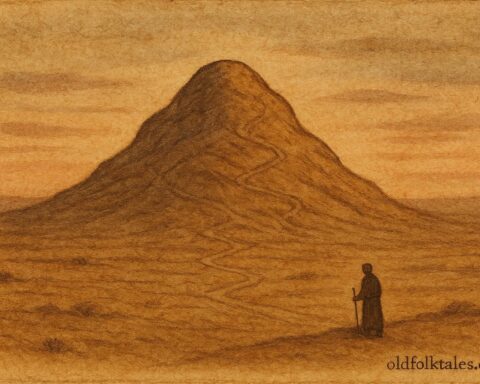
Long ago, a small group of travelers journeyed across the tundra as winter approached. They were returning from a trading visit and hoped to reach their home settlement before darkness fully claimed the sky. The sun hung low, casting long shadows across the snow, and the air grew colder with each passing moment.
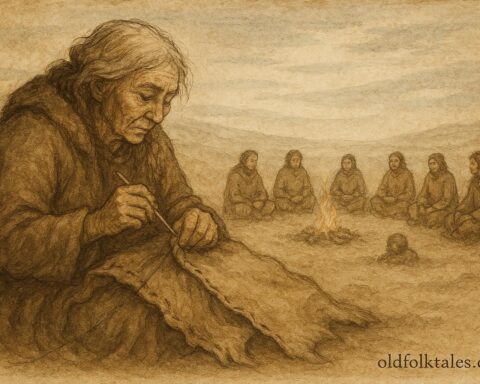
Among the group was an elder named Nuvua, whose hair had turned white like frost. He walked slowly but observed everything. The others were younger and stronger, eager to press forward and impatient with delay. They believed speed alone would protect them.
Explore the ancestral legends of Canada, Mesoamerica, and South America’s Indigenous tribes.
As evening approached, a thin fog rose from the snow, softening the horizon. The wind shifted unexpectedly, erasing familiar landmarks. Soon the travelers realized they had lost their path. Panic stirred, for night in the Arctic could bring deadly cold.
They debated loudly about what to do. Some wanted to keep walking blindly. Others argued they should build shelters immediately. Nuvua listened quietly before speaking.
“This is the hour when the land listens most closely,” he said. “We must show patience.”
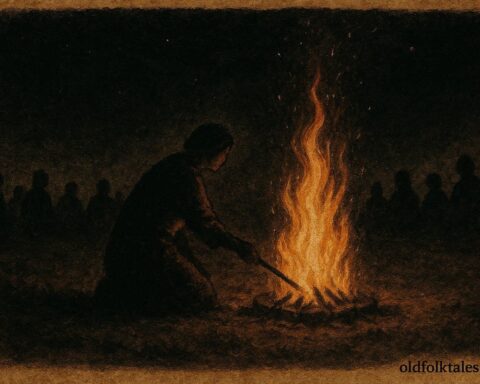
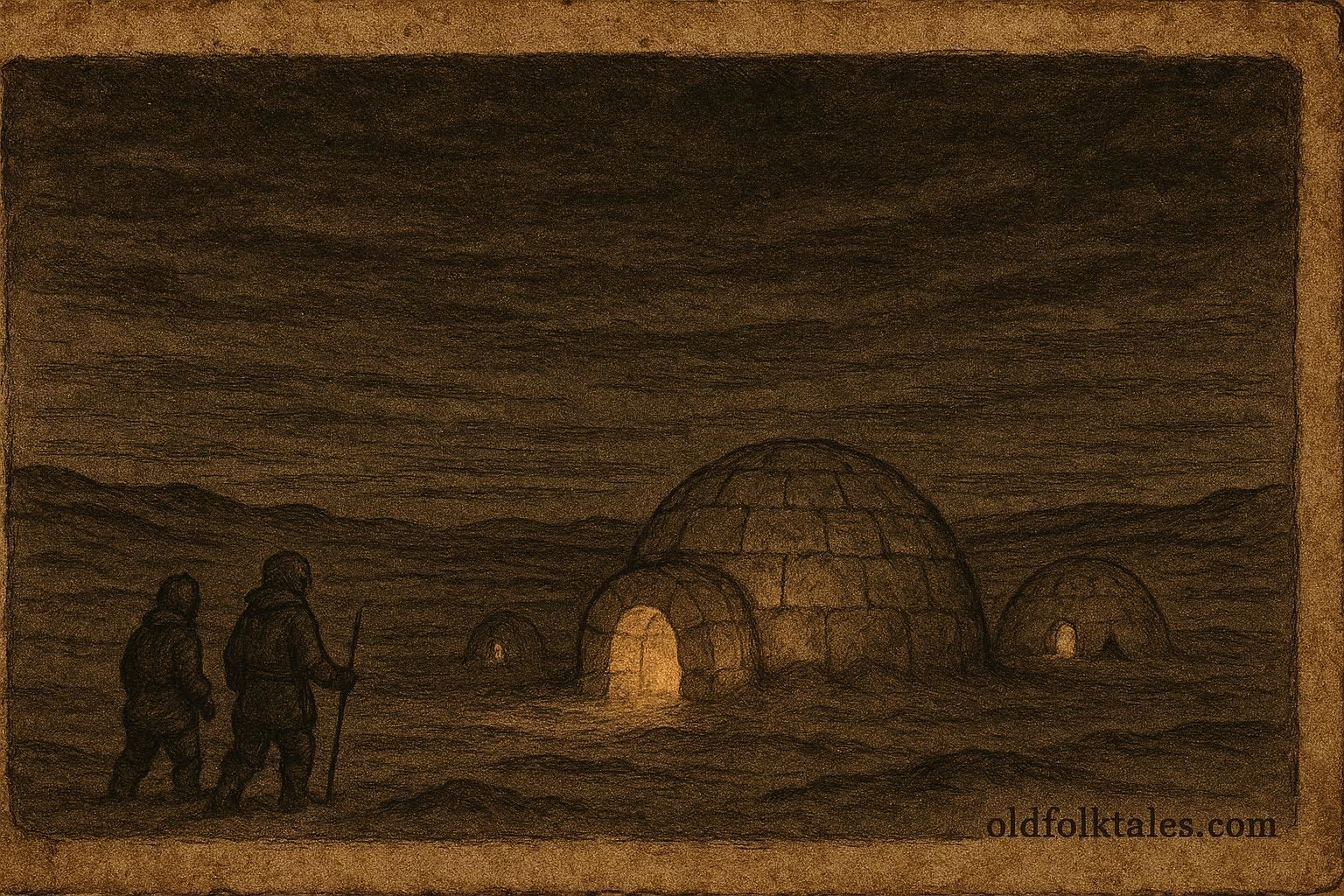
As dusk deepened, the sky glowed faintly with fading light. Suddenly, one of the travelers pointed ahead. In the distance stood a small camp. Snow shelters formed a protective circle, and a soft glow came from within, warm and inviting.
Relief swept through the group. They hurried toward it, calling out, but no voices answered. Still, the shelters stood firm, untouched by wind or storm.
Inside the camp, they found food laid neatly, tools prepared, and sleeping spaces already formed. No footprints surrounded the shelters, and no fire burned, yet warmth filled the air.
Some travelers questioned whether they should stay. Others entered quickly, eager for rest. Nuvua bowed his head and whispered thanks before stepping inside.
Throughout the night, the wind rose fiercely. Snow battered the shelters, but the camp remained unmoved. The travelers slept deeply, protected from the storm’s fury.
At dawn, Nuvua awoke early. Pale light spread across the snow, and silence returned. He stepped outside and froze in surprise. The camp was gone.
The shelters, the tools, even the paths between them had vanished without trace. Only open tundra stretched in every direction.
The others emerged, confused and frightened. Had they imagined the camp? Had spirits sheltered them? No answers came.
Nuvua spoke gently. “The camp was never meant to remain. It existed only to help us pass through danger.”
The travelers reflected on the night. Some realized they had taken shelter without gratitude. Others remembered laughing and speaking carelessly within the camp.
As they continued their journey, each step felt heavier. The land seemed quieter, less forgiving. That night, when another storm approached, no camp appeared. The travelers were forced to build their own shelters, working carefully and remembering the gift they had once received.
From that time on, the Inuit told of a camp that appears only at dusk, offering brief protection to those who travel respectfully. It is said that those who show gratitude may see it again, but those who expect help without humility will never find it twice.
Moral Lesson
Not all help is permanent, and not all gifts are meant to be kept. Gratitude must be shown in the moment it is given. When people respect temporary kindness and understand its purpose, they learn humility and awareness. Those who take help for granted may find themselves alone when they need it most.
Knowledge Check
- When does the spirit camp appear?It appears only at dusk.
- Why does the camp disappear by morning?
It exists only to offer temporary protection. - What does the camp symbolize?
Unseen help and the impermanence of gifts. - Why does Nuvua show gratitude?
He understands the spiritual nature of the camp. - Why does the camp not return?
Some travelers fail to show respect and humility. - What lesson does the story teach?
Gratitude and awareness are essential for survival.
Source:
Adapted from Inuit storytelling archives and Arctic folklore research.
Cultural Origin:
Inuit folklore, Arctic Canada.