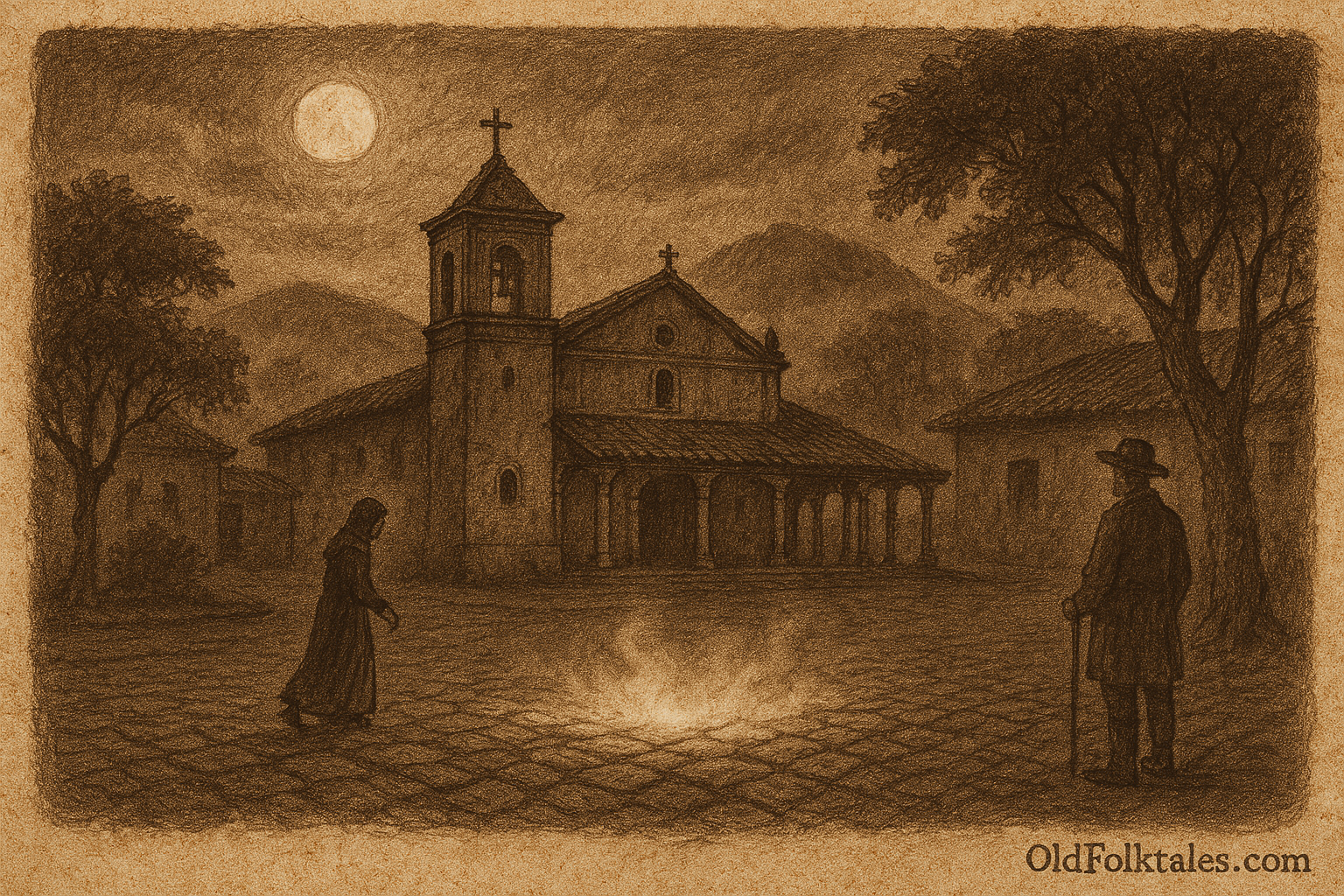
In the small colonial town of Yaguarón, nestled in the verdant hills of Paraguay, there stands an ancient Franciscan church whose baroque beauty has weathered centuries of sun and storm. Its ornate wooden interior, carved by indigenous Guaraní craftsmen, tells stories of faith and devotion that stretch back to the days when Spanish missionaries first walked these lands. But beneath the cobblestone streets and red-tiled roofs of this quiet town lies a secret that has haunted generations a secret that rings out in the darkness when the moon hangs low over the plaza.
The legend begins in the turbulent years of colonial unrest, when tensions between Spanish authorities and local populations threatened to tear the missions apart. The Franciscan fathers of Yaguarón possessed a magnificent bell, cast in bronze and blessed by the bishop himself. Its voice was said to be the most beautiful in all the region, a deep, resonant tone that called the faithful to prayer and marked the hours of the day with celestial precision. The bell was more than mere metal; it was a symbol of divine presence, a guardian of the community’s spiritual life.
Click to read all South American Folktales — timeless stories from the Andes to the Amazon.
When word reached the missionaries that marauding forces were approaching some say they were bandits, others claim they were soldiers seeking to plunder the missions the friars faced an impossible choice. They could not bear to see their sacred bell melted down for weapons or coin, stripped of its holy purpose and silenced forever. In the dead of night, under a moonless sky thick with secrecy, the priests and their most trusted parishioners carried the heavy bell from its tower.
They dug deep into the earth in a place known only to them, somewhere within the grounds of the mission or perhaps just beyond its walls. The exact location has been lost to time, swallowed by memory and silence. With prayers whispered in Latin and Guaraní, they lowered the bell into its earthen tomb, covering it carefully with soil and stone. Before they finished, the eldest priest pronounced a solemn blessing or perhaps it was a curse declaring that the bell would be protected by spirits until the rightful time came for its resurrection.
The danger passed, but the bell was never recovered. Whether the priests perished before they could reveal its location, or whether they chose to keep the secret buried with them, no one knows. What is certain is that the bell did not remain silent in its underground sanctuary.
On still nights, when the wind dies down and the town settles into sleep, residents of Yaguarón claim they can hear it a distant, muffled tolling that seems to rise from beneath the earth itself. The sound is neither loud nor clear, but unmistakable to those who know its story. It echoes through the empty streets like a memory, like a prayer that refuses to be forgotten. Some say it rings on holy days, marking hours that only the dead now keep. Others insist it tolls as a warning, reminding the living that sacred things must remain sacred.
Over the generations, many have sought the buried bell. Treasure hunters have come with shovels and maps, drawn by tales of Spanish gold and ancient artifacts. Local men, tempted by curiosity or hardship, have dug in likely places, hoping to claim the legendary bronze for themselves. But the spirits that guard the bell, it seems, do not look kindly upon greed.
Those who dig with impure hearts seeking wealth rather than restoration find only misfortune. Some fall suddenly ill with fevers that no doctor can diagnose, their bodies wracked with pain that has no earthly cause. Others are visited by madness, seeing visions of robed figures in the darkness, hearing voices that whisper warnings in languages they cannot understand. Tools break inexplicably. Earth collapses upon itself. Accidents plague the seekers until they abandon their search, fleeing Yaguarón with empty hands and haunted minds.
The townspeople have learned to respect the mystery. They no longer dig. They simply listen when the bell calls out from its hidden chamber, accepting its voice as part of the town’s identity, a reminder that some treasures are not meant to be possessed, only honored. The old church still stands, its tower empty but its spirit unbroken, watching over the secret that sleeps beneath Yaguarón’s soil.
And so the bell remains buried, waiting. Perhaps it waits for a time when faith outweighs greed, when someone with a pure heart might finally free it from its earthly prison. Or perhaps it prefers its underground sanctuary, content to ring out its ghostly message through the centuries, reminding all who hear it that the sacred cannot be claimed only cherished.
Click to read all Andean Highland Folktales — echoing from the mountain peaks of Peru, Bolivia, and Ecuador.
The Moral Lesson
This legend teaches us that sacred objects and traditions deserve reverence, not exploitation. Greed and selfish desire corrupt even the noblest quests, while respect for what is holy brings protection and peace. The spirits guarding the bell represent the collective conscience of a community that values spiritual wealth over material gain. The story reminds us that some mysteries are meant to endure, serving as eternal reminders of our values, and that attempting to claim what is not rightfully ours especially for personal gain inevitably leads to suffering.
Knowledge Check
Q1: Who buried the bell of Yaguarón and why?
A: Spanish Franciscan missionaries buried the bell during colonial unrest to protect it from being stolen or melted down by approaching marauding forces, whether bandits or soldiers seeking to plunder the missions.
Q2: What happens to people who try to dig up the buried bell with greedy intentions?
A: Those who dig seeking wealth rather than restoration fall ill with mysterious fevers, experience madness with disturbing visions, or suffer accidents and misfortune until they abandon their search.
Q3: What is the significance of hearing the bell ring at night in Yaguarón?
A: The ghostly ringing serves as a spiritual reminder of the sacred nature of the bell and represents the enduring presence of faith and tradition in the community, with some believing it rings on holy days or as a warning.
Q4: What do the spirits guarding the bell symbolize in this Paraguayan legend?
A: The guardian spirits represent the collective conscience of the community and the sacred duty to protect religious heritage, ensuring that holy objects remain honored rather than exploited for personal gain.
Q5: Why has the location of the buried bell never been rediscovered?
A: The exact location was known only to the priests and trusted parishioners who buried it, and they either died before revealing the secret or chose to keep it hidden, protected by their blessing and the guardian spirits.
Q6: What is the cultural importance of this legend to the town of Yaguarón, Paraguay?
A: The legend is central to Yaguarón’s identity, connecting the town to its colonial and indigenous Guaraní heritage while teaching values of respect for sacred objects and warning against greed. It represents the blending of Spanish Catholic and indigenous spiritual traditions.
Source: Adapted from Paraguayan folklore as documented by Carlos Villagra Marsal in Mitos y Leyendas del Paraguay and the Portal Guaraní folklore archives.
Cultural Origin: Paraguay, Yaguarón region