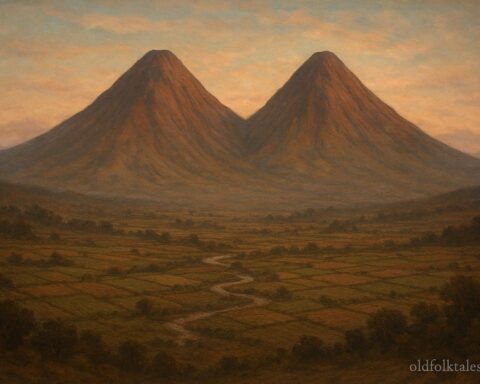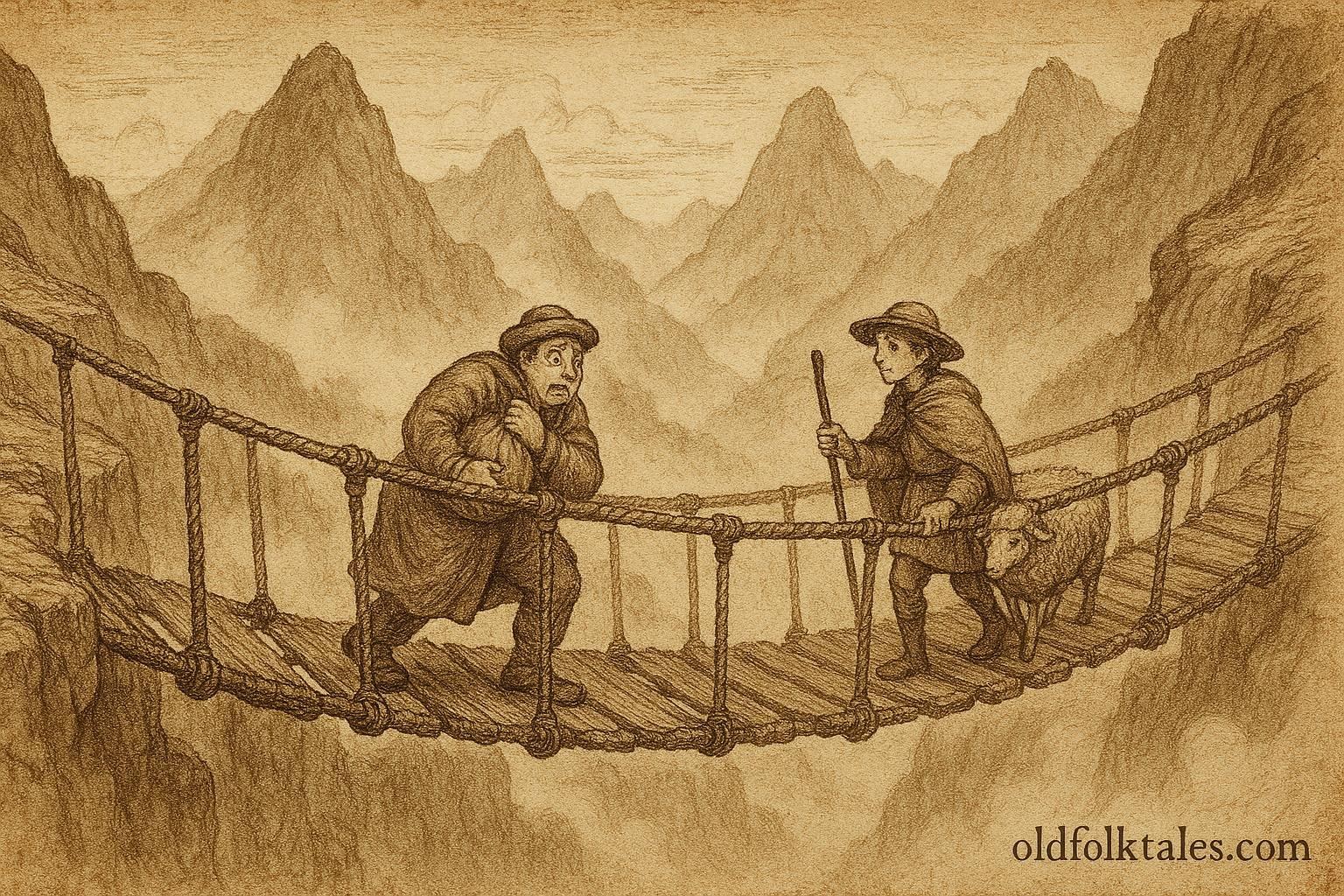
High in the misted Andes, where jagged peaks pierced the clouds and the wind whistled through ancient valleys, there lay a rope bridge strung across a deep chasm. The bridge was old, worn by centuries, yet it held a secret power, known only to the mountain spirits who watched over the trails. The villagers called it the Bridge of Truth, for it had a way of sensing the hearts of those who crossed it.
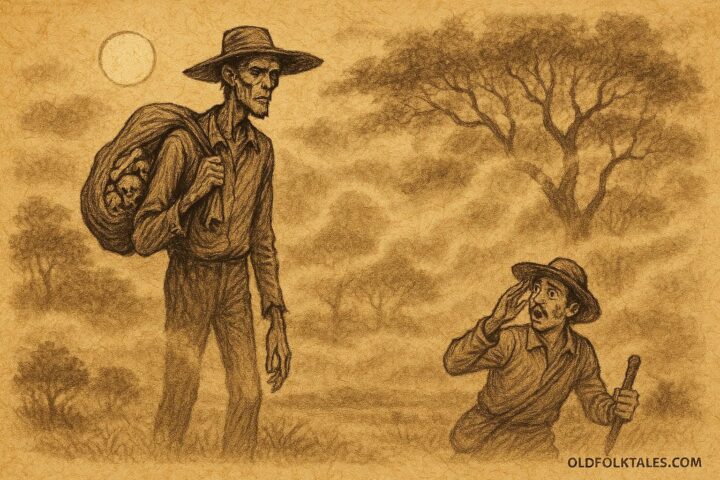
One morning, two travelers approached from opposite sides. One was a merchant eager to sell goods in a distant village; the other was a young shepherd boy returning home. The merchant, greedy and boastful, spoke loudly as he stepped onto the bridge, exaggerating the wealth of his cargo and telling a tale of how he had tricked a rival trader. The bridge swayed gently at first, as if it were merely old and delicate. But when the merchant lied about his deeds, boasting of victories that never happened, the bridge trembled violently. The ropes twisted, the wooden planks shifted, and suddenly a section broke, sending the merchant’s bag tumbling down the cliff. He clung to the ropes, terrified, while the bridge slowly righted itself. The spirits had warned him, and the dishonesty had caused near disaster.
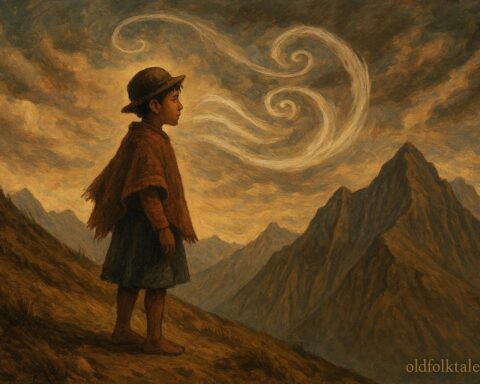
Meanwhile, the shepherd boy approached, carrying only a small sack of food. He spoke softly, honest words about his journey and family, admitting when he had erred and giving credit to others for their help. The bridge, sensing truth and humility, remained firm beneath him, each step steady and secure. The boy crossed safely, feeling a deep respect for the spirits who had protected him and for the power that truth carried.
Explore the ancestral legends of Canada, Mesoamerica, and South America’s Indigenous tribes.
Throughout the day, travelers came and went. Some bragged, some hid secrets, and some spoke honestly. Those who lied found the bridge unsteady, trembling under their weight or swaying as if warning them to reconsider their words. Others, honest and humble, crossed without fear. Word spread quickly through the villages: the bridge could not be cheated. It was a guardian not just of the chasm, but of moral law itself.
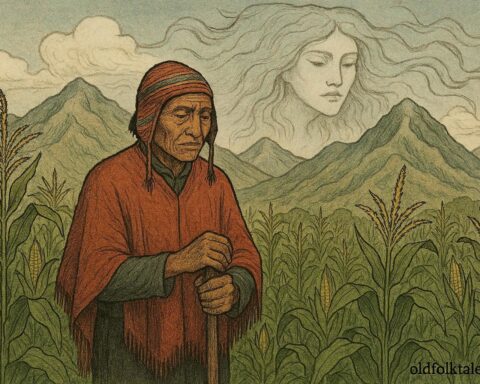
The elders told children that the bridge’s power was a lesson from the ancestors: deceit might seem harmless, but it carries consequences visible in both the human and spirit worlds. They spoke of a young girl who once tried to cross while claiming stolen gold as her own, only to have the ropes snap under her. She learned humility as she clutched the bridge, promising never to lie again.
The legend said that even today, travelers who think of trickery or boast without merit will feel the subtle sway of the ropes. And those who act honestly, even when frightened or tired, will find the bridge steady and safe. The mountains themselves watch the deeds of humans, rewarding honesty and punishing deceit, teaching that truth is more enduring than gold or pride.
For generations, the Bridge of Truth became a symbol in Andean villages. Weddings, harvests, and pilgrimages were planned with knowledge of the bridge’s moral tests, reminding people that their integrity was tied to the land itself. In times of famine or conflict, elders would tell children to walk with truth as firmly as they walked across the bridge, for the chasm beneath was not the only danger—they were tested by unseen eyes at every step.
Even merchants, wary of the legend, would pay attention to the stories of those who had crossed with lies. They learned that the mountains favored honesty and that bragging or cheating could invite calamity. In this way, the bridge became not only a physical crossing but also a teaching tool, binding communities together with shared respect for morality and the natural world.
And so, the Bridge of Truth endures, high in the misted Andes, a silent witness to human action, an ever-present reminder that integrity matters more than speed, strength, or cunning. To cross safely is to honor the spirits and the ancestors alike.
Click to read all South American Folktales — timeless stories from the Andes to the Amazon.
Moral Lesson
Honesty and humility are rewarded while deceit and pride carry consequences. Integrity is essential not only in personal life but in maintaining harmony with community and nature.
Knowledge Check
1 What was the special power of the bridge?
The bridge could sense the honesty of those who crossed it
2 What happened to travelers who lied on the bridge?
The bridge trembled or broke under their weight
3 How did honest travelers fare when crossing the bridge?
They crossed safely, with the bridge remaining steady
4 What lesson did the elders teach children about the bridge?
That deceit carries consequences and truth ensures protection
5 Why did the bridge become a symbol in Andean villages?
It represented moral integrity and respect for ancestors and nature
6 What is the main theme of the story?
Truth, consequence, and the importance of honesty
Source:
Adapted from Ethics and Travel in Andean Folklore, Pontificia Universidad Católica del Perú (1998)
Cultural Origin:
Quechua peoples, Peru