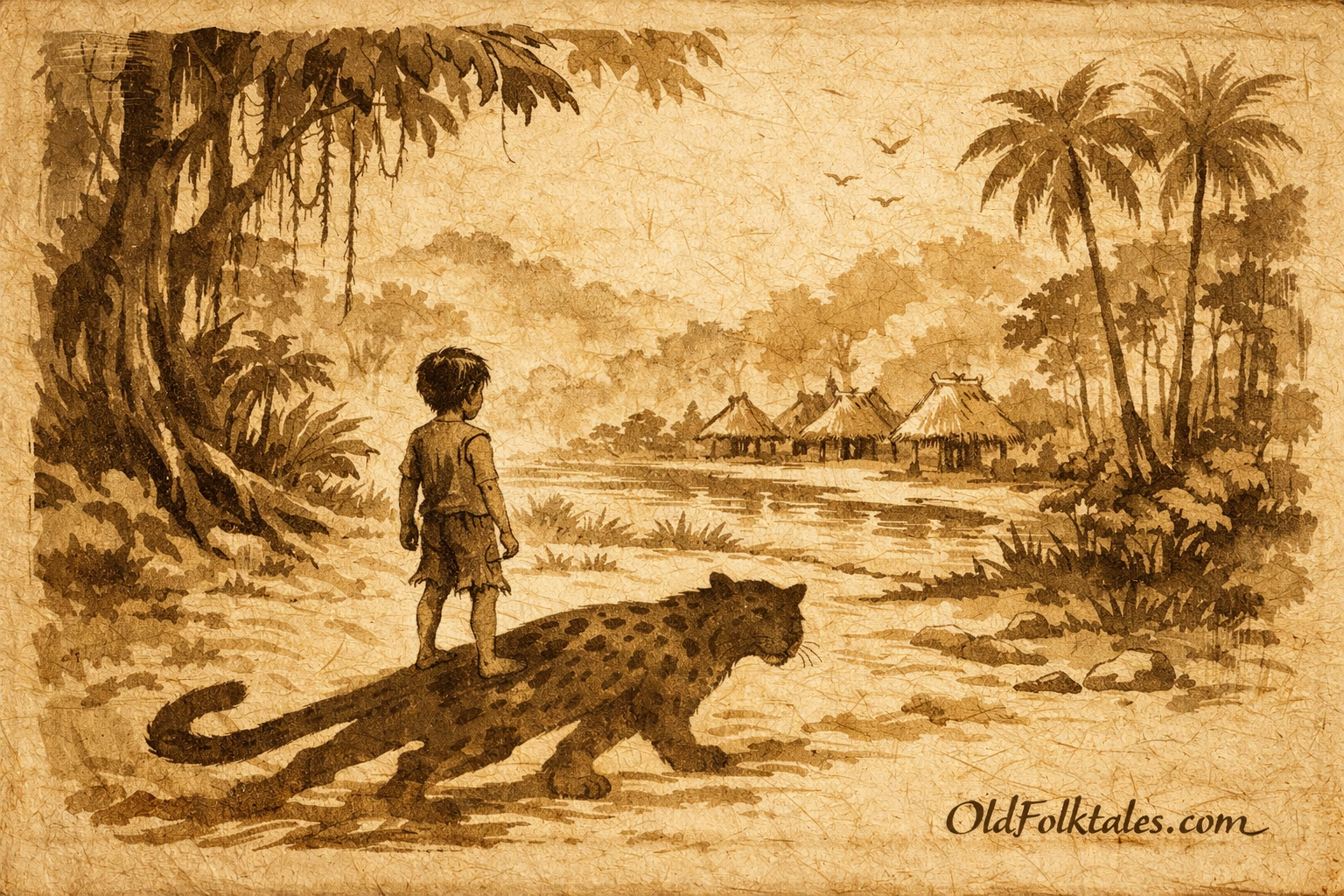
In the deep forests of the Western Amazon, where the trees rise like pillars and the calls of unseen creatures echo through the canopy, there lived a boy who grew up at the edge of two worlds. One was the village of his people, shaped by voices, fires, and shared labor. The other was the forest itself, vast, watchful, and alive with spirit. From an early age, the boy felt a pull toward the forest that others did not feel, as though it recognized him as one of its own.
As he grew, the elders noticed that the forest responded to his presence. Animals did not flee when he approached. The paths seemed to open before him. At night, he dreamed of running through the undergrowth with strength and speed beyond any human body. These dreams were vivid and unsettling, filled with the scent of earth and the rhythm of powerful movement.
Explore the land of La Llorona, trickster coyotes, and magical realism in Mexican folklore
In time, the boy discovered the truth of his nature. Alone beneath the trees, he felt his body shift and change. His senses sharpened, his limbs strengthened, and his spirit expanded until he was no longer fully human. He had become a jaguar, the most powerful and respected creature of the forest.
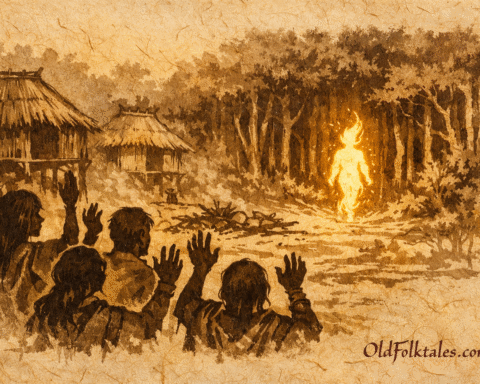
At first, the boy did not understand the meaning of this gift. He returned to the village filled with excitement and pride. When night fell, he transformed again and let his power roam freely. He circled the village, leaving deep tracks in the earth and letting out calls that froze people in fear. Children hid, fires burned low, and whispers of danger spread among the homes.
The boy felt powerful, but the village felt threatened.
The elders soon recognized what was happening. They had seen such gifts before, though rarely. They called the boy before them and spoke of the old teachings, of shamanic knowledge passed down through generations. They explained that transformation was not meant for play or intimidation. It was a responsibility, not a privilege.
They told him that the jaguar was not merely an animal, but a guardian of balance. To carry its spirit was to stand between worlds, protecting both rather than disrupting either. Power used without purpose brought harm, not honor.
The boy listened, though the lesson was slow to settle. It took time and guidance for him to understand his dual nature. Under the elders’ instruction, he learned restraint. He learned when to transform and when to remain human. He learned to move through the forest without leaving fear behind him.
Gradually, his role changed. When hunters lost their way, the jaguar guided them home. When dangers threatened the forest, the boy stood watch, unseen but present. He became a bridge between human and animal, village and wilderness.
The people no longer feared the jaguar’s presence. They understood that it was the boy, protecting them as he protected the forest. His identity was no longer divided, it was balanced.
In time, the story of the boy who became a jaguar was passed down, not as a tale of fear, but as a lesson. It reminded the people that identity carries responsibility, and that true power serves the community and preserves harmony.
Explore myths and legends from Brazil, Peru, and Argentina rooted in spirit and survival.
Moral Lesson
This folktale teaches that power demands responsibility and self-control, and that identity finds its purpose only when it serves balance, community, and harmony with nature.
Knowledge Check
1. What special ability does the boy possess in the story?
He can transform into a jaguar.
2. Why do villagers fear the boy at first?
He misuses his power and frightens them.
3. Who helps the boy understand his responsibility?
The village elders.
4. What does the jaguar symbolize in the folktale?
Power, guardianship, and balance between worlds.
5. How does the boy’s role change by the end of the story?
He becomes a protector of both village and forest.
6. What cultural belief does the story reflect?
Shamanic transformation and spiritual responsibility.
Source: Indigenous oral folklore; recorded in Amazonian myth collections
Cultural Origin: Western Amazon (Peru-Colombia Indigenous cultures)