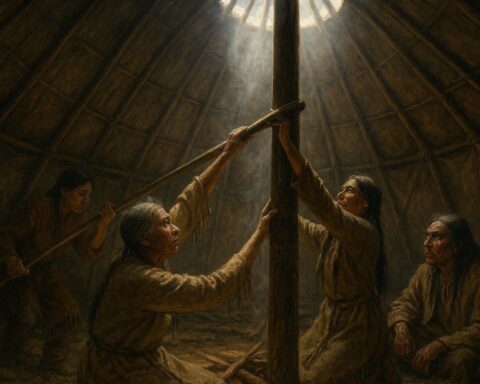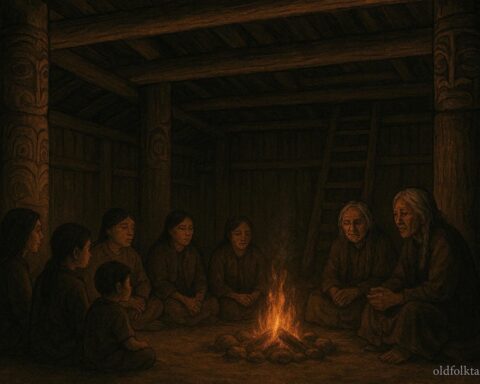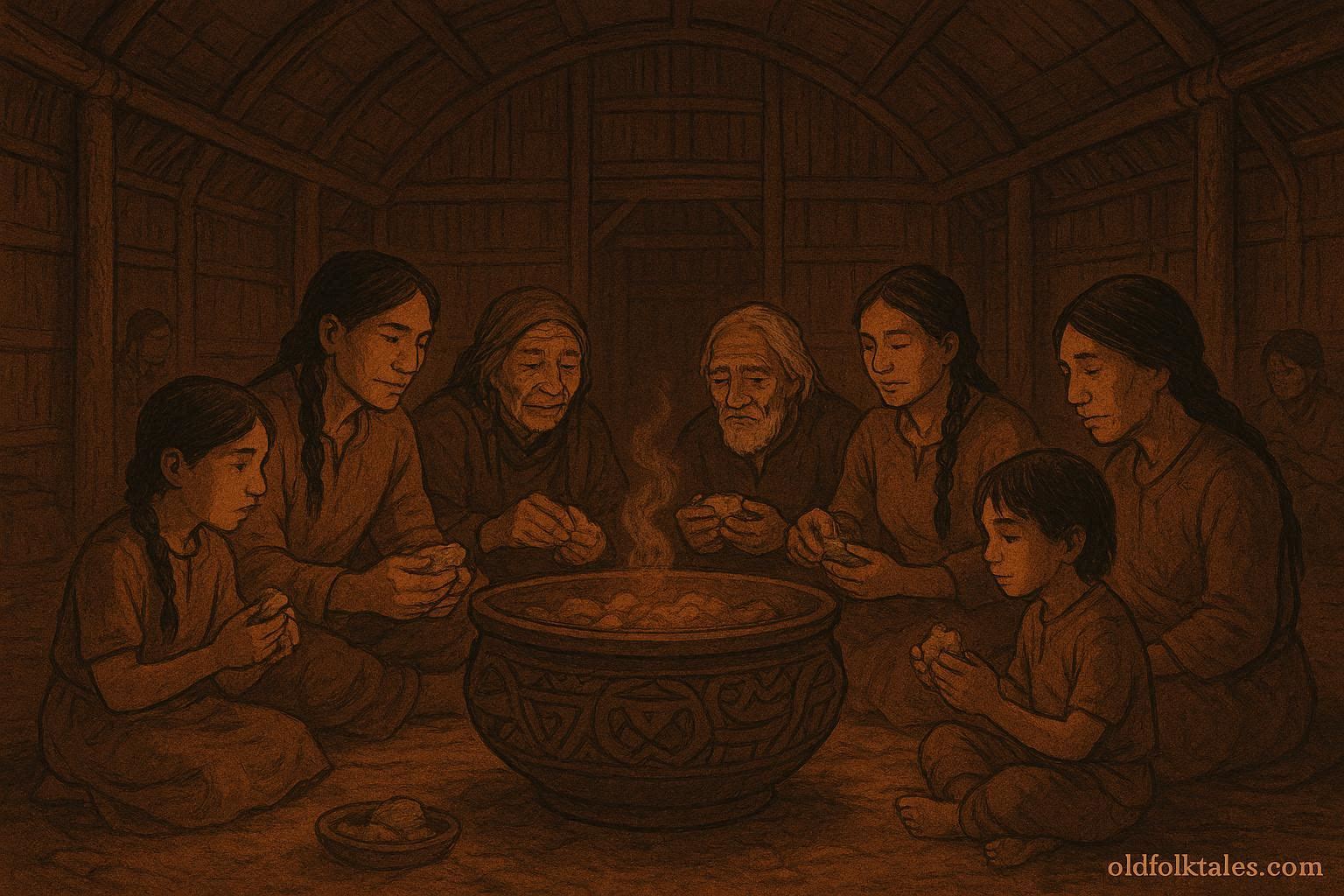
Long ago, in a small Anishinaabe village along the shores of the Great Lakes, there was a special bowl unlike any other. It was said to have been crafted by the elders of the village, infused with teachings from the ancestors. The bowl’s surface was smooth and dark, with subtle carvings that depicted animals, winds, and rivers. No one remembered who had first brought it to the village, only that it had always been present at the center of the longhouse where all could gather.
The elders instructed the people that the bowl could provide food for the entire community. It would never run empty, no matter how much was taken, as long as no one tried to claim its contents for themselves. The moment someone tried to hoard, the food would vanish, and the bowl would remain empty until humility and sharing were restored.
At first, the villagers were careful. Each family would take only what they needed, leaving plenty for others. Children would sit beside their parents and watch as the elders measured portions. Meals from the bowl were simple but nourishing: thick porridge, berries, fish, or boiled roots gathered from the surrounding forests. The bowl provided just enough for everyone, and the village flourished.
Explore the ancestral legends of Canada, Mesoamerica, and South America’s Indigenous tribes.
However, as seasons passed and the village prospered, whispers of greed began to spread. Some villagers thought: Why not take a little extra? No one will notice. One morning, a young hunter named Makwa, proud of his growing family and confident in his own cleverness, filled his bag with more porridge than necessary and hid it for later. He did not return the next day.
When the villagers gathered at the longhouse, they were surprised to find the bowl empty. No matter how much they tried, it would not provide food. Families whispered anxiously. The elders called the village together and reminded them of the teachings: The bowl honors generosity and punishes selfishness. Only those who share freely may receive its gifts.
Makwa, ashamed, returned to the longhouse and confessed his actions. He admitted that he had taken more than his share and had hidden it for himself. The elders nodded, recognizing the courage it took to speak the truth. Together, the villagers cleaned the longhouse, offered the bowl a portion of food they had gathered collectively, and waited. Slowly, the bowl began to fill again, first with a small serving of porridge, then with berries, fish, and roots.
The village learned a valuable lesson that day. The bowl was not just a source of food; it was a reflection of their own hearts. When generosity flowed freely, the bowl never emptied. When greed or selfishness crept in, the bowl reminded them of balance and responsibility.
Years later, the story of the bowl spread to neighboring villages. Travelers would come and witness its magic, and elders would tell their children that the bowl existed in every act of sharing: in kindness, in giving, and in respecting the needs of the community. Even after generations, the villagers said, the bowl continued to teach the lesson that food, wealth, and sustenance are never truly gained through selfishness — they are nurtured through generosity.
In time, the children of the village would gather around the longhouse, listening intently to the elders’ retelling of the bowl. They learned that no one person could own the gifts of the community and that each person’s actions ripple outward, touching the lives of all. The bowl became a symbol, a constant reminder that sharing is not just an act, but a way of living.
Even today, according to the elders, if you pass through the old village and look closely at the center of the longhouse, you can see the dark, smooth surface of the communal bowl. And if your heart is humble and generous, it is said the bowl will offer you a taste of its enduring gift.
Moral lesson
Generosity and humility nourish a community more than personal greed. True sustenance comes not from hoarding, but from sharing and respecting the needs of others.
Knowledge check
- What special property does the communal bowl have?
It never empties as long as the villagers act with generosity and do not claim its contents for themselves. - Who caused the bowl to become empty?
Makwa, a young hunter, hid extra food for himself, demonstrating selfishness. - What lesson do the elders teach about the bowl?
The bowl reflects the hearts of the people and teaches that sharing ensures sustenance while greed causes scarcity. - How do the villagers restore the bowl’s power?
By confessing wrongdoing, returning excess food, and collectively offering a portion from the community. - What does the bowl symbolize in the village?
It symbolizes generosity, community responsibility, and the moral impact of individual actions. - Which First Peoples cultural group does this story originate from?
Anishinaabe First Peoples, Great Lakes region, Canada.
Source: Adapted from Canadian Museum of History Indigenous ethics narratives; Native-Languages.org
Cultural origin: Anishinaabe First Peoples, Great Lakes region, Canada