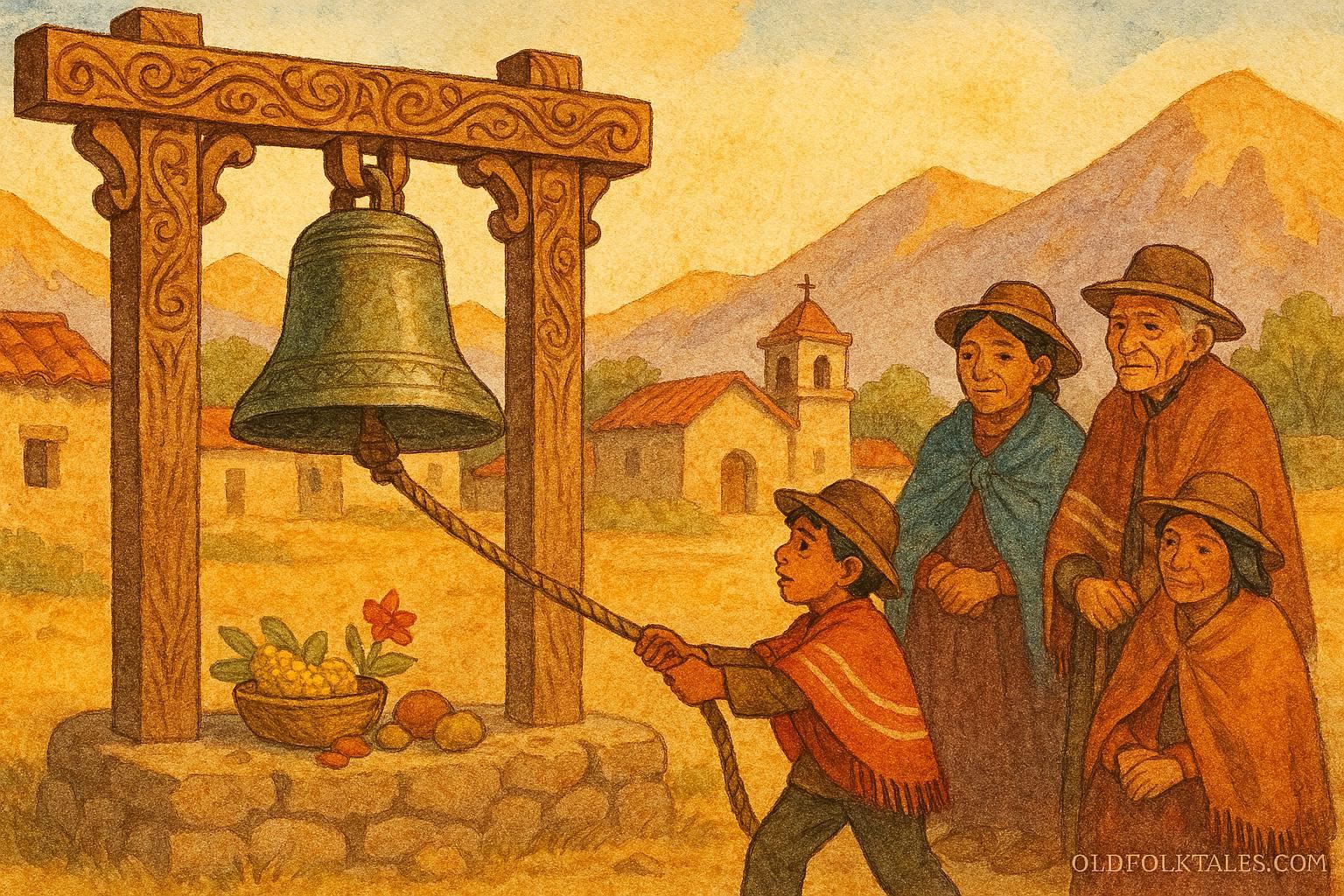
High in the arid valleys of northern Chile, the Aymara people maintained a ritual site where a large ceremonial bell hung from a carved wooden frame. This bell was not merely an object for calling the community to gathering; it carried the spirit of reciprocity and the memory of ancestors. The rope used to ring the bell was made from woven llama hair, treated with ceremonial oils, and imbued with the understanding that generosity and fairness must govern communal life.
Every festival, villagers offered gifts like grains, small handcrafted items, or tokens of gratitude to honor the spirits and ancestors. In return, the bell would ring clearly, its sound resonating across the valley, symbolizing balance and harmony among the people and the land. The elders taught that if someone attempted to ring the bell without making offerings, or withheld them out of selfishness, the rope would resist, tighten, and sometimes even fray.
One year, a particularly harsh season had left the villagers worried about their harvests. Fear and scarcity clouded their judgment. Several young villagers, impatient and self-interested, decided to ring the ceremonial bell without leaving any offerings, believing the act alone would bring blessings. They pulled on the rope forcefully, but it refused to give. It tightened in their hands, as if alive, testing their intentions. The bell remained silent.
Explore the ancestral legends of Canada, Mesoamerica, and South America’s Indigenous tribes.
Confused and frustrated, the youth tried again and again. The rope would not budge, and each attempt left their hands scratched and sore. Observing this, the elders shook their heads and called the villagers together. They explained that the bell’s silence reflected the imbalance in the community’s ethics. Without generosity, the connection between the people, their ancestors, and the land could not be maintained. Self-interest and greed disrupted harmony, and the bell rope was a living witness of that truth.
The young villagers, chastened but still curious, asked how they could make the rope loosen and hear the bell’s sound. The elders replied that only sincere offerings and gestures of generosity could restore the balance. Gifts need not be extravagant; even the smallest token, offered from the heart, could suffice. The lesson was clear: it was the intention behind the action, not the quantity, that mattered.
The youth then worked together to gather what they could spare: dried corn, handcrafted figurines, small woven bags, and sincere words of gratitude. Each item was offered with humility, and the bell rope began to respond. Slowly, it slackened under their hands, and the ceremonial bell rang for the first time that season. The sound echoed across the valley, clear and strong, reminding the villagers that generosity and restraint were valued above fear or greed.
Over time, this lesson became part of the villagers’ identity. Festivals were no longer just about celebration; they were also about cultivating moral and ethical balance. Children were taught from a young age that the rope would tighten if selfishness guided their actions. Elders emphasized that the bell rope was more than a ritual tool; it was a moral instrument, guiding the community toward reciprocity, patience, and ethical action.
Even when the harvests were lean, the people remembered the bell rope’s lesson. They offered whatever they could, understanding that generosity was measured not by abundance but by sincerity and willingness to maintain communal balance. Over decades, the story of the bell rope that tightened at greed became a teaching tool for generations, reminding the community that moral responsibility and shared ethics were central to survival, happiness, and harmony with the land.
The bell rope, though old and frayed in places, still hangs today in the ceremonial plaza. It tightens only for those who attempt selfishness and slackens for those whose hearts honor the values of generosity, patience, and respect. Through this simple but powerful mechanism, the elders ensure that ethical behavior is woven into the very fabric of daily life, echoing the voices of ancestors and the lessons of centuries.
Click to read all South American Folktales — timeless stories from the Andes to the Amazon.
Moral Lesson
The bell rope teaches that selfishness and greed disrupt community harmony. True prosperity comes from generosity, sincerity, and ethical reciprocity. Rituals are not mere formalities; they encode moral and spiritual truths essential to the survival and cohesion of society. Respecting these principles ensures balance between individuals, the community, and the natural world.
Knowledge Check
1 What caused the bell rope to tighten?
Answer : Villagers attempted to ring the bell without leaving offerings or acted selfishly
2 What did the bell symbolize?
Answer :The bell symbolized communal balance, ancestral presence, and ethical reciprocity
3 How could the rope loosen and allow the bell to ring?
Answer : By making sincere offerings and acting with generosity and humility
4 What lesson did the elders emphasize?
Answer : That the intention behind actions matters more than quantity; selfishness disrupts harmony
5 What broader principle does the bell rope teach about ritual practice?
Answer : Ritual objects reflect moral and ethical responsibilities essential to communal survival
6 Which First Peoples’ wisdom is reflected in this story?
Answer : Aymara peoples of Northern Chile
Source: Adapted from Material Morality in Andean Ritual Practice, Universidad de Chile (2013)
Cultural Origin : Aymara peoples, Northern Chile