Across the cold waters of Atlantic Canada, sailors have long trusted their eyes and ears. They watched the sky, read the waves, and listened for the groan of hulls and the cry of wind through rigging. Yet among the oldest mariners, there was another warning spoken of in hushed tones. It was not heard or seen, but felt. This was the warning of the bell rope that grew warm.
The story is told of a coastal trading vessel called The Northward Grace, which sailed between small ports carrying timber, salt, and dried fish. Her crew was experienced, practical, and proud of their seamanship. Among them was Thomas Hale, a quiet deckhand known for his attentiveness. While others joked and boasted, Thomas observed. He noticed small shifts in wind, subtle changes in the sea, and sounds others dismissed.
One late autumn voyage, the ship left harbor under calm skies. The sea lay smooth and dark, and the air carried the sharp bite of approaching winter. The captain expected a straightforward journey. No storms were forecast, and the barometer showed nothing unusual.
Explore the ancestral legends of Canada, Mesoamerica, and South America’s Indigenous tribes.
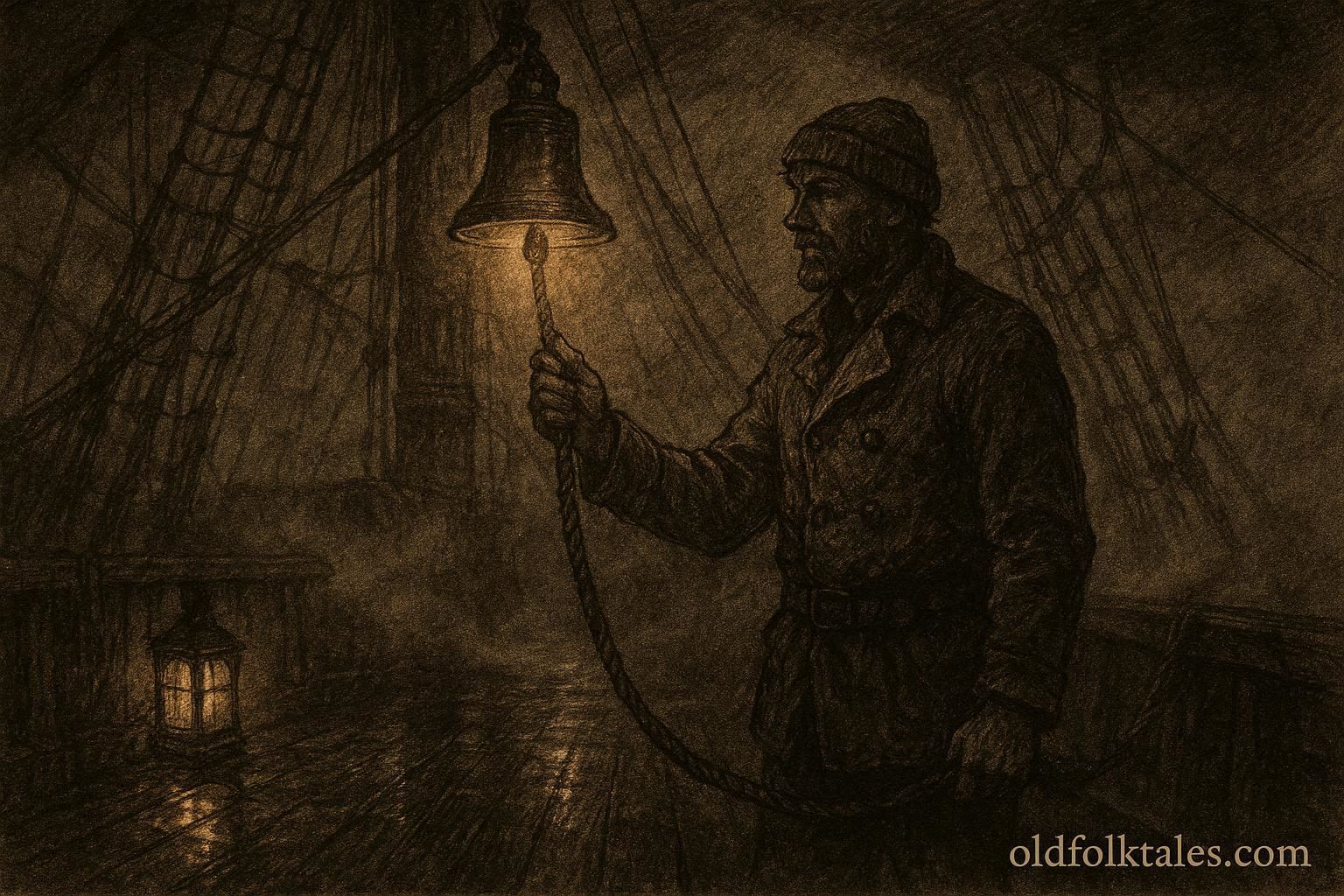
As evening settled, Thomas was sent to ring the ship’s bell to mark the changing watch. He wrapped his hand around the thick rope that hung beside the bell. At once, he froze.
The rope was warm.
Not sun-warmed, not damp with friction, but strangely, unmistakably warm, as though it held heat of its own. Thomas released it quickly and stared, unsettled. The night air was cold enough to numb fingers. Nothing aboard should have felt warm.
He rang the bell anyway, but unease clung to him. When his watch ended, he mentioned it to another sailor, who laughed it off. “Ropes don’t feel,” the man said. “You’ve imagined it.”
But the warmth returned.
Each time Thomas touched the bell rope that night, it was warm. By midnight, it felt warmer still. He began to notice other small signs. The sea grew unnaturally quiet. The wind died without warning. Even the ship’s timbers seemed to hold their breath.
Remembering an old story told by his grandfather, Thomas went to the captain. The elder sailors used to say that when danger approached unseen, the ship itself tried to speak. Wood, iron, and rope were not dead things at sea. They listened, absorbed, and sometimes warned.
The captain hesitated. He trusted charts and instruments, not sensations. Still, Thomas’s seriousness gave him pause. He ordered the crew to reduce sail and posted extra lookouts.
Barely an hour later, a wall of fog rolled in without warning. Thick, wet, and blinding, it swallowed the ship entirely. Visibility vanished. The compass spun wildly. Beneath the fog, the sea changed its rhythm, growing shallow and confused.
Suddenly, breakers roared ahead.
The ship was being carried toward hidden shoals.
Orders rang out. Sail was cut. The helm was fought. The crew worked in frantic silence, knowing one mistake would tear the hull open. Through it all, Thomas clutched the bell rope, guiding movements by its position in the chaos. It burned warm beneath his palm, as though urging haste.
At the last possible moment, the ship turned. The hull scraped rock, but did not split. Waves hammered them sideways, yet somehow, the vessel slid free and drifted into deeper water.
By dawn, the fog lifted. The shoals lay behind them, jagged and unforgiving. The Northward Grace was battered but alive.
When the danger passed, Thomas returned to the bell. The rope was cold again.
No one laughed after that.
Word spread quickly through the ports. Sailors spoke of the warm bell rope as a living warning, a sign that disaster approached quietly. Some said it was the memory of wrecked ships lingering in the fibers. Others believed it was the sea itself, sending a final chance to those willing to pay attention.
From then on, sailors treated the ship’s bell with new respect. They touched the rope carefully, especially at night, and trusted not only what they saw, but what they felt. Those who ignored such signs often met misfortune. Those who listened survived.
Even now, some claim that on fog-bound nights, certain ships carry a bell rope that grows warm without cause. The sea, it seems, still whispers to those who are willing to listen with more than their eyes.
Moral Lesson
Not all warnings announce themselves loudly. Survival often depends on attention, intuition, and humility. The story teaches that wisdom lies in listening to subtle signs and respecting experience, even when it defies logic. Those who dismiss quiet warnings may lose their chance to act.
Knowledge Check
- What unusual sign warned the crew of danger?
The ship’s bell rope became warm to the touch. - Who first noticed the warning?
Thomas Hale, a quiet and observant deckhand. - Why did others initially dismiss the sign?
They believed ropes could not feel or change on their own. - What danger did the ship narrowly escape?
Hidden shoals concealed by sudden fog. - What changed after the crew survived?
Sailors began respecting sensory warnings and intuition. - What does the bell rope symbolize?
The ship’s awareness and the importance of attentiveness.
Source:
Adapted from Canadian Museum of History maritime folklore records.
Cultural Origin:
Maritime folklore, Atlantic Canada.