Among the Haudenosaunee First Peoples, woven baskets are more than containers. They hold food, seeds, and belongings, but some are also believed to carry the weight of human behavior. One such basket, sacred and finely woven, had the ability to reflect the balance of favors and kindness within a community. Its story is told to teach responsibility, generosity, and the social consequences of neglecting reciprocal obligations.
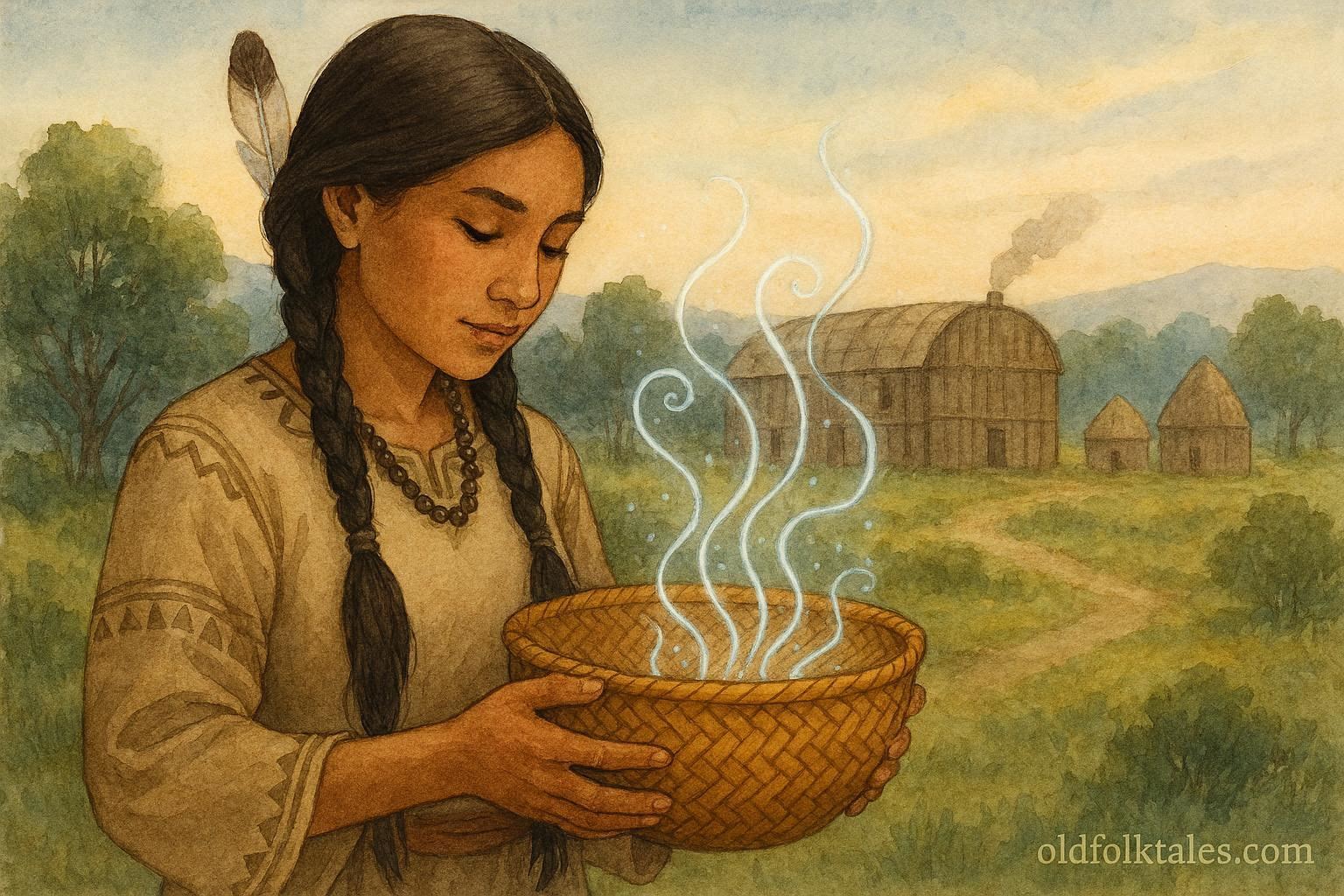
Long ago, there was a young woman named Onwentsia who was known for her generous spirit. She helped neighbors gather firewood, shared her harvest, and assisted elders in their tasks. Her grandmother entrusted her with a special basket, saying, “This basket counts the kindness you receive. Return every favor you are given. Only then will the basket rest lightly.”
At first, Onwentsia noticed nothing unusual about the basket. She used it for food and carrying small items as she had done with ordinary baskets. But over time, she began to realize that when she received help and did not reciprocate, the basket grew heavier in her hands. If she accepted seeds or assistance and forgot to offer something in return, the basket would become burdensome, pressing down as if alive.
Discover ancient tales passed down by the Indigenous peoples of the Americas.
Confused by the sensation, Onwentsia consulted the elders. They explained that the basket was a reflection of communal balance and ethical responsibility. “Kindness is a circle,” they said. “It travels from one heart to another. If you allow the circle to break, the weight falls upon you.”
Determined to restore harmony, Onwentsia began carefully noting the favors she had received. She returned seeds to farmers who had shared, helped repair the homes of those who assisted her family, and spent time with elders who had offered guidance. With each act of reciprocity, the basket lightened, as if approving her actions.
The story spread among the village, and people learned that unreturned kindness creates imbalance. The basket became a teaching tool: children were shown how to recognize when help was offered and how to act with gratitude. Adults were reminded that generosity without expectation must be paired with acknowledgment and respectful return. In this way, the basket taught that ethical responsibility is not only individual but also communal.
Years later, Onwentsia passed the basket to her own daughter. She explained that its weight is not meant to punish, but to educate. A basket may grow heavy from neglect, but it can be lightened through mindful action. The moral of the basket’s story is clear: the web of relationships, like the weave of the basket itself, must be maintained with care, honesty, and gratitude.
Through the generations, the basket became symbolic. It reminds the Haudenosaunee that every action carries consequence, that generosity is a form of social currency, and that communal bonds rely on active participation. The tale underscores that kindness is not only a virtue but also a responsibility, and that failure to uphold reciprocal obligations affects not just the individual, but the entire community.
This folktale also teaches that material objects can be ethical mirrors. Just as a basket counts favors, other tools and garments in Haudenosaunee culture serve to reinforce the moral fabric of society. In giving, receiving, and returning, the community maintains equilibrium, and the spirits of the ancestors watch over both the giver and the recipient, ensuring that the circle of kindness continues unbroken.
By listening to these lessons, individuals are reminded to act with integrity, to observe carefully, and to honor the interconnectedness of all community members. The basket, humble yet potent, embodies the principle that every favor carries moral weight and that ethical living requires constant attention and care.
Moral lesson
Generosity without acknowledgment or reciprocity creates imbalance. Returning favors maintains personal integrity, strengthens community bonds, and honors the interconnectedness of human relationships.
Knowledge check
- What causes the basket to grow heavier?
Failing to return favors or neglecting acts of kindness. - Who first carried the sacred basket?
Onwentsia, a young Haudenosaunee woman. - How does the basket teach ethical lessons?
Its weight reflects unreturned kindness, prompting action to restore balance. - What actions lighten the basket?
Returning favors, helping those who assisted you, and acting with gratitude. - What broader principle does the basket illustrate?
That ethical responsibility and reciprocity sustain community harmony. - Which cultural group does this story originate from?
Haudenosaunee First Peoples, Great Lakes region, Canada.
Source: Adapted from Indigenous material symbolism studies; Canadian Museum of History
Cultural origin: Haudenosaunee First Peoples, Great Lakes region, Canada