In ancient times, when rivers still wandered freely across the land and their paths were not yet fixed, the people of the Lower Amazon believed that the waters were watched over by a living spirit. Beneath the deepest channels, where sunlight could not reach and currents moved with slow authority, lived a colossal anaconda older than memory itself.
This great serpent was not feared as a monster, nor worshipped as a god of destruction. It was understood as a guardian, an ancient presence charged with maintaining balance between rivers, lakes, rainfall, and the lives that depended upon them. The elders taught that the anaconda listened to human behavior as closely as it sensed the movements of water.
Villagers who fished with care took only what they needed. Before casting their nets, they spoke quiet words of gratitude to the river. After each catch, they returned the smallest fish and poured clean water back into the current. In return, the rivers remained generous. Canoes moved safely. Floods arrived when they were needed and retreated when their work was done.
The children learned early that water was alive. It remembered footsteps along its banks and hands that reached too deeply into its gifts.
One season, strangers arrived from beyond the forest. They traveled in heavy boats and laughed at the warnings offered by the villagers. When elders spoke of the anaconda guardian and the need for ritual respect, the outsiders mocked them. They believed the river was only a resource, not a living force.
Ignoring custom, they poisoned sections of the water to bring fish quickly to the surface. They took more than they could carry, leaving the rest to rot along the banks. The villagers watched in silence, uneasy but unwilling to interfere.
At first, nothing happened.
Then, without warning, the river began to change.
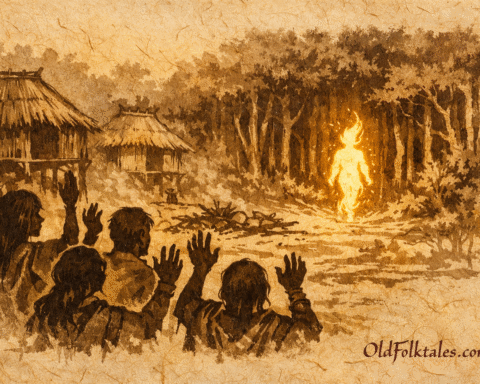
The waters rose even though no rain had fallen. Currents twisted where they had always run straight. Canoes rocked violently, and trees along the banks leaned as if pushed by unseen hands. At night, the water glowed faintly, disturbed by something vast moving beneath its surface.
The elders knew what was happening.
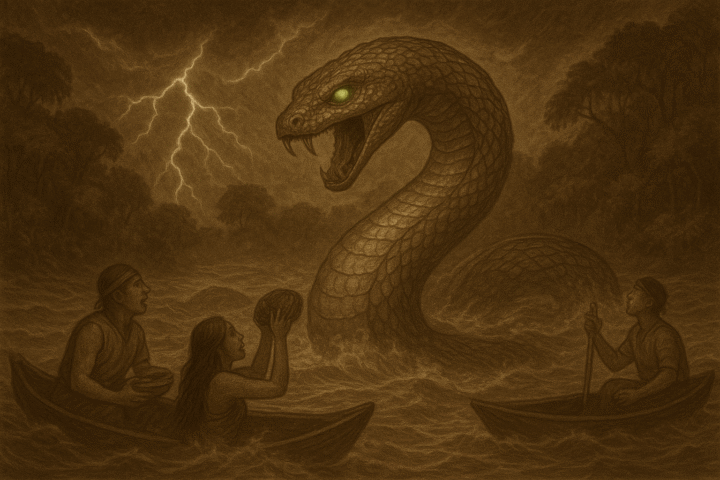
From the deepest bend in the river, the anaconda emerged.
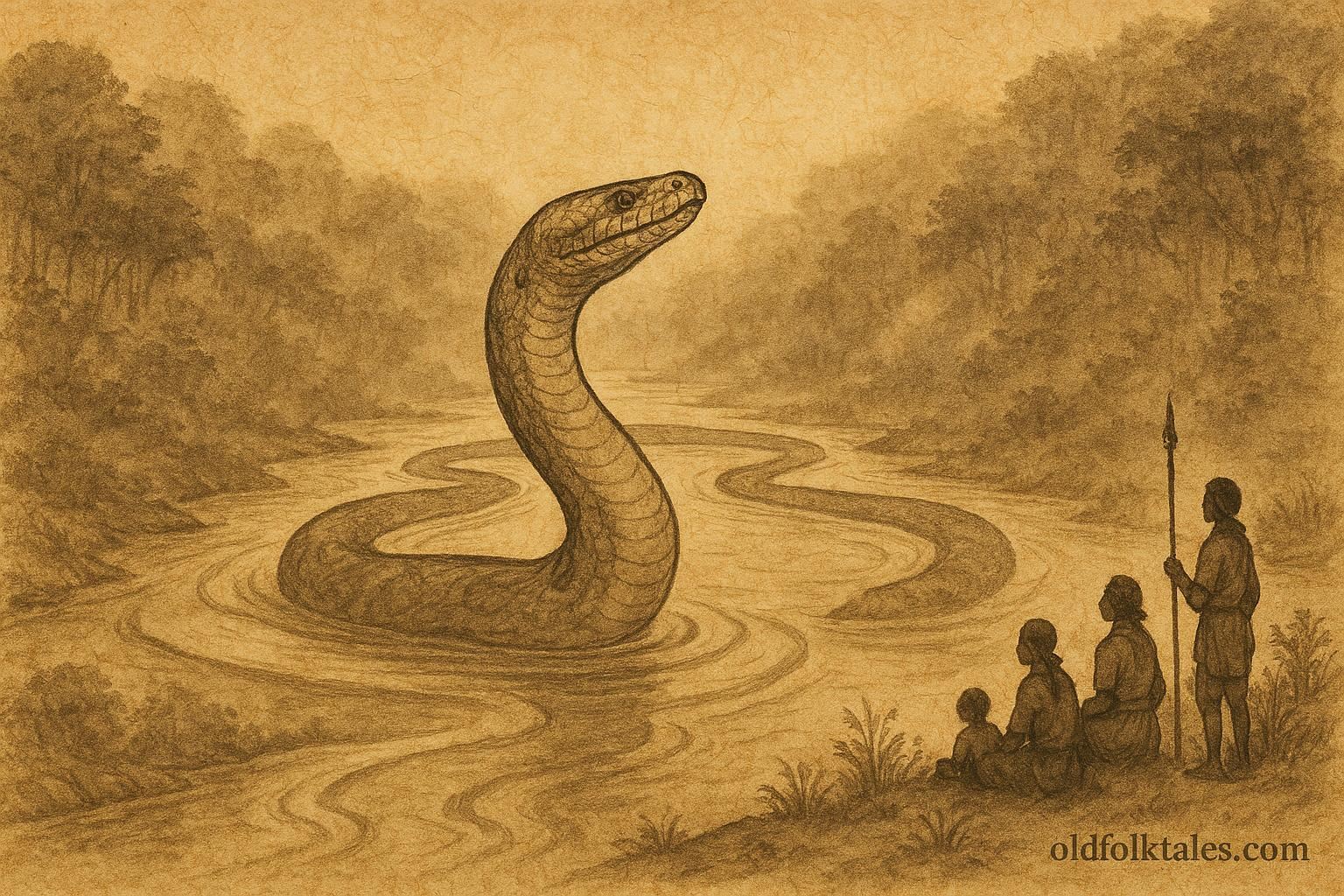
Its body was immense, its scales dark and gleaming like wet stone. As it moved, the river reshaped itself around the serpent’s path. New bends formed where none had existed before. Old channels vanished beneath churning water. The anaconda did not strike, yet its presence alone commanded terror.
The outsiders fled in panic. Their boats overturned. Supplies were lost. They escaped into the forest, abandoning everything they had taken. Only when they were gone did the anaconda sink once more beneath the surface.
Slowly, the waters calmed.
The river settled into its new shape, altered but balanced. Fish returned. The banks held firm again. The villagers gathered at the shore in silence, offering renewed prayers and cleansing rituals. They taught their children that the anaconda’s work was not punishment, but correction.
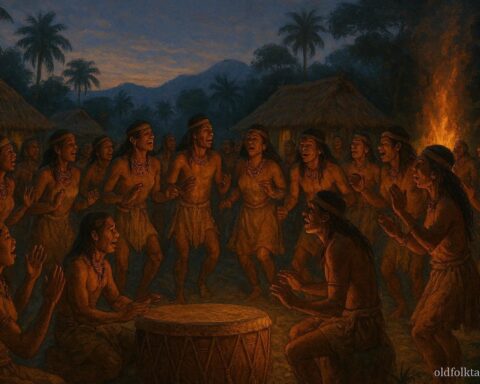
From that time on, ceremonies were performed with greater care. No one entered the river without intention. No one took without gratitude. Elders pointed to the river’s curves and told the young ones, “That is where the guardian passed.”
Even now, they say that when a river shifts its course, it is because the anaconda has moved, reminding the world that water obeys laws older than humanity.
Click to read all South American Folktales — timeless stories from the Andes to the Amazon.
Moral Lesson
This folktale teaches that nature enforces its own laws. Respect for water and balance is not optional, and those who ignore natural order invite consequences beyond their control.
Knowledge Check
1. What role does the anaconda play in the story?
It is a guardian spirit maintaining balance in rivers and waters.
2. How did the villagers show respect for the river?
By fishing responsibly, offering gratitude, and performing rituals.
3. What mistake did the outsiders make?
They polluted the water and ignored local warnings.
4. How did the anaconda respond to the disrespect?
By reshaping the river and causing dangerous floods.
5. What lesson did the villagers pass to their children?
That water listens, remembers, and demands respect.
6. What do shifting river paths symbolize?
The movement and authority of the anaconda guardian.
Source: Indigenous river-guardian mythology; recorded in Lower Amazon oral traditions
Cultural Origin: Amazon Basin (Indigenous folklore)