Long before humans walked the forest paths or named the rivers that shaped their world, the Amazon existed in a time of beginnings. In this ancient age, the anaconda was not merely a creature of the forest, but a sacred ancestral being. The land was vast and untouched, the trees stood like guardians beneath the sky, and the rivers had not yet taken their winding form. From this primordial world emerged the great Anaconda Mother, whose body and spirit would give rise to humanity itself.
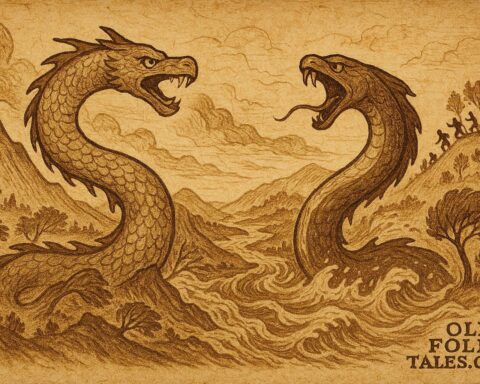
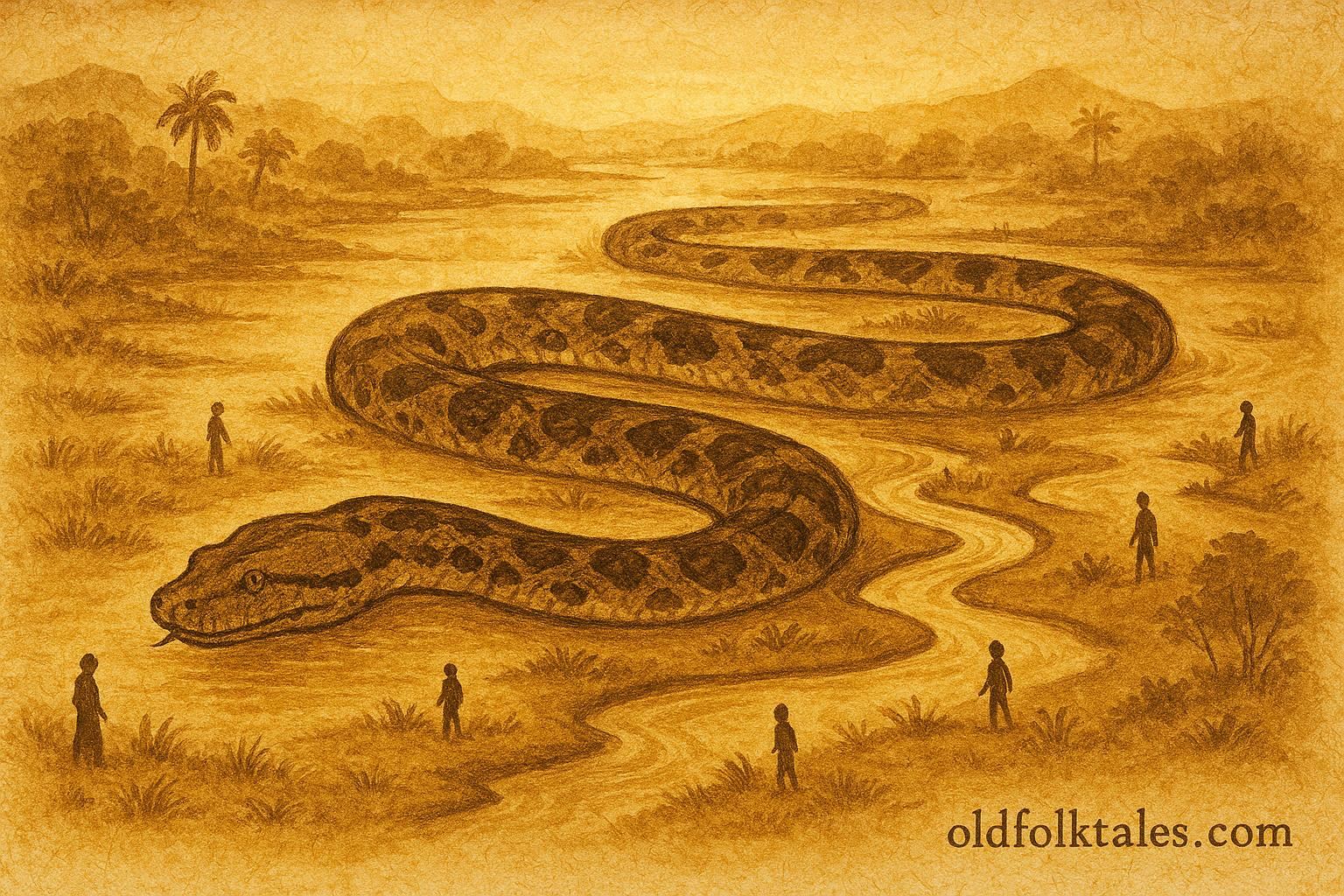
The Anaconda Mother was immense in size and power, her scales shimmering like flowing water. As she moved across the land, her body pressed into the earth, carving deep channels. Wherever she passed, water followed. These channels became the rivers of the Amazon, twisting and turning through the forest like veins carrying life itself. The people later understood that the rivers were not separate from her, they were a living continuation of her presence.
Long before humans walked the forest paths or named the rivers that shaped their world, the Amazon existed in a time of beginnings. In this ancient age, the anaconda was not merely a creature of the forest, but a sacred ancestral being. The land was vast and untouched, the trees stood like guardians beneath the sky, and the rivers had not yet taken their winding form. From this primordial world emerged the great Anaconda Mother, whose body and spirit would give rise to humanity itself.
The Anaconda Mother was immense in size and power, her scales shimmering like flowing water. As she moved across the land, her body pressed into the earth, carving deep channels. Wherever she passed, water followed. These channels became the rivers of the Amazon, twisting and turning through the forest like veins carrying life itself. The people later understood that the rivers were not separate from her, they were a living continuation of her presence.
From the Anaconda Mother came the first humans. They emerged from her body, born not in separation from nature, but as part of it. They were imbued with her spirit and carried her essence within them. Because of this, the people believed they were not masters of the forest, but relatives within a vast family of life.
Each tribe traced its ancestry back to the Anaconda Mother. Rivers marked the journeys of their origins, and waterways became living records of creation. To travel by river was to move along the path of one’s ancestors. To drink from it was to receive life from the same source that gave birth to humanity.
The Anaconda Mother’s presence taught that humans, animals, and rivers shared the same bloodline. Fish, birds, trees, and people were bound together through her sacrifice and transformation. No being stood above another. All were connected through shared beginnings.
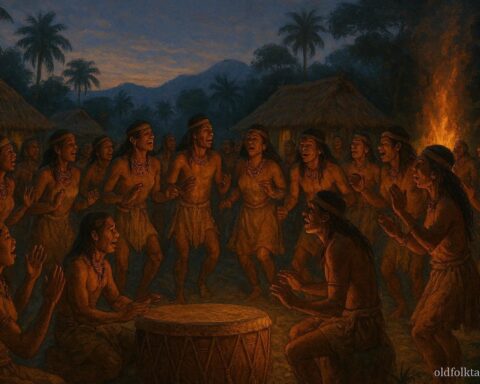
This understanding shaped how communities lived. Cooperation was valued over conflict. Respect guided interactions not only between people, but between humans and the natural world. The rivers were treated as sacred relatives, never to be polluted or abused. Animals were honored, not exploited, because they were kin.
When disputes arose between tribes, elders reminded the people of their shared ancestry. Though languages and customs differed, all descended from the same Anaconda Mother. Unity was not a choice, but a responsibility inherited from creation itself.
The story endured across generations, passed down through spoken word and ceremony. It reminded the people that harmony could only exist when shared origins were honored. To forget the Anaconda Mother was to forget oneself.
Even today, the rivers continue to trace her ancient movements, and the forest stands as living proof of her legacy. The Anaconda Mother remains a symbol of unity, ancestry, and the deep interconnectedness of all life within the Amazon.
Click to read all South American Folktales — timeless stories from the Andes to the Amazon.
Moral Lesson
This folktale teaches that all life is interconnected through shared ancestry, and that harmony among people and nature comes from honoring unity, kinship, and common origins.
Knowledge Check
1. Who is the Anaconda Mother in Amazonian folklore?
She is a sacred ancestral being from whom the first humans emerged.
2. How were the Amazon rivers created according to the legend?
They trace the movements of the Anaconda Mother across the land.
3. What relationship do humans have with animals and rivers in the story?
They are relatives, sharing a common origin.
4. Why is unity important in this folktale?
Because all tribes descend from the same ancestral source.
5. How did the legend influence community behavior?
It encouraged cooperation, respect, and care for nature.
6. What does the Anaconda Mother symbolize?
Ancestry, unity, and the sacred interconnectedness of life.
Source: Indigenous oral tradition; recorded in anthropological texts
Cultural Origin: Amazon Basin (Colombia–Brazil border; Tukanoan and related cultures)