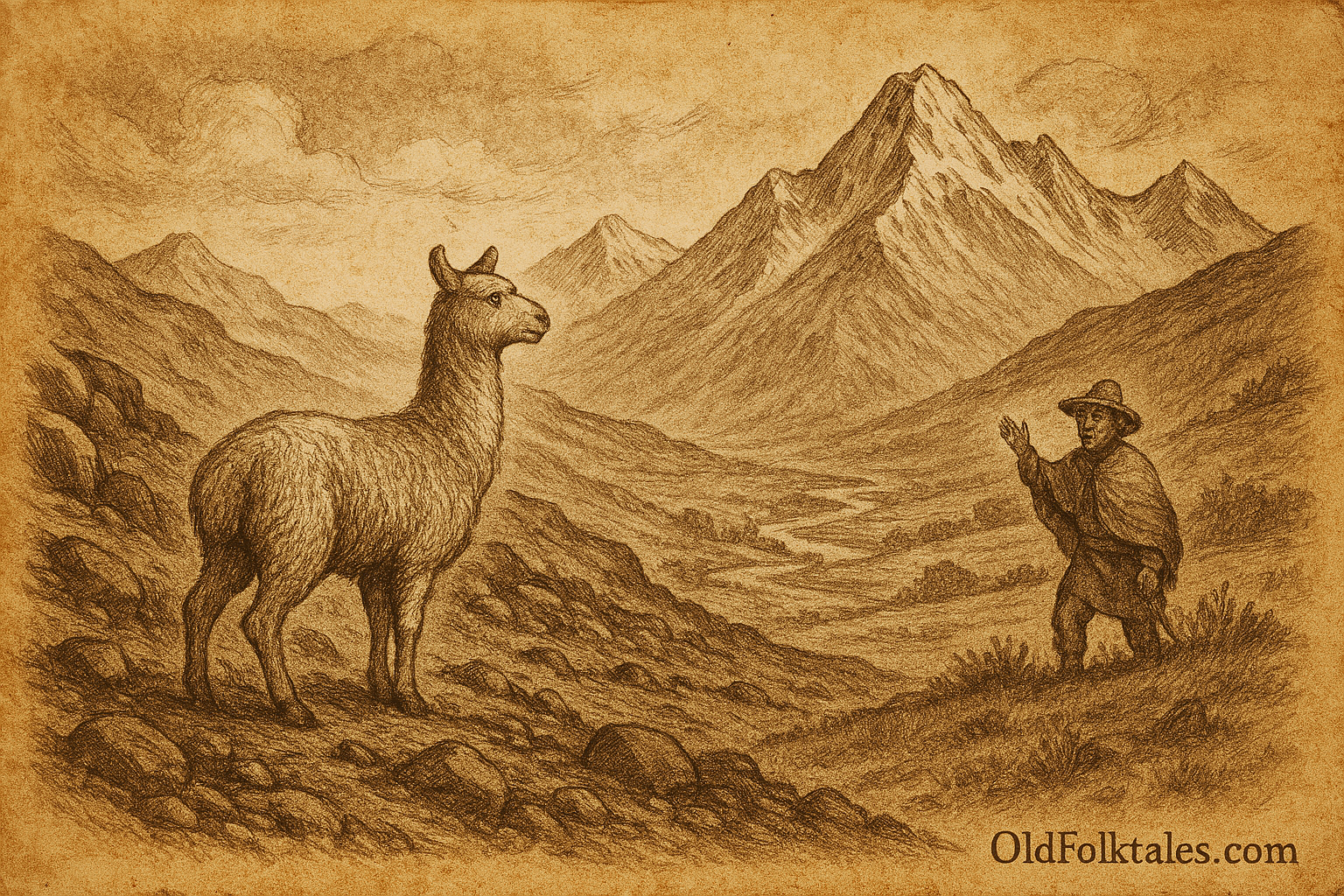
In one highland community where the pastures stretched across rolling slopes beneath snow-capped peaks, there lived a shepherd named Tupac who tended a herd of alpacas that had been in his family for generations. Among them was a particularly fine animal, a female with fiber so lustrous it seemed to catch and hold light, with a temperament both spirited and intelligent. Tupac had known this alpaca since her birth, had guided her through her first uncertain steps, had led the herd to the best grazing grounds his knowledge could find, season after season, year after year.
The alpaca knew Tupac’s call, the particular whistle he used, the specific sounds that meant safety, that indicated direction, that warned of danger. She knew the patterns of his movement through the highlands, understood the rhythm of his guidance. When he led the herd to new pastures, she followed with the confidence born of experience. When he called them back from slopes that became too steep or areas where the grazing was insufficient, she responded without hesitation. This was relationship built on accumulated trust, on countless interactions that had proven his guidance reliable and protective.
Click to read all South American Folktales — timeless stories from the Andes to the Amazon.
One day, while the herd grazed on a high meadow where the grass grew thick and sweet, a stranger appeared another man who also moved among the peaks with alpacas of his own. This stranger stopped to observe Tupac’s herd, his eyes particularly drawn to the fine female whose fiber gleamed in the mountain sunlight. He approached Tupac and struck up a conversation, as herders sometimes do when their paths cross in the vastness of the highlands.
“That is a magnificent animal,” the stranger said, gesturing toward the prized alpaca. “Such fiber would bring high price at market. You must take great care with her.”
Tupac nodded, pleased at the recognition of his finest animal but also slightly wary, as one becomes when a stranger shows too much interest in valuable property.
The stranger continued, his voice smooth and persuasive. “You know, just over that ridge there” he pointed to the east “there are pastures far superior to these. The grass grows thicker, more nutritious. The water is sweeter. My own herd has prospered greatly since I found those grazing grounds. It seems almost unfair that I should keep such knowledge to myself when I see a fellow herder with such fine animals. Perhaps your herd would benefit from grazing there as well.”
Tupac looked in the direction indicated but saw only the familiar peaks and ridges he had known all his life. His father and grandfather had herded these same mountains, and their accumulated knowledge passed down through stories, observations, and direct instruction had mapped the highlands in his mind with precision. He knew which areas offered good grazing and which were deceptive, appearing lush from a distance but proving barren or dangerous upon closer approach. He had never heard of superior pastures in that direction, and his instinct told him to be skeptical of such claims from a stranger.
“I thank you for the information,” Tupac said politely but noncommittally. “But I am content with the grazing grounds I know.”
The stranger shrugged and moved on, but not before the prized alpaca had heard his words and observed his gesture. And here began the problem the alpaca, though intelligent in many ways, lacked the full understanding that humans possess. She had heard talk of superior grazing, thicker grass, sweeter water. Her mind, such as it was, fixed on these promised benefits without the capacity to evaluate the source of the promise or recognize the stranger’s potential unreliability.
Over the following days, the stranger passed near Tupac’s herd several more times, always pausing to speak loudly about the wonderful pastures he knew, always gesturing in the same direction. And each time, the alpaca paid attention, her interest growing. The idea of better grazing began to occupy her thoughts, simple though they were. She began to gaze in the direction the stranger had indicated, to hesitate slightly when Tupac called the herd in different directions, to feel a pull toward this promised abundance that grew stronger with each passing day.
Then one morning, when the herd was grazing near a ridge and Tupac’s attention was occupied with a young alpaca that had strayed too close to a steep drop, the prized female made a decision. The stranger appeared again in the distance, moving in that eastern direction he had spoken of so enticingly. The alpaca, driven by the promise of superior grazing and lacking the wisdom to question or evaluate, broke away from Tupac’s herd and began to follow the stranger.
At first, she felt a thrill of independence and anticipation. She was going to the better pastures, the thicker grass, the sweeter water. She would be more comfortable, better fed, more prosperous. The stranger moved ahead of her, not particularly encouraging her but not discouraging her either, simply traveling his own path while she followed at a distance.
But as the day wore on and the sun climbed toward its peak, the terrain began to change. The lush meadows gave way to rockier ground. The grass became sparser, the grazing less appealing than what she had left behind. The stranger led her higher and higher into more barren highlands, into areas where the wind blew cold and constant, where patches of snow persisted even in summer, where the ground was more stone than soil.
Behind her, she could hear Tupac’s call his familiar whistle, the sounds that had always meant safety and guidance. He had discovered her absence quickly and was calling her back, his voice carrying across the thin mountain air with increasing urgency. But the alpaca, committed now to her choice and still believing in the stranger’s promise, ignored the familiar call. She had made her decision; she would continue toward the better pastures that surely lay just ahead.
By afternoon, she realized she had made a terrible mistake. The stranger’s path had led her into highlands so barren that virtually no vegetation grew just rocks and ice and the howling wind that cut through even her thick fiber. There was no grass, no water, no shelter. The stranger himself had disappeared, having traveled his own route with no concern for the animal that had foolishly followed him. She was alone in terrain she did not know, at elevations even higher and more hostile than her familiar grazing grounds, with no food, no water, and no guide.
She tried to retrace her path, but the highlands all looked similar, and without familiar landmarks, she became disoriented and lost. Night was approaching, and with it came cold that penetrated even her protective coat. She had grown weak from the day’s exertion without adequate grazing, and fear began to grip her as she understood, in her limited way, that she was in serious danger.
Tupac, meanwhile, had been searching frantically. He knew these mountains intimately, could read their terrain like others read text, and his mind worked quickly to calculate where a lost animal might have wandered. He followed the most likely routes, calling constantly, using every skill accumulated through generations of highland herding to track and locate his missing alpaca.
As darkness fell and the cold deepened, Tupac finally found her shivering, weakened, terrified, huddled against a rock formation that provided minimal shelter. When she heard his familiar call cutting through the darkness, she responded immediately with sounds of distress and recognition. All her earlier determination to follow the stranger, all her conviction that better pastures awaited, had dissolved in the face of harsh reality. Now she wanted only to return to the familiar guidance she had foolishly abandoned.
Tupac approached carefully, speaking in the calm tones she knew, rebuilding the connection that her departure had broken. He guided her slowly back down the mountain through the darkness, a journey that took hours and required all his knowledge and skill. He led her back to the herd, back to familiar grazing grounds that she now recognized as far superior to the barren heights the stranger’s promise had led her toward.
The alpaca survived, though she was weakened by her ordeal and required careful attention for days afterward. But she had learned something her animal mind could grasp that familiar guidance proven reliable over time was more valuable than attractive promises from strangers, that the shepherd who had cared for her consistently was more trustworthy than voices that spoke enticingly but had no investment in her wellbeing.
The story of the alpaca that followed the wrong shepherd became a teaching tale in the community, told particularly to young people who stood at the threshold of making their own decisions about whom to trust and which guidance to follow. The elders would recount how the alpaca had ignored Tupac’s familiar call to follow a stranger’s promise, how she had pursued an illusion of better grazing only to find herself lost and endangered, and how she had been saved only by the very guidance she had rejected.
“Not every voice that speaks to you has your welfare in mind,” the elders would teach. “Not every promise that sounds attractive leads to safety. The shepherd who has guided you faithfully through many seasons, who knows the terrain through long experience, who has proven care for your wellbeing such guidance is precious and should not be abandoned for smooth words from those with no proven commitment to you. Wisdom lies in recognizing which voices deserve your trust and which merely offer appealing lies.”
Click to read all Andean Highland Folktales — echoing from the mountain peaks of Peru, Bolivia, and Ecuador.
The Moral Lesson
This Quechua tale teaches that discernment the ability to distinguish trustworthy guidance from appealing but dangerous promises is essential for navigating life safely. The alpaca’s error was abandoning proven, reliable guidance in favor of a stranger’s attractive promises, lacking the wisdom to evaluate the source of advice or recognize the difference between empty words and demonstrated care. The story reminds us that not all who speak enticingly have our best interests at heart, that following attractive promises without evaluating their source can lead to genuine danger, and that guidance proven reliable through long experience and consistent care is more valuable than appealing claims from untested sources.
Knowledge Check
Q1: What is the significance of the shepherd-alpaca relationship in Andean Quechua culture?
A1: In Andean Quechua culture, the relationship between shepherd and herd is built over years or lifetimes, creating bonds of mutual recognition and trust essential for survival in the harsh highland environment. Alpacas are more than livestock they are companions and partners in survival at extreme elevations where few animals thrive. The relationship involves learned communication (specific calls and whistles), accumulated knowledge of safe grazing grounds and dangerous areas, and mutual dependence where the shepherd’s guidance and the animals’ responses mean the difference between life and death in an environment where wrong turns can lead to cliffs and sudden storms can disorient travelers.
Q2: Why was Tupac skeptical of the stranger’s claims about superior pastures?
A2: Tupac possessed accumulated knowledge passed down through generations his father and grandfather had herded these same mountains, and their observations and instructions had mapped the highlands in his mind with precision. He knew which areas offered good grazing and which were deceptive, appearing lush from distance but proving barren or dangerous upon approach. He had never heard of superior pastures in the direction the stranger indicated, and his experience-based instinct told him to be skeptical of such claims from someone with no proven reliability or investment in his herd’s wellbeing.
Q3: What motivated the alpaca to follow the stranger instead of staying with Tupac?
A3: The alpaca, though intelligent in some ways, lacked the human capacity to evaluate the source of promises or recognize potential unreliability. She heard repeatedly about superior grazing, thicker grass, and sweeter water, and her simple mind fixed on these promised benefits without ability to assess whether the stranger was trustworthy or whether his claims were true. The idea of better grazing began to dominate her thoughts, creating a pull toward promised abundance that eventually overcame her learned responses to Tupac’s familiar guidance. She lacked the wisdom to question attractive promises or recognize the value of proven, reliable care.
Q4: What did the alpaca discover when she followed the stranger’s path?
A4: The alpaca discovered that the stranger’s promises were false. The lush meadows gave way to increasingly rocky, barren terrain. The grass became sparser rather than thicker. She was led higher into hostile highlands with harsh wind, persistent snow, and ground that was more stone than soil areas with virtually no vegetation, no water, and no shelter. The stranger disappeared, having traveled his own route with no concern for the animal following him. She found herself alone in unfamiliar, dangerous terrain, disoriented without familiar landmarks, weakening from exertion without food, and facing life-threatening cold as night approached.
Q5: How did Tupac rescue the lost alpaca and what did this demonstrate?
A5: Tupac searched frantically using his intimate knowledge of the mountains and generations of accumulated herding skills to calculate where a lost animal might have wandered. He followed likely routes, calling constantly, and eventually found the alpaca in darkness shivering, weakened, and terrified. He carefully rebuilt connection through calm, familiar tones and guided her through hours of difficult nighttime travel back to safety, demonstrating both his knowledge of the terrain and his commitment to the animal’s welfare. His successful rescue proved the value of the guidance she had abandoned and showed the difference between proven care and empty promises.
Q6: What cultural values about trust, guidance, and discernment does this Andean highland story teach?
A6: The story embodies Quechua values emphasizing that wisdom involves discerning between trustworthy guidance and attractive but dangerous promises, that relationships proven reliable through long experience are more valuable than appealing claims from untested sources, and that loyalty to those who have demonstrated consistent care is essential for safety and wellbeing. It reflects Andean understanding that survival in harsh environments requires recognizing which voices deserve trust and maintaining connection to proven guidance even when other options sound appealing. The tale teaches that not all who speak enticingly have our welfare in mind, that following promises without evaluating their source can lead to genuine danger, and that accumulated knowledge passed through generations deserves respect over new claims lacking proof lessons particularly important for youth learning to navigate life’s choices.
Source: Adapted from Quechua pastoral oral tradition recorded in Andean ethnographic collections referenced by José María Arguedas.
Cultural Origin: Quechua people, Andean Highlands, Peru