Long ago, in the lush green hills of Haiti, there was a quiet village resting beside a wide, glittering river. The people of this village depended on that river for everything, their drinking water, their crops, their cooking, and even their daily washing. To them, the river was the heart of life itself. But the elders knew something deeper: the river was also home to a powerful spirit.
They spoke in hushed tones of Tezin Nan Dlo, the guardian of the waters, a divine being who could appear as a giant fish or a radiant mermaid. Her beauty was said to rival the moonlight, and her voice sounded like waves softly breaking on the shore. The villagers respected her deeply, knowing that Tezin protected those who honored her but punished those who took without gratitude.
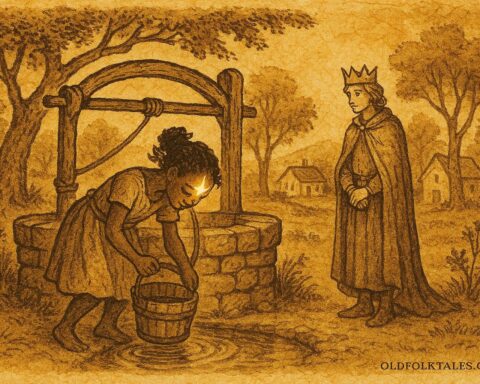
Among them lived a young girl named Manman Dlo, gentle and curious by nature. Each morning, she helped her mother draw water from the river. When her chores were done, she often lingered by the bank, gazing at the silver ripples that danced beneath the rising sun. Sometimes, she imagined she saw glimmers of scales or heard faint music under the current.
“Tezin Nan Dlo must be near,” she whispered once.
Her mother smiled faintly but warned, “Child, always remember to thank her when you take her water. The river spirit listens.”
So, every morning, Manman Dlo dropped a few flowers into the water and whispered a quiet prayer of thanks. The river always seemed to sparkle brighter afterward.
For many years, the people and the spirit lived in harmony. The villagers sang songs of gratitude under the full moon, leaving gifts of food and fruit by the riverside. Their crops grew strong, the fish were plentiful, and their hearts were at peace.
But as time passed, a harsh drought fell upon the land. The sun blazed unrelentingly, and the river shrank to a trickle. Thirst and hunger spread through the village. Desperation grew, and with it, forgetfulness.
The villagers stopped their offerings. Some even mocked the old traditions, saying Tezin was just a story for children.
Manman Dlo’s mother, weary and anxious, sighed one morning. “We need water to live, not flowers to waste.”
Manman Dlo obeyed but felt unease as she dipped her gourd into the river. The water felt colder now, heavier somehow. That night, she dreamed of a woman whose eyes glowed like the moon and whose hair shimmered like the tides.
“Child of the earth,” the woman’s voice whispered, “why have your people forgotten me?”
The next morning, the skies darkened. The wind howled. Then came the rain, first gentle, then raging. It fell for days, flooding the river until it overflowed its banks. The waters surged into homes and fields, sweeping away food, animals, and huts. The villagers were terrified.
Through the storm, Manman Dlo remembered her dream. She ran to the riverbank and cried out:
“Tezin Nan Dlo! Forgive us! We forgot to honor you. We will remember now, please, spare us!”
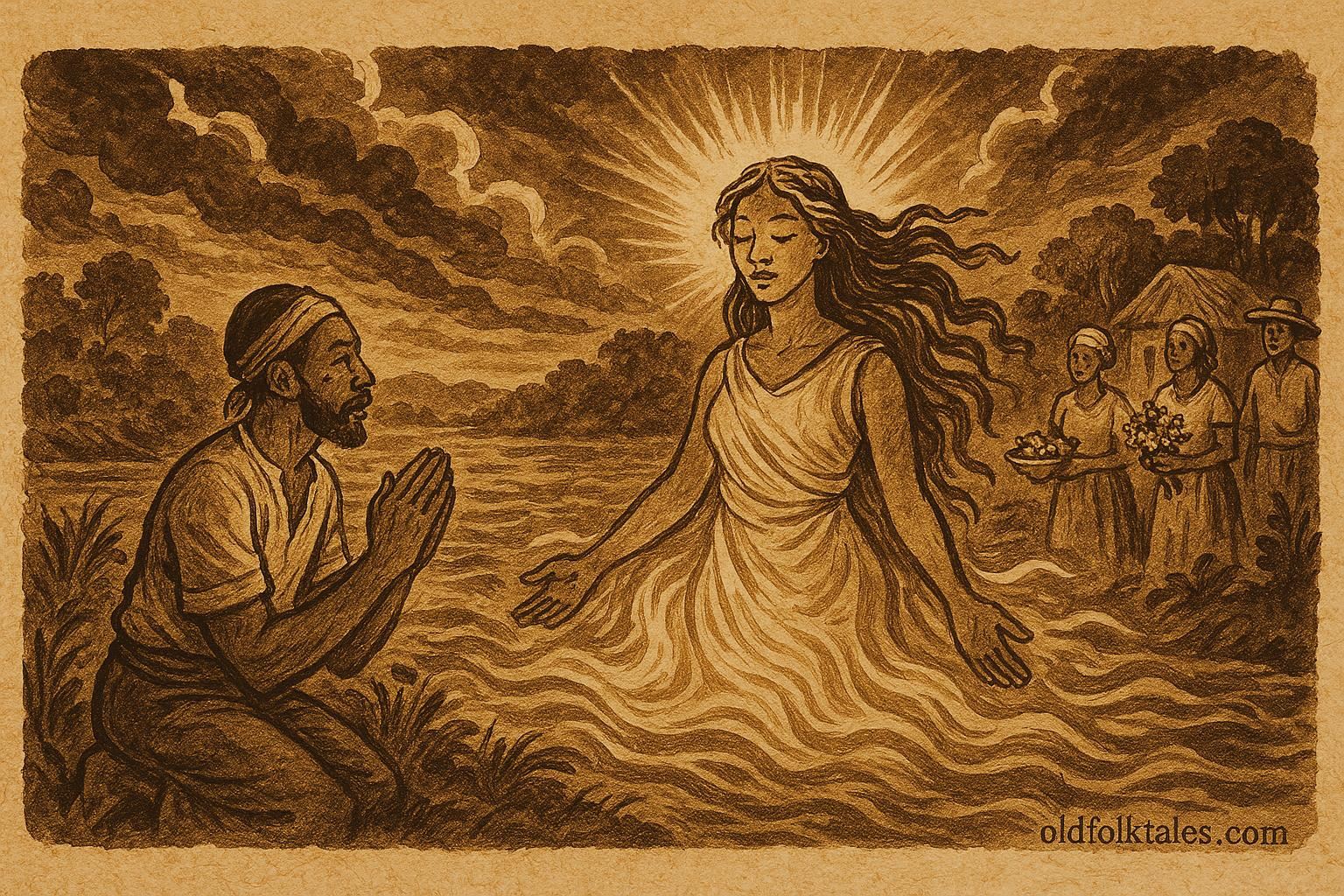
Thunder echoed her plea, and the river swelled higher. But then, through the lightning, a figure rose from the waves. Tezin Nan Dlo appeared, tall, glowing, and sorrowful. Her voice was both fierce and kind.
“You took and took,” she said, her tone like rolling water. “You forgot that the river lives. Those who forget gratitude will drown in their own greed.”
Manman Dlo fell to her knees. “Please, Great Spirit, teach us to make it right!”
Tezin’s eyes softened. “Then sing,” she said. “Sing the songs your ancestors sang. Let your hearts remember.”
Manman Dlo lifted her trembling voice in an old melody her grandmother once taught her. One by one, the villagers joined in, men, women, and children, singing to the river with tears in their eyes. They brought offerings of fruit, flowers, and food, letting them drift upon the floodwaters.
Slowly, the rain eased. The river began to calm. When the moon emerged from behind the clouds, the waters withdrew peacefully to their banks. Tezin Nan Dlo’s form shimmered once more in the river’s glow before fading back into the depths.
Her final words rippled through the night:
“Remember, and you shall be blessed. Forget, and you shall be lost.”
From that day on, the villagers never failed to honor Tezin Nan Dlo. They built a small shrine near the water, and every new moon, they offered songs, fruits, and flowers. Manman Dlo grew into a wise woman who taught her children and grandchildren the sacred truth: that water gives life, but only if treated with love and respect.
Immerse yourself in Latin America’s stories of passion, transformation, and spirit.
Moral Lesson
This Haitian folktale teaches lessons on gratitude and respect for nature. When humans live in harmony with the world around them, life flourishes, but when they forget gratitude and balance, nature itself reminds them of their place within it.
Knowledge Check
1. Who is Tezin Nan Dlo in Haitian folklore?
Tezin Nan Dlo is the river spirit or water guardian who protects the natural balance of the river.
2. Why did Tezin Nan Dlo punish the villagers?
She punished them because they stopped offering thanks and took too much from the river without respect or gratitude.
3. What disaster symbolized Tezin’s anger?
A massive flood that destroyed the village and crops, showing nature’s power when disrespected.
4. How did Manman Dlo restore peace with the river spirit?
She prayed, sang traditional songs, and led the villagers in heartfelt offerings of repentance.
5. What cultural tradition influences this tale?
The story reflects African and Afro-Caribbean beliefs, especially the Mami Wata water-deity tradition.
6. What lesson does the tale teach about the environment?
It reminds us to respect and care for nature, recognizing that the elements of life, like water, are sacred gifts, not possessions.
Source: Traditional Haitian oral folktale; documented in Haitian Creole Folktales collections.
Cultural Origin: Haiti (Afro-Caribbean folklore)