In the time before light and learning, when the world was still young, humanity lived in hunger and shadow. The earth was barren, the winds dry, and the people wandered through the valleys searching for sustenance. They chewed on roots and stones, yet nothing satisfied their hunger.
From the heavens above, the great and wise god Quetzalcóatl, the Feathered Serpent, looked upon their suffering. His heart filled with sorrow and compassion, for he loved humankind deeply and desired that they should live not as beasts but as beings of spirit and wisdom. He vowed to bring them maize, the sacred food of life, the golden seed that nourished the body and enlightened the soul.
But the maize was hidden far away, beyond the mountains of Tonacatépetl, guarded by powerful and jealous spirits who wished to keep its riches for themselves. No god or creature had been able to breach those stony walls, for the spirits defended them with thunder and smoke.
The Quest for the Food of Life
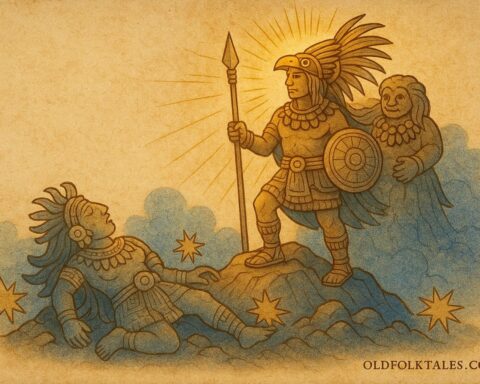
Quetzalcóatl gathered the other gods to seek a way to retrieve the maize. They stood upon the highest peak of the world, gazing across the vast mountains, their peaks crowned with clouds. One by one, the gods tried to move the mountains apart, using strength, fire, and wind, but none could succeed.
The wise Feathered Serpent spoke softly, “Strength alone cannot open what the earth conceals. Wisdom and patience will do what force cannot.”
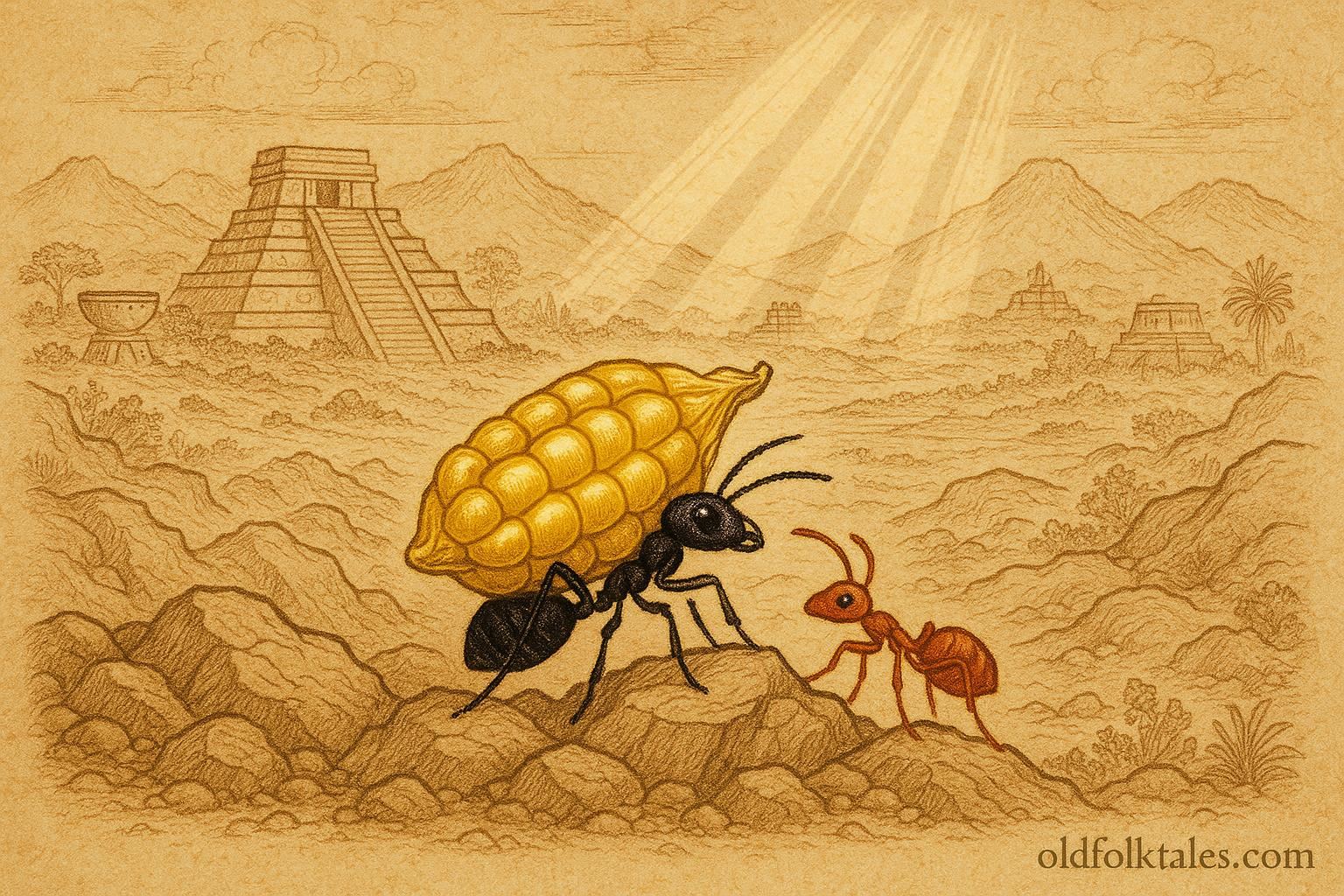
As the gods looked on in wonder, Quetzalcóatl transformed himself into a tiny black ant. His magnificent feathers vanished, his gleaming scales dimmed, and he became small enough to vanish between blades of grass. Yet within that humble form burned the divine purpose of a god.
The Journey of the Ant-God
The world looked immense from the eyes of the ant. Each stone was a mountain, each breeze a storm. Yet Quetzalcóatl did not waver. Crawling along the earth, he journeyed toward the forbidden mountains. The spirits that guarded them did not notice such a small creature passing among the shadows.
Along the way, he met a red ant, who asked, “Brother, where do you go with such purpose?”
“To the mountains,” said Quetzalcóatl, “to bring maize to my children, the humans who suffer.”
The red ant nodded, recognizing the divine spark within him. “Then I shall guide you, for I know the paths through the earth where the spirits cannot see.”
Together, the two ants crept through cracks and tunnels, climbing higher and higher until they reached the secret cavern where the maize was kept. Inside, golden kernels shimmered like sunlight trapped in stone, their scent filling the air with sweetness and promise.
Quetzalcóatl took a single grain, just one, and held it gently between his jaws. The red ant bowed, and the Feathered Serpent began his long journey back to the world of humans.
The Gift to Humanity
When Quetzalcóatl reached the land of men, he placed the maize before them. “This is your food,” he said. “Plant it in the soil, care for it with your hands, and it shall feed you for generations.”
The people looked upon the golden grain and wept with joy. They followed his teachings, sowing the seeds into the earth. Soon, green stalks sprouted under the sun, their leaves singing in the wind, and cobs of maize ripened in the fields.
No longer did humans wander hungry. They built homes, villages, and temples, and their hearts filled with gratitude. In honor of Quetzalcóatl, they offered prayers and songs, for he had not only given them food but also the wisdom to cultivate and live in harmony with the earth.
The Divine Lesson
The other gods marveled at what Quetzalcóatl had done. “You did not break the mountains,” they said, “nor did you fight the guardians. How did you succeed?”
He answered, “Because I became small. To serve life, one must humble himself. Greatness is not in power, but in the will to help others.”
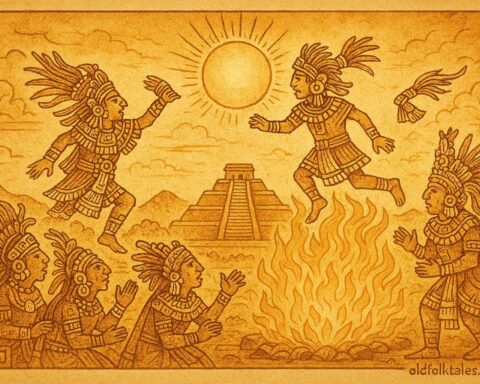
From that day forward, Quetzalcóatl was remembered not only as the Feathered Serpent, god of the wind and wisdom, but as the bringer of maize, the sustainer of humanity. His gift became a symbol of divine generosity and the sacred bond between the gods, the earth, and humankind.
Discover Mexico’s timeless tales blending Indigenous roots and Spanish tradition
Moral Lesson
The legend of Quetzalcóatl and the maize teaches that true strength lies in humility, compassion, and the willingness to serve others. Through wisdom and selflessness, even the smallest act can nourish an entire world. The maize remains a sacred reminder that life flourishes when knowledge and kindness are shared.
Knowledge Check
1. Who is Quetzalcóatl in Aztec mythology?
He is the Feathered Serpent god of wisdom, wind, and creation, known for his compassion toward humanity.
2. What was humanity’s condition before Quetzalcóatl’s gift?
Humans lived in darkness and hunger, with no knowledge of agriculture or sustenance.
3. Why did Quetzalcóatl transform into an ant?
He became small to pass unnoticed by the mountain spirits and retrieve the hidden maize.
4. What does the maize symbolize in this legend?
It represents life, knowledge, and the divine connection between the gods and humankind.
5. What lesson did Quetzalcóatl teach through his actions?
That humility and service achieve what power and pride cannot.
6. How did the gift of maize change humanity?
It ended their suffering, teaching them agriculture and bringing civilization and gratitude toward the gods.
Source: Leyendas de los Soles (“Legends of the Suns”), recorded from Nahuatl oral traditions, c. 1558.
Cultural Origin: Aztec (Mexica), Central Highlands of Mexico.