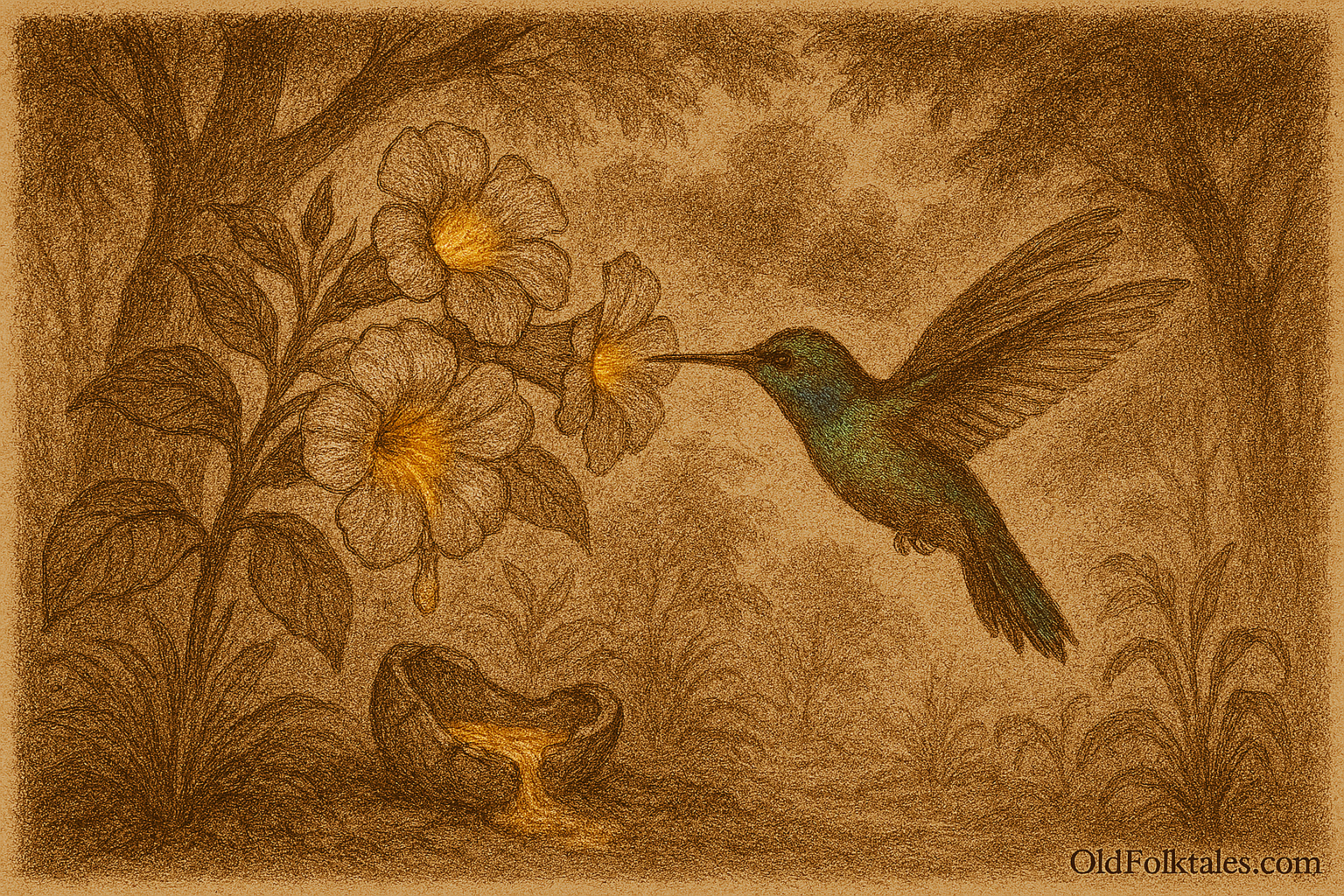
In the beginning, before the world took its present form, before the rivers carved their paths through the earth and the forests grew tall with ancient trees, there was only Ñamandú, the First Father, the creator who dreamed all things into existence. From his sacred dwelling in the realm beyond mortal sight, Ñamandú began the magnificent work of bringing forth the world that would sustain human life.
The act of creation was exhausting beyond mortal comprehension. To speak light into darkness, to separate sky from earth, to breathe life into clay and shape the countless forms of plants and animals required strength that even a god could feel diminishing. Ñamandú labored without rest, driven by love for the world he was bringing into being and for the people who would one day walk upon it.
Click to read all South American Folktales — timeless stories from the Andes to the Amazon.
As the creator worked, his divine essence began to fade like a candle burning too long. The effort of making mountains rise from flat plains, of filling the oceans with water and the air with wind, of giving each creature its particular nature and purpose, drained him until he could barely continue. The work was not yet complete, but Ñamandú felt himself weakening, his power ebbing like a tide retreating from the shore.
In this moment of profound vulnerability, when the world hung half formed and the creator’s strength faltered, the first hummingbirds appeared. No one knows precisely where they came from, whether Ñamandú created them specifically for this purpose or whether they manifested spontaneously from his need. But suddenly, there they were: tiny birds with iridescent feathers that caught and reflected light in colors that seemed to shift and change with every movement, their wings beating so fast they created a sound like distant thunder compressed into a whisper.
The hummingbirds, whom the Guaraní would come to call mainumby, did not hesitate. With an understanding that transcended thought, they recognized the creator’s need and knew what they must do. They flew to the most beautiful flowers that had just been created, flowers that bloomed in the half formed paradise Ñamandú had already brought into being. These blossoms contained nectar, sweet and pure, concentrated essence of life itself.
The hummingbirds gathered this nectar with their long, delicate beaks, drawing it from deep within each flower where it collected like liquid light. Then, with determination that belied their tiny size, they flew to where Ñamandú rested, exhausted from his cosmic labors. One by one, they offered him the nectar they had gathered, feeding the creator with the very sweetness he had created.
As Ñamandú drank the nectar brought by the faithful hummingbirds, he felt his strength returning. The divine essence that had been depleting was renewed, replenished by this gift offered so freely by the smallest of his creations. The sweetness of the flowers, carried by the devoted mainumby, flowed through him like rivers of light, restoring his power and rekindling his ability to continue the great work.
The hummingbirds did not rest. They flew tirelessly between flowers and creator, an endless procession of tiny messengers bearing sustenance. Their wings, beating impossibly fast, created a breeze that cooled Ñamandú’s brow. Their bright colors delighted his eyes, reminding him of the beauty he was bringing into the world. Their dedication inspired him to continue, showing him that even the smallest beings could contribute to great purposes.
With renewed strength, Ñamandú completed the creation. He finished shaping the mountains and valleys, filled the world with countless species of animals, established the cycles of day and night, and prepared the earth for the coming of humanity. Through all of this continued work, the hummingbirds remained faithful, always present, always offering nectar when the creator needed sustenance, never asking for reward or recognition.
When the work was finally complete and the world stood perfect and whole, Ñamandú looked upon the hummingbirds with deep gratitude and love. These tiny creatures had sustained him through the most difficult moments of creation. Without their devoted service, the world might have remained incomplete, humanity might never have come into being, and all the beauty and life that filled the earth might have existed only as unfinished dreams.
“You have served me faithfully,” Ñamandú said to the mainumby, his voice resonating through all of creation. “You brought me sustenance when I most needed it, asking nothing in return. You shall be honored among all creatures. You shall be known as my messengers, sacred bearers of divine connection. The people who will walk this earth shall know that you are under my special protection.”
The creator decreed that the hummingbirds would always remain close to flowers, living on the sweet nectar that had saved him during creation. He gave them wings that could hover in stillness, defying the normal rules that governed other birds, allowing them to feed while floating in air as if by magic. He blessed them with colors that seemed to contain captured sunlight, making them beautiful beyond measure. And he established that they would carry messages between the earthly and divine realms, serving as links between humanity and the sacred powers.
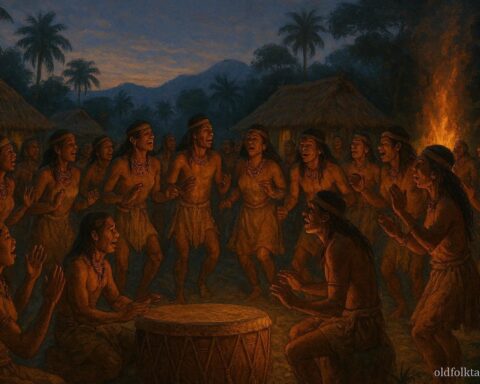
When the Guaraní people came into being and began to populate the forests and rivers of Paraguay, they learned the story of mainumby from the spirits and from their ancestors who had received this knowledge directly from Ñamandú. The tale was passed down through generations, told around fires on warm nights, whispered to children as they watched the tiny birds dart among blossoms.
The Guaraní understood that harming a hummingbird was not merely killing a bird but committing a grave offense against the sacred. To strike down a mainumby was to show disrespect to the creatures who had sustained the creator himself, to violate the protection Ñamandú had placed upon them. Such an act would bring misfortune, for how could the gods smile upon someone who harmed their faithful messengers?
When a hummingbird appeared near a Guaraní home or settlement, it was considered a blessing, a sign that divine attention rested upon that place. If mainumby hovered near someone, it meant the spirits were observing that person, perhaps bringing messages from ancestors or from Ñamandú himself. The Guaraní planted flowers specifically to attract hummingbirds, understanding that welcoming these sacred creatures brought spiritual benefits to the entire community.
Parents taught their children to watch the hummingbirds with reverence, to admire their beauty without seeking to capture or harm them. They explained how these tiny birds, despite their small size, had accomplished something no other creature could claim: they had fed the creator himself, sustained the divine force that brought all things into being.
To this day, throughout Paraguay and wherever Guaraní culture persists, the mainumby remains sacred. The hummingbird is more than simply a bird; it is a living reminder of how even the smallest among us can serve great purposes, how dedication and selfless service please the divine, and how some creatures carry blessings that must never be violated.
When you see a hummingbird hovering among flowers, its wings a blur of motion, its feathers catching the light in impossible colors, remember: you are looking at a descendant of those who saved creation itself, who carried sweet nectar to a weary god, who earned eternal protection through faithful service. The mainumby is sacred, forever blessed, forever protected, forever honored among the Guaraní people who remember what the little bird accomplished when the world was young.
Discover the sacred tales of llamas, condors, and gods who guard the Andes
The Moral of the Story
The legend of mainumby teaches us that true greatness is not measured by size or strength but by selfless service and devotion. The smallest among us can accomplish the most important tasks when motivated by love and dedication. The story emphasizes that those who serve without expectation of reward earn the deepest respect and most lasting protection. It also reminds us that all creation is interconnected, that even divine beings can need help, and that showing respect for the sacred in nature honors both the creatures themselves and the creator who made them.
Knowledge Check
Q1: Who is Ñamandú in Guaraní mythology?
A: Ñamandú is the First Father and supreme creator deity in Guaraní cosmology who brought the world into existence through divine will and effort. He dreamed all things into being, separating sky from earth, creating plants and animals, and preparing the world for humanity’s arrival.
Q2: Why did Ñamandú need help from the hummingbirds during creation?
A: The immense effort of creating the world exhausted Ñamandú to the point where his divine essence began to fade and he could barely continue. The work of forming mountains, filling oceans, giving life to countless creatures, and establishing natural laws drained his power, leaving him vulnerable and in need of sustenance to complete his cosmic task.
Q3: How did the mainumby help sustain the creator?
A: The hummingbirds gathered sweet nectar from the flowers Ñamandú had already created and brought it to him as sustenance. They flew tirelessly between blossoms and the creator, forming an endless procession of tiny messengers that fed him the concentrated essence of life contained in the nectar, allowing him to recover his strength and continue creation.
Q4: What special blessings did Ñamandú give to the hummingbirds?
A: Ñamandú blessed the hummingbirds with the ability to hover in stillness while feeding, defying normal rules of flight. He gave them iridescent feathers containing captured sunlight and made them beautiful beyond measure. He established them as sacred messengers between earthly and divine realms and placed them under his eternal protection.
Q5: Why is killing a hummingbird considered to bring misfortune in Guaraní culture?
A: Killing a hummingbird violates the sacred protection Ñamandú placed upon these creatures who sustained him during creation. It shows disrespect to the creator’s faithful messengers and offends the divine order. The Guaraní believe such an act would anger the gods and bring misfortune because it harms beings who performed essential service to creation itself.
Q6: What does the presence of a hummingbird signify to the Guaraní people?
A: When a hummingbird appears near a Guaraní home or person, it is considered a blessing and a sign that divine attention rests upon that place or individual. It may indicate that spirits are observing, that messages are being carried from ancestors or from Ñamandú himself, representing a tangible connection between the earthly and sacred realms.
Source: Adapted from traditional Guaraní oral mythology and spiritual beliefs documented in Paraguayan indigenous cultural records, ethnographic studies, and preserved sacred narratives of Guaraní cosmology and creation stories.
Cultural Origin: Guaraní indigenous communities of Paraguay and surrounding regions, South America