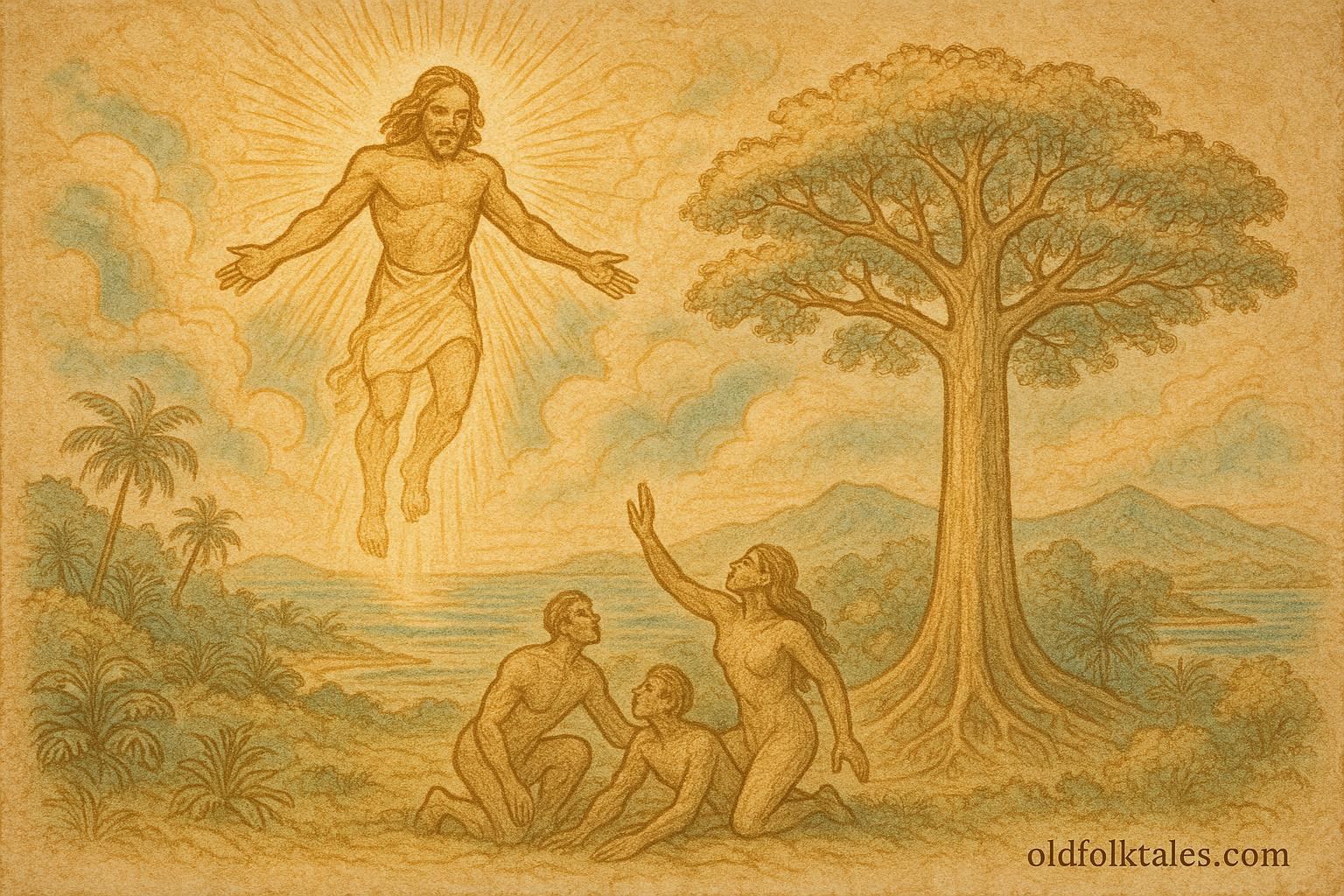
In the beginning, before the sun had found its course across the sky and before the waves had learned to kiss the shores, the world was silent and empty. Only the vast sky spirit existed, endless, luminous, and full of mystery. From that sacred sky descended a being unlike any other: Louquo, the First Man.
He came down through the mists of dawn, his body glowing with the light of the heavens. His feet touched the soft earth of the new islands, and where he stepped, the land bloomed with green. The Taíno people of Hispaniola remember him as the first ancestor, the bridge between the divine sky and the living earth.
Discover Mexico’s timeless tales blending Indigenous roots and Spanish tradition
Louquo was not born of woman or man. He was the child of the cosmos itself, a being of both breath and light. When he looked upon the vast emptiness around him, he felt both wonder and sorrow. “This land is beautiful,” he said, “but it is lonely.” So, from his own flesh, he shaped the first people.
He tore small pieces of his body and molded them with the sacred clay of the islands. He breathed into them, and they opened their eyes to the new world. These were the first humans, the Taíno people, children of Louquo, born of his body and sustained by his spirit.
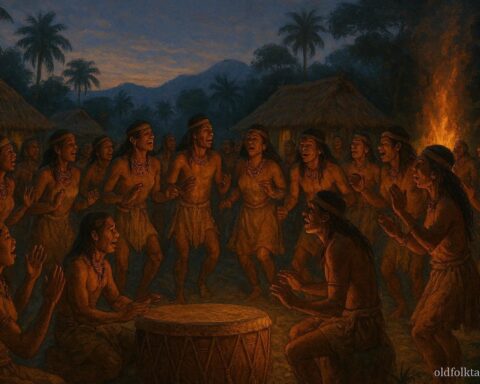
He walked among them, teaching them how to live in harmony with the land and the sea. He showed them how to plant cassava and gather fruit from the forests, how to fish from the bright waters, and how to honor the spirits who governed the winds, rains, and mountains. He taught them songs to call upon the ancestors and dances to celebrate the rhythm of life.
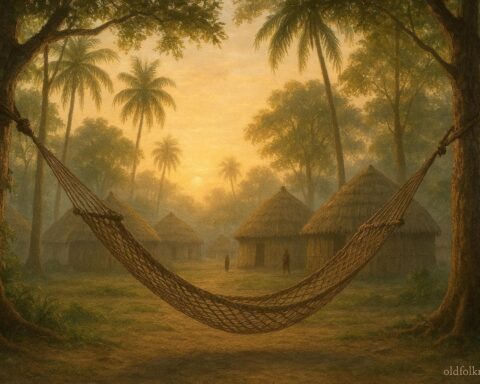
Under Louquo’s guidance, the people flourished. They built villages near the rivers, carved canoes that glided like leaves upon the water, and learned to share the gifts of the earth with gratitude. Every sunrise was a prayer to Louquo, every meal a blessing in his name.
But time, even for one born of the heavens, is not without end. When Louquo felt his strength beginning to fade, he gathered the people before him beneath a great ceiba tree, whose roots reached deep into the earth and whose branches stretched toward the sky.
“My children,” he said, “the time has come for me to return to where I came from. But do not fear. The blood that made you is mine, and the sky that bore me will one day welcome me again. I will not leave you alone, for as long as you live with reverence for the land and one another, I will be among you.”
Then Louquo lifted his eyes to the heavens and let out a final breath. His spirit rose into the sky, leaving his mortal body behind. The people watched as his light ascended higher and higher until it joined the stars. From that night onward, a new constellation appeared, the radiant figure of Louquo, the First Man, watching over his children.
The Taíno believed that after death, their own spirits would follow the same path, rising from the earth to join Louquo among the stars. Thus, life and death were never truly apart, for both were part of the same sacred journey.
As generations passed, the Taíno continued to honor Louquo as their divine ancestor. They told his story around the fire, teaching that every person carries within them a spark of the sky. They believed that when they looked upward on clear nights, Louquo’s light guided them, reminding them of where they came from and where they would return.
Even now, when the stars shimmer above the Caribbean and the waves lap against the same shores he once walked, Louquo’s spirit is said to whisper in the wind:
“You are born of the sky and the earth. You are both flesh and light. Remember me and remember who you are.”
Through Louquo, the Taíno understood the sacred unity between heaven and humanity, that all life is a reflection of the same divine essence. His story endures as a testament to origins, connection, and the eternal bond between the living and the cosmos.
Explore the ancestral legends of Canada, Mesoamerica, and South America’s Indigenous tribes.
Moral Lesson
The legend of Louquo teaches that humanity is both earthly and divine. It reminds us to honor our origins, live in balance with nature, and remember that every person carries within them the light of their ancestors and the breath of the cosmos.
Knowledge Check
- Who was Louquo in Taíno mythology?
Louquo was the first man, a divine being who descended from the sky and created humanity from his own flesh. - How did Louquo create the first people?
He shaped them from pieces of his own body mixed with the sacred clay of the earth and breathed life into them. - What teachings did Louquo give to the Taíno people?
He taught them to plant crops, fish, respect nature, and honor the spirits of the land and sky. - What happened to Louquo after his death?
His spirit ascended back to the sky and became a constellation watching over his descendants. - What does Louquo symbolize in Taíno culture?
He symbolizes cosmic ancestry,the divine connection between humans, the earth, and the heavens. - What is the moral of Louquo’s story?
That all humans share a sacred origin and must live in harmony with nature and one another, remembering their celestial roots.
Source: Adapted from Historia de las Indias by Bartolomé de las Casas; retold in Irving Rouse’s The Taínos: Rise and Decline of the People Who Greeted Columbus.
Cultural Origin: Taíno (Hispaniola / Dominican Republic)