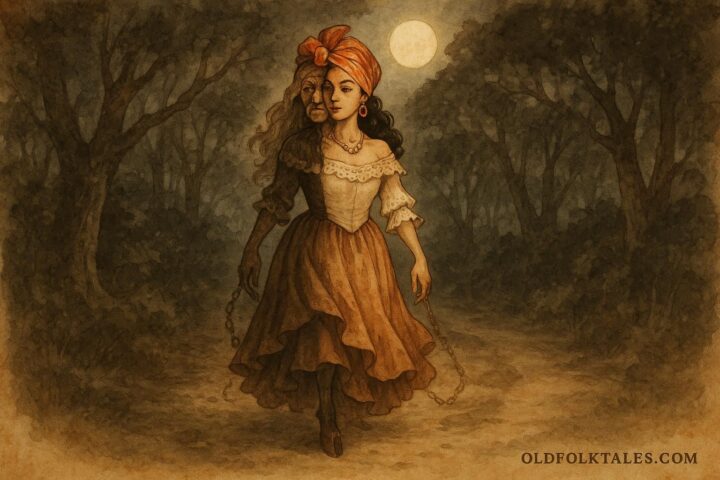
In the quiet villages and dusty trails of colonial Mexico and Central America, travelers often spoke in hushed tones about La Siguanaba, a spectral woman whose beauty could ensnare the hearts of wandering men. She was said to appear at night along lonely roads, under the silver light of the moon, or by the flickering glow of lanterns swaying in the wind. At first, she seemed a vision of grace: long flowing hair, eyes that sparkled like stars, and a presence so enchanting that any man might stop in his tracks.
Yet her beauty was only a mask. As soon as the unsuspecting traveler drew near, her face would twist into a horrifying visage—mouth wide, teeth jagged, eyes hollow, and her form stretched unnaturally tall. The sight filled the heart with terror, causing some to scream and flee, while others stumbled, falling into rivers or ditches, or becoming hopelessly lost in the night. La Siguanaba did not harm all men, only those who had a weakness in their hearts: those who were unfaithful to their wives, lustful, or morally careless.
Click to read all South American Folktales — timeless stories from the Andes to the Amazon.
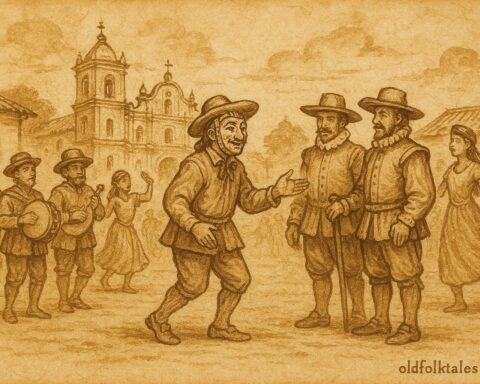
The origins of La Siguanaba intertwine indigenous mythology and colonial Catholic morality. Indigenous beliefs held that certain spirits punished immoral conduct, and La Siguanaba was linked to ancient goddess figures who protected societal harmony. With the arrival of Spanish colonial influence, her story merged with Christian teachings, emphasizing virtue, fidelity, and respect for women. Villagers warned young men: “Beware the beauty that wanders alone, La Siguanaba tests your heart and your intentions.”
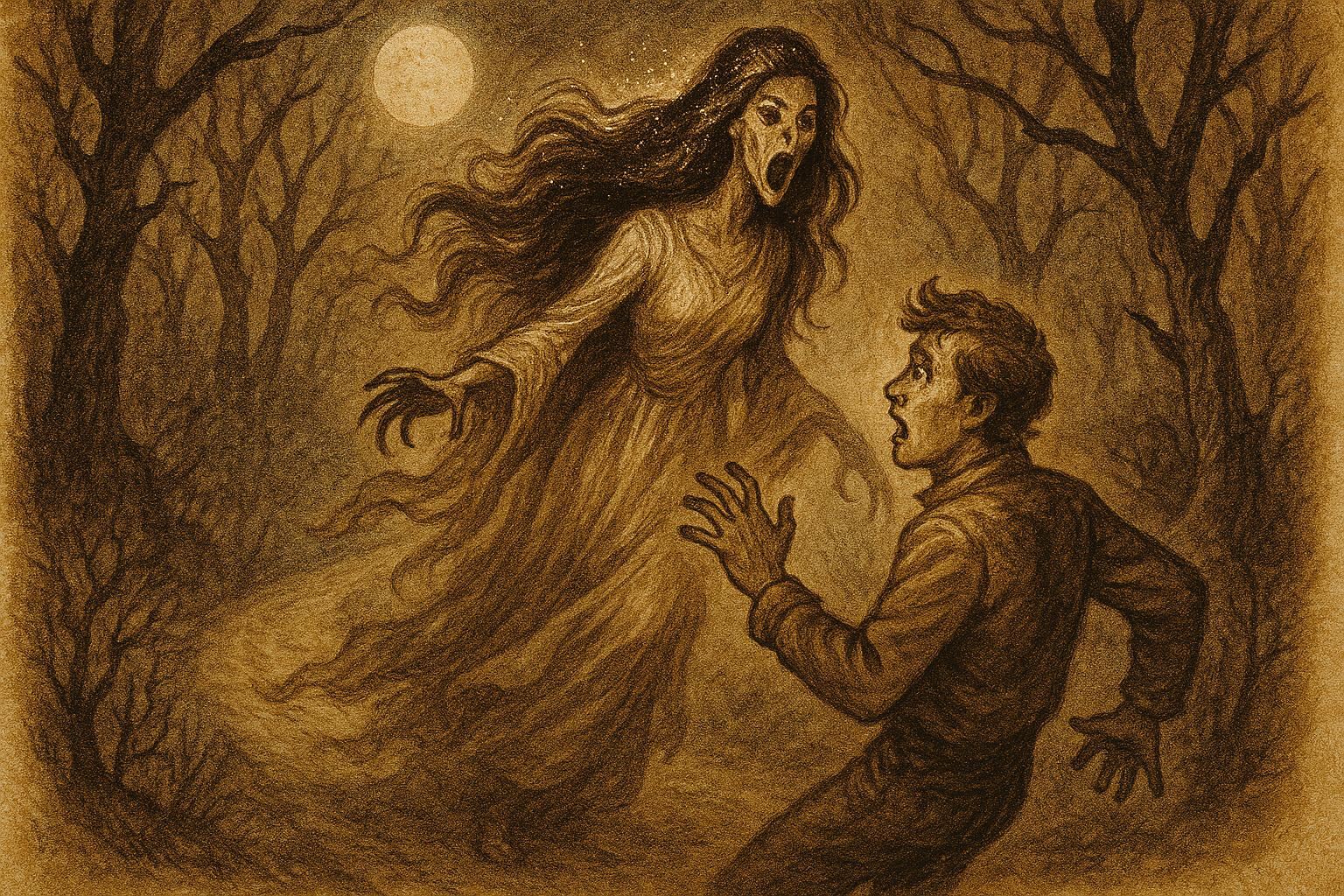
One evening, a young man named Diego traveled the forested road home after a night of revelry. He laughed to himself, believing he could charm any woman, ignoring the village warnings. From the shadows emerged La Siguanaba, radiant and smiling. Diego’s eyes widened; he imagined he had met the perfect companion. He quickened his pace, eager to impress her, failing to notice how the path twisted beneath his feet and how strange, unnatural sounds filled the air.
As he drew closer, her beauty melted into terror. Her face stretched and distorted, her laughter turning into a wailing cry that echoed through the trees. Diego froze, paralyzed by fear. In that moment, he understood the tales: La Siguanaba did not punish the innocent or the virtuous. He stumbled backward, the weight of guilt and recognition of his own failings rooting him to the spot. Only after hours of wandering did he find his way back to the village, shaken but alive, vowing never to stray into moral weakness again.
The villagers knew that La Siguanaba served a purpose beyond fear. Her legend reminded communities that temptation could appear beautiful and alluring, but those who acted without self-discipline and respect would face ruin. Parents told the story to sons, teaching them to honor their families, avoid indulgence, and respect the women of their community. Travelers carried the warnings like talismans, checking paths and timing journeys to avoid her specter. In some accounts, offerings were left at crossroads or prayers whispered aloud, blending indigenous and Catholic rituals as shields against moral and physical danger.
In this way, La Siguanaba became more than a ghost story; she was a moral compass. The roads she haunted were not just physical trails but metaphors for life’s journey, where choices reflected the inner state of a man’s character. To ignore the story was to risk wandering in darkness, both literal and moral.
Moral Lesson
Temptation and moral weakness can lead to one’s destruction, but virtue, self-control, and respect for others provide protection and guidance.
Knowledge Check
-
Who is La Siguanaba?
A ghostly woman who lures unfaithful or immoral men, appearing beautiful but revealing a terrifying face. -
What moral lessons does the story teach?
It teaches the dangers of temptation, infidelity, and moral weakness while promoting virtue and self-control. -
What cultural influences shaped La Siguanaba’s legend?
Indigenous goddess beliefs and Catholic morality merged during the colonial era. -
What happens to those who encounter La Siguanaba?
Men who are morally weak may become lost, fall into danger, or experience terror; the virtuous remain unharmed. -
Why did villagers recount this tale to young men?
To instruct them on virtue, fidelity, and respect for women, using the ghostly figure as a cautionary symbol. -
What does La Siguanaba symbolize in a broader sense?
She represents the moral consequences of succumbing to temptation and the need for self-discipline in society.
Source: Colonial-era oral tradition
Cultural Origin: Mexico & Central America (Colonial folklore)