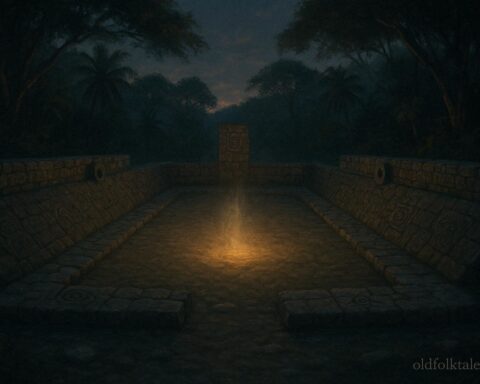
On the edge of a quiet Mexican village, where the moonlight trembled on the surface of the river, there once lived a woman named María. She was known throughout the valley for her beauty, her long dark hair shimmered like silk, and her laughter could brighten the dullest day. Many young men admired her, but she turned them all away until one evening a wealthy ranchero rode into town.
His clothes were fine, his horse strong and shining, and when he saw María, he was enchanted. Before long, he won her heart with his charm and promises. They married, and soon she bore him two beautiful children.
Click to read all South American Folktales — timeless stories from the Andes to the Amazon.
For a while, life seemed perfect. María walked proudly through the town with her husband and children, and the people whispered about their happiness. But as time passed, the ranchero began to change. He rode away often, visiting other towns, and when he returned, he greeted his children with affection but grew cold toward María.
One day, María saw him riding through the village with another woman, finely dressed, laughing at his side. Her heart shattered. Anger, jealousy, and grief twisted together inside her until she could hardly breathe. That night, unable to control her anguish, María led her children to the river. The moonlight shimmered on the water as the wind whispered through the trees.
Blinded by despair, María pushed her children into the river’s current. As the water closed over them, she awoke from her madness and screamed, “¡Mis hijos! ¡Ay, mis hijos!” She leapt into the river to save them, but it was too late. The rushing water carried them away.
When dawn came, the villagers found María wandering the riverbank, her white dress soaked and her eyes wild with grief. She cried out for her children again and again until her voice broke into silence. Some say she fell to her knees and died beside the river; others say she vanished into the mist, condemned for eternity to search for her lost children.
From that time on, villagers whispered of strange cries that rose from the river at night. Travelers heard a woman’s wails carried on the wind, “¡Ay, mis hijos!” Children were warned not to wander near the water after dark, for La Llorona might mistake them for her own and carry them away.
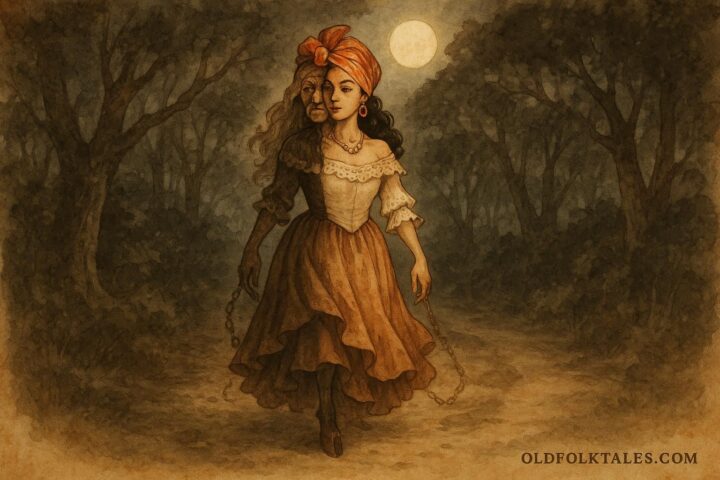
Over the generations, María’s sorrow became a haunting legend. Some say her spirit appears dressed in white, her face hidden beneath a veil, gliding along the water’s edge. Her presence chills the air and stills the night birds. To some, she is a warning, the voice of guilt and loss. To others, she is a symbol of human weakness, forever seeking forgiveness for an unforgivable act.
And so, in towns across Mexico and the American Southwest, the cry of La Llorona echoes still, a reminder that passion, pride, and rage can destroy what we love most, and that regret may last beyond the grave.
Immerse yourself in Latin America’s stories of passion, transformation, and spirit.
Moral Lesson
This haunting folktale teaches lessons on the danger of uncontrolled emotion and the weight of regret. It reminds us that anger and despair, left unchecked, can lead to tragic choices, and that forgiveness, once lost, may be sought for eternity but never found.
Knowledge Check
1. Who is La Llorona in Mexican folklore?
La Llorona, “The Weeping Woman,” is a ghostly figure who mourns her drowned children and wanders near rivers crying for them.
2. What event causes María to become La Llorona?
After discovering her husband’s betrayal, María, in a fit of grief and rage, drowns her children, and her soul is cursed to eternal sorrow.
3. What is the main moral lesson of La Llorona?
The story warns against letting passion or anger control one’s actions and teaches the lasting pain of regret and the need for forgiveness.
4. Why is La Llorona associated with rivers and water?
The river is where she drowned her children and where she endlessly searches for them, symbolizing both guilt and cleansing.
5. How is La Llorona used as a cautionary tale in Mexican communities?
Parents tell the story to keep children from wandering near dangerous waters or straying too far from home after dark.
6. What cultural meaning does La Llorona carry beyond the ghost story?
She represents the pain of betrayal, the consequences of impulsive actions, and the deep connection between sorrow and redemption in human life.
Source: Mexican and Mexican-American folklore, Mexico and U.S. Southwest.
Adapted from oral traditions and archival retellings including the Library of Congress Folklife Collection and “La Llorona = The Weeping Woman,” University of New Mexico Digital Archive.
Cultural Origin: Mexico / Southwestern United States (Hispanic-American tradition).