Before the islands learned the patience of the tides and before the forests learned how to bend without breaking, the people believed the sky was silent unless called upon. They cut trees without asking, fished beyond hunger, and built their homes as if the earth beneath them were endless and forgiving. In those days, the winds watched quietly. They listened. They remembered.
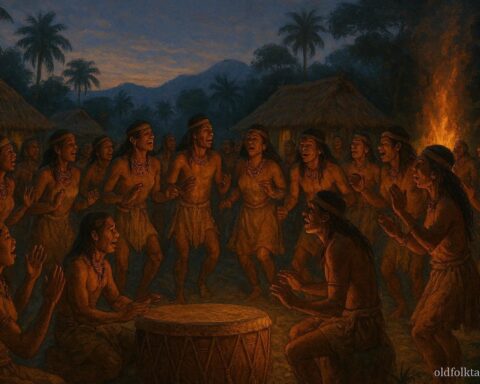
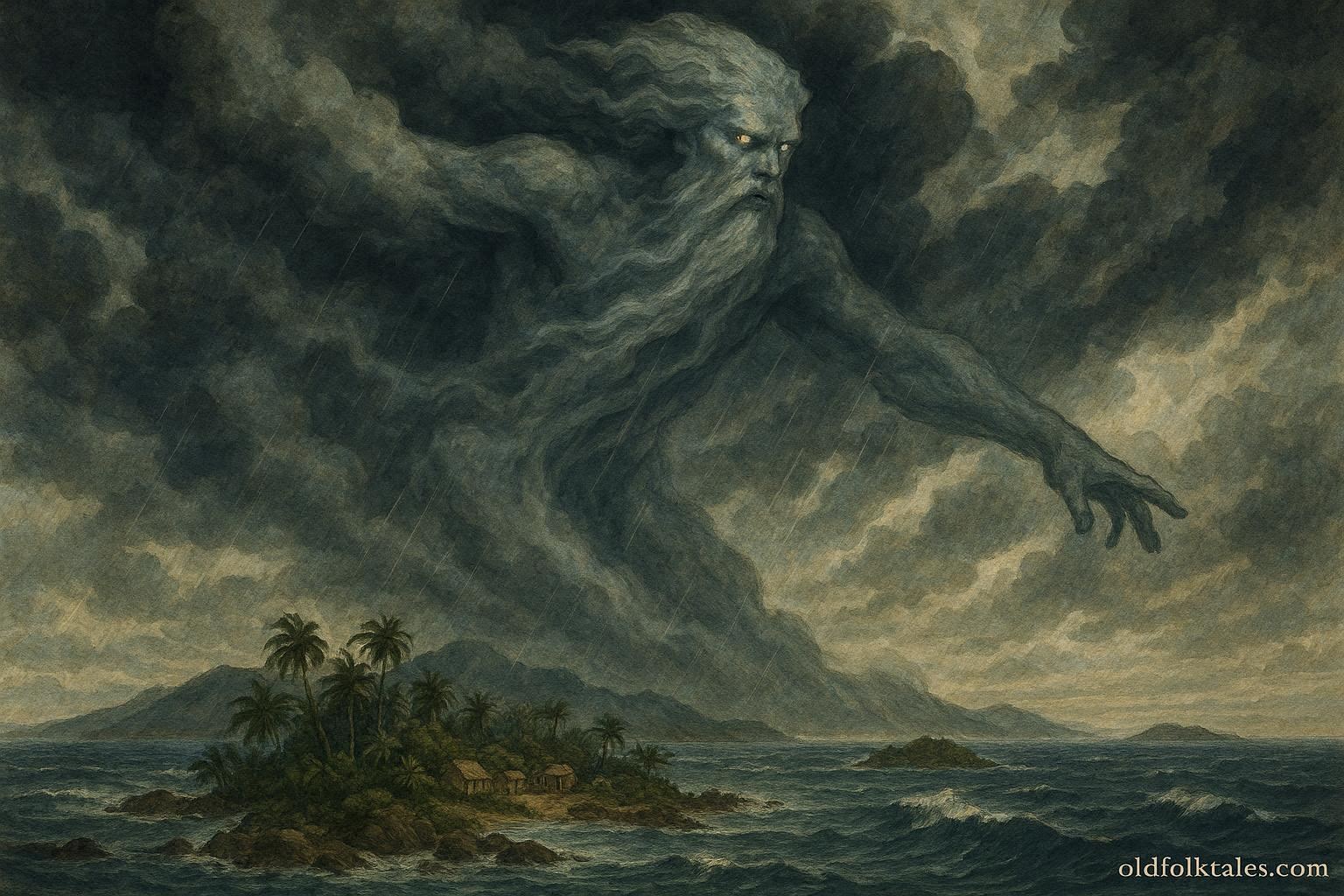
Among the Taíno people, elders spoke of Juracán, a force older than speech, older than fire carried by human hands. Juracán was not born as a god with a face or a body. He was movement itself. He lived where the warm sea met the restless sky. His breath shaped clouds, his footsteps stirred waves, and his voice was thunder that did not need words.
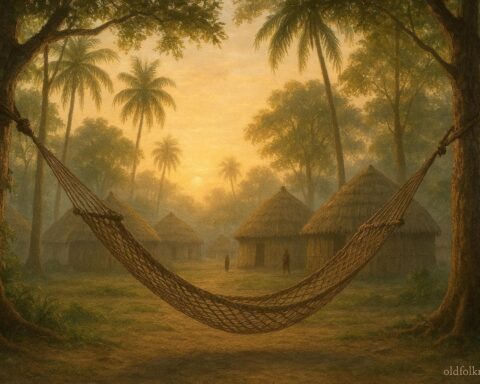
For many seasons, Juracán remained unseen. The people prospered and mistook calm weather for approval. Villages grew larger. Canoes went farther than ever before. Some leaders began to boast that they had mastered the land and sea. They laughed at the old stories and called them warnings for weaker times.
Immerse yourself in Latin America’s stories of passion, transformation, and spirit.
One such leader was Caonabo, a chief whose voice carried far and whose pride carried farther. He ordered forests cleared without ceremony and demanded harvests taken without offerings. When elders warned him to show gratitude to the earth and water, he dismissed them. He said storms were accidents and spirits were inventions meant to control fear.
That night, the air grew heavy. Birds fell silent. The sea pulled back from the shore as if holding its breath. Children woke crying without knowing why. The elders felt it first. They knew the stillness was not peace.
At dawn, the horizon darkened. Clouds rose like mountains and folded over one another. Winds began to circle, not rushing forward but turning, tightening, learning the shape of the land. Juracán had awakened.
The first gusts were playful, bending palm trees and scattering leaves. Some villagers laughed, still confident. But the wind returned again and again, each time stronger, testing roofs, shaking canoes, whispering through doorways. Then the rain came, not falling but striking, as if thrown by unseen hands.
Juracán did not strike blindly. His winds moved with purpose. The homes built with arrogance were the first to fall. The storehouses filled beyond need collapsed under their own weight. Canoes taken without permission were lifted and broken against rocks.
Caonabo stood at the edge of the village shouting orders into the storm. He demanded the wind obey him. The answer came as thunder so close it shook the ground beneath his feet. A sudden gust tore the words from his mouth and sent him to his knees.
In the heart of the storm, the elders gathered those who would listen. They sang old songs, not to stop the wind but to remember why it came. They taught the children to sit low and stay still. They reminded the people that survival was not dominance but relationship.
For three days and nights, Juracán moved across the islands. Rivers overflowed and then returned to their paths. Forests lost branches but not roots. When the storm finally passed, the land was changed but not destroyed. What remained was enough.
Caonabo survived, but his voice was gone. When he tried to speak, only breath escaped. He lived the rest of his life listening, unable to command, forced to learn what silence could teach.
The people rebuilt slowly. This time, they asked before taking. They shared food evenly. They taught children the names of the winds and what each one meant. Juracán did not disappear, but he returned to watching. His presence lingered in every sudden breeze and distant thunder.
From that time forward, storms were no longer seen as punishment alone but as reminders. They came when balance was broken and left when humility returned. Juracán was not cruel. He was necessary.
And so the islands endured, shaped by wind, guided by memory, and held together by respect.
Discover ancient tales passed down by the Indigenous peoples of the Americas.
Moral lesson
Power that is ignored becomes destructive. Power that is respected becomes guidance. Juracán teaches that nature does not exist to be conquered but to be understood. Humility preserves life. Arrogance invites correction.
Knowledge check
1 What does Juracán represent in the story?
Juracán represents natural power and balance rather than a humanlike god.
2 Why did the storm begin after a time of prosperity?
Because the people confused abundance with permission and forgot respect.
3 What mistake did Caonabo make?
He believed authority over people meant authority over nature.
4 Why did Juracán spare the land from total destruction?
The storm aimed to correct imbalance, not erase life.
5 What lesson did the elders preserve during the storm?
That survival depends on relationship, gratitude, and restraint.
6 How did the people change after Juracán passed?
They rebuilt with humility and renewed respect for land and sea.
Source
Adapted from Caribbean Indigenous weather myths preserved by the Smithsonian Institution.
Cultural origin
Taíno peoples, Caribbean.