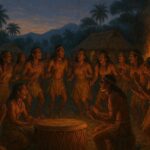
Long before the islands of the Caribbean were separated by wide and restless waters, the Taíno people believed the land and sea listened carefully to human promises. Words spoken before elders, rivers, and the sky were not merely sounds. They were bonds. These bonds shaped how villages lived together and how leaders were chosen.
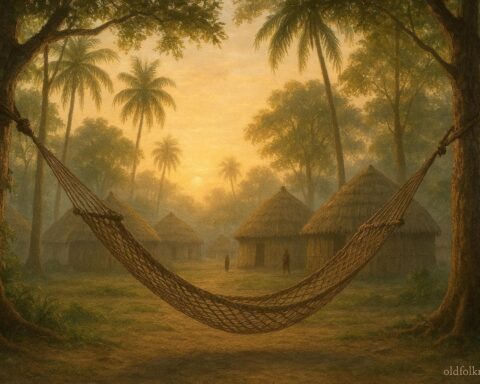
In those days, the islands lay closer to one another, and travel between them was guided by memory rather than fear. Canoes moved easily across familiar currents. Families shared harvests, songs, and ceremonies across shores. Unity was not enforced by strength but sustained by agreement.
Among the leaders entrusted with this responsibility was Guahayona. He was known for his commanding voice and his ability to persuade. He remembered long genealogies and spoke with confidence in council. Many believed he carried the spirit of leadership naturally, and for a time, he did.
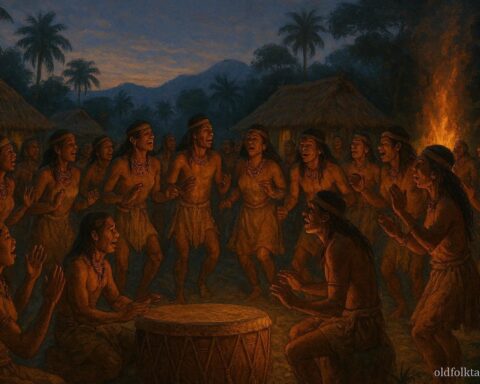
When Guahayona was chosen as a guide among the people, he accepted a covenant older than any single village. The covenant required that no leader act alone in matters that could alter the balance of the people. Decisions affecting land, migration, or separation were to be discussed openly and agreed upon collectively. This promise was witnessed by elders and sealed in ceremony.
For several seasons, Guahayona honored this covenant. He traveled from village to village, listening to concerns and carrying messages. He helped resolve disputes and reminded younger leaders of their duties. His reputation grew, and with it, his confidence.
Gradually, that confidence shifted. Guahayona began to believe that the shared process slowed progress. He imagined a future shaped by one guiding will rather than many voices. He convinced himself that unity could be preserved even if decisions were made by force of persuasion rather than consent.
During a particularly prosperous year, when cassava and maize filled storage houses and ceremonies lasted many nights, Guahayona began speaking of lands beyond the horizon. He described fertile shores and easier living. He framed separation not as abandonment but as opportunity.
Some listened eagerly. Others felt uneasy. Elders reminded him of the covenant and asked that the matter be discussed over time. They suggested consulting the spirits of the land and sea, as tradition required.
Guahayona dismissed their caution. He claimed urgency. He spoke as though delay would bring loss. That night, without calling council or ceremony, he gathered those already convinced and led them to the shore. Canoes were pushed into the water quietly. No farewell songs were sung.
By morning, the betrayal was known.
The covenant had been broken.
The people felt the absence immediately. Not only were loved ones gone, but trust itself seemed wounded. Elders gathered and spoke of what had occurred. They did not curse Guahayona. They named his action for what it was, a rupture of agreement that could not be undone.
Soon, the land responded.
Currents shifted subtly at first. Canoe routes became uncertain. The sea between islands grew unpredictable. Places once reached in a day required longer journeys. Some passages became dangerous altogether. The people understood this not as punishment alone, but as consequence. The balance had changed.
Those who followed Guahayona reached new shores, but the land there was unfamiliar and demanding. Disagreements arose quickly. Without shared customs and collective decision making, conflicts deepened. Guahayona attempted to rule alone, but his authority was questioned. Each decision reminded his followers that the covenant he broke had once protected them all.
As seasons passed, Guahayona’s name lost its power. He remained alive in story, not as a founder, but as a caution. The people he led scattered further, forming smaller groups bound by necessity rather than unity.
Meanwhile, those who remained behind rebuilt their practices with care. Councils became longer, not shorter. Elders emphasized the importance of listening. Children were taught the story of Guahayona early, not with anger, but with seriousness. They learned that leadership was not ownership and vision did not replace agreement.
The islands never returned to their former closeness. The sea remembered what had happened. Even generations later, when canoes traveled farther and knowledge expanded, the elders said the water still held the memory of broken promise.
Guahayona’s legacy endured not in monuments but in the shape of the world itself. The Taíno believed that when a covenant is broken, it does not vanish. It becomes part of the land, the sea, and the path forward.
Explore the ancestral legends of Canada, Mesoamerica, and South America’s Indigenous tribes.
Moral lesson
Leadership without shared responsibility leads to division, and broken agreements leave consequences that endure beyond a single lifetime.
Knowledge check
1 Who was Guahayona?
Answer A Taíno leader entrusted with upholding unity through a sacred covenant.
2 What was the covenant Guahayona accepted?
Answer An agreement requiring leaders to make major decisions collectively and protect unity.
3 How did Guahayona break the covenant?
Answer He led people away secretly without communal consent or ceremony.
4 What happened to the land and sea after the betrayal?
Answer Travel routes changed and the distance between islands increased.
5 Why did Guahayona’s authority weaken after migration?
Answer He ruled without shared trust, counsel, or collective agreement.
6 What lesson did the Taíno preserve through this story?
Answer That betrayal reshapes communities and the world itself.
Source
Adapted from Taíno migration and moral separation legends preserved by the Smithsonian National Museum of the American Indian.
Cultural origin
Taíno peoples, Caribbean.