When night settles over hospitals in Peru and Mexico, the long corridors grow quiet. The sounds of machines soften, footsteps fade, and fluorescent lights hum gently above empty halls. It is during these hours, between midnight and dawn, that nurses, orderlies, and night guards speak of a presence known as El Niño del Hospital.
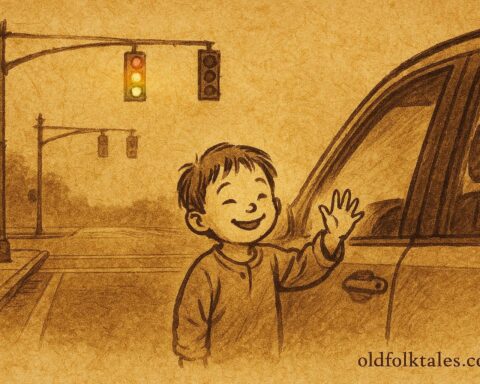
The first sightings are often dismissed as exhaustion. A nurse turning a corner glimpses a small boy standing near a doorway. A cleaner hears soft footsteps echoing behind him. A security guard sees a child sitting quietly on a bench, swinging his legs that do not quite reach the floor. Each time, the figure vanishes before anyone can speak.
Those who see him describe the same details. The boy is young, no older than six or seven. He wears simple clothes, sometimes described as pale or old-fashioned. His face is calm, neither smiling nor sad. He never cries. He never speaks. He only wanders.
Unlike frightening tales of spirits that scream or threaten, this child does nothing alarming. He does not disturb patients. He does not open doors or touch equipment. Instead, he moves slowly through hallways, pauses near patient rooms, and sometimes appears to be playing quietly with something invisible in his hands.
Nurses who follow him report that he disappears before dawn, fading as silently as he arrived.
At first, staff members assume coincidence. But as stories repeat across hospitals, told by people who have never met, patterns emerge. The boy is always seen late at night. He is always alone. And he is always gone by morning.
Eventually, curiosity gives way to concern. In some hospitals, senior staff search old patient records. In others, administrators quietly investigate past events. What they uncover gives weight to the whispers.
Decades earlier, a young boy died in the hospital. He had no visitors. Some say his family never came. Others say he was forgotten in an overcrowded ward. Records show he passed away quietly, unnoticed, during the night.
No one remembers his name.
From that point on, the story changes tone. The child is no longer seen as a shadow or illusion, but as a spirit left behind by loneliness and neglect. Word spreads among hospital staff, passed carefully from one shift to the next.
Some nurses begin leaving small toys at nurse stations overnight, wooden cars, dolls, or paper figures. Others whisper prayers when they walk the halls alone. A few pause where the boy is often seen, offering a gentle greeting, even if no one is there.
Those who do this claim something changes.
The sightings become calmer. The hospital feels lighter. The child is still seen, but less often. Some say he appears content, lingering only briefly before fading away. Others say he stops appearing altogether.
In contrast, hospitals where the boy is ignored report continued sightings. The same quiet figure. The same restless wandering. The same sense that something unfinished remains.
Across Peru and Mexico, El Niño del Hospital becomes a lesson told quietly among medical workers. He is not a warning meant to terrify, but a reminder meant to humble. In places devoted to healing, compassion must extend beyond schedules, records, and routines. Even those who leave this world unseen deserve kindness.
And so, in the stillness of hospital nights, toys remain where no living child will claim them. Because remembrance, the story teaches, can soothe even the most forgotten spirit.
Moral Lesson
This folktale teaches that compassion does not end with death. When the living fail to show kindness and remembrance, sorrow may linger, seeking the care it never received.
Knowledge Check
1. Who is El Niño del Hospital?
A silent child believed to be the spirit of a boy who died alone in a hospital.
2. Where is this urban folktale commonly told?
In hospitals across Peru and Mexico.
3. When does the boy usually appear?
Late at night, disappearing before dawn.
4. What behavior makes the child different from frightening spirits?
He is calm, silent, and never causes harm.
5. How do hospital staff respond to his presence?
By leaving toys, offering prayers, and showing remembrance.
6. What lesson does the story teach?
Compassion and kindness must extend beyond death.
Source: Hospital folklore and urban oral tradition
Cultural Origin: Peru & Mexico (Urban Latin American folklore)