In the misty hillsides of Colombia and Central America, where coffee plants carpet the slopes like waves of green, villagers speak in hushed, reverent tones of El Duende del Café. This small, barefoot spirit is rarely seen clearly, yet his presence is felt in every careful step taken among the rows of coffee bushes. Elders warn children not to wander alone through the plantations, particularly during the harvest, for the duende watches both for curiosity and for respect, or the lack of it.
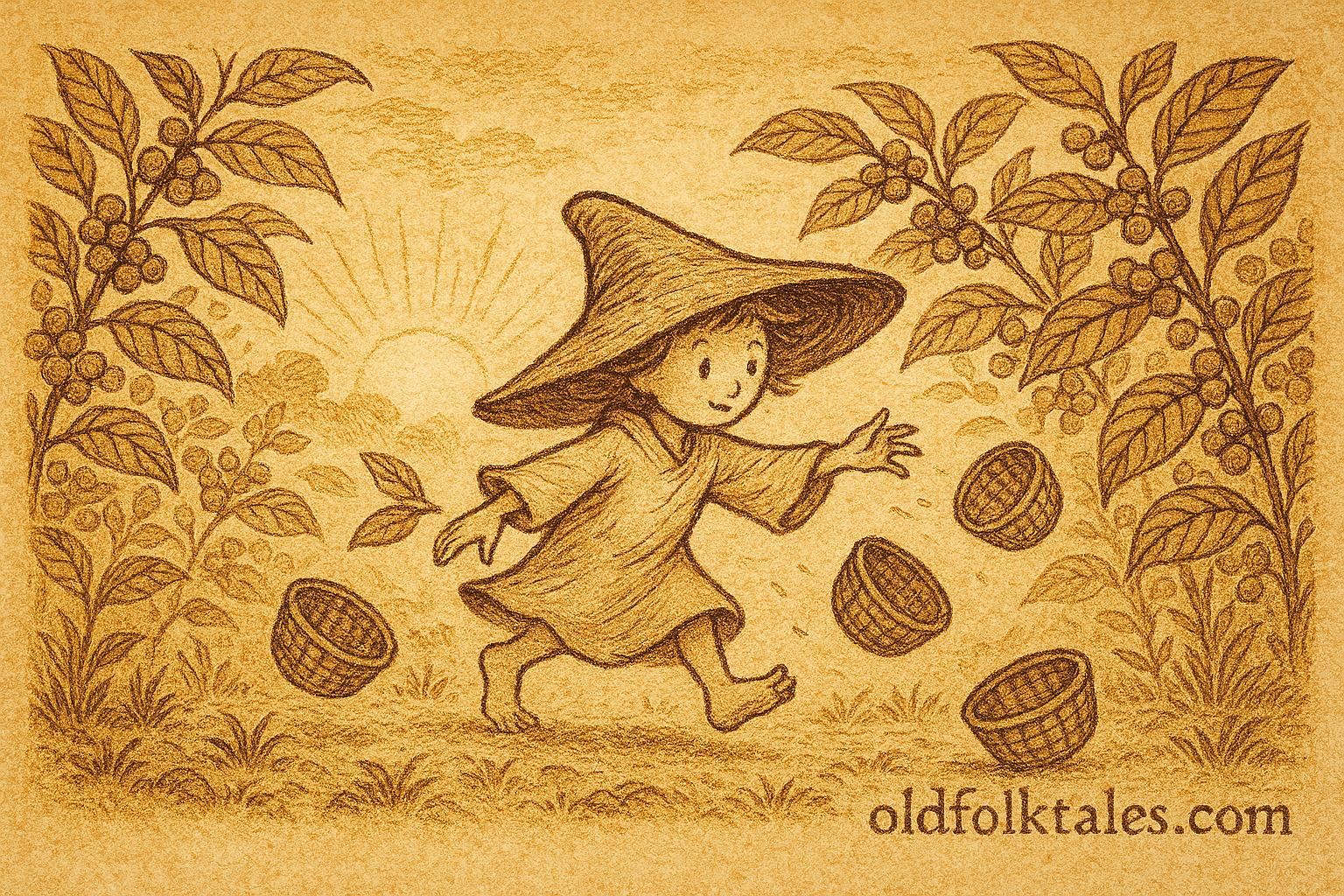
El Duende del Café appears at the edges of dawn or as dusk settles, a tiny figure cloaked in simplicity, wearing a wide hat that shades his impish smile. He moves nimbly among the coffee plants, laughing softly, so that one might think the sound comes from the rustle of leaves or the whispering wind. His work is subtle but unmistakable: he hides tools left out of place, scatters baskets carelessly set on the paths, and sometimes confuses the trails that wind between the steep hills. Those who rush, grumble, or treat the land carelessly often find their mornings filled with frustration and disrupted labor.
The villagers tell many stories of farmers who underestimated the duende. A young boy in a village once left a basket of freshly picked beans in a careless heap. By the time he returned, it had vanished, or so he thought. In truth, El Duende had moved it elsewhere, leaving him to retrace his steps and reflect on the value of diligence and order. Another tale speaks of a woman impatient with her morning harvest, hurrying through the rows, brushing aside the lower leaves. By midday, her carefully picked coffee beans were disorganized, a subtle reminder that the spirit honors care and punishes haste.
Yet El Duende is not cruel. Those who labor patiently and treat the coffee plants with respect often find their work guided by unseen hands. Baskets remain in place, paths stay clear, and harvests appear more bountiful than expected. Many farmers claim that if they work quietly and with attentiveness, El Duende moves gently behind them, ensuring that their labor bears fruit. In this way, he embodies the balance between humans and nature, a guardian who encourages care, patience, and respect rather than punishing the poor or the hardworking unfairly.
Stories of El Duende del Café are passed down through generations. Elders use them to teach children the rhythm of planting and harvesting, the importance of listening to the land, and the value of working alongside nature rather than against it. Through these tales, villagers learn that shortcuts and carelessness lead to frustration, while thoughtful labor and a respectful heart bring both reward and peace of mind.
Even today, when the morning fog drifts over the plantations and sunlight glimmers across the dew-laden coffee leaves, farmers speak softly of the duende. “Watch your steps,” they say, “and honor the coffee with care. El Duende is always near.” Whether one believes in the spirit as a supernatural guardian or as a symbolic reminder of labor ethics, his lesson is clear: respect for the land, diligent work, and mindful attention yield prosperity far greater than reckless haste or carelessness ever could.
Moral Lesson
El Duende del Café teaches that honest labor, patience, and respect for nature bring lasting rewards, while haste and carelessness disrupt both work and harvest.
Knowledge Check
1. Who is El Duende del Café?
A small, barefoot spirit living among coffee plants who guides or misleads villagers based on their respect for the land.
2. When does El Duende typically appear?
At dawn or dusk, during times of planting or harvest.
3. How does El Duende punish carelessness?
By hiding tools, scattering baskets, and confusing paths, creating subtle obstacles for the impatient or disrespectful.
4. Who benefits from El Duende’s presence?
Farmers who work patiently, carefully, and respectfully with the coffee plants.
5. What does El Duende symbolize?
The balance between humans and nature, patience in labor, and the rewards of respectful work.
6. Why is this story culturally significant?
It reflects rural coffee-growing traditions in Colombia and Central America, teaching respect for land and labor through oral folklore.
Source: Rural oral tradition
Cultural Origin: Colombia & Central America (Village Folklore)