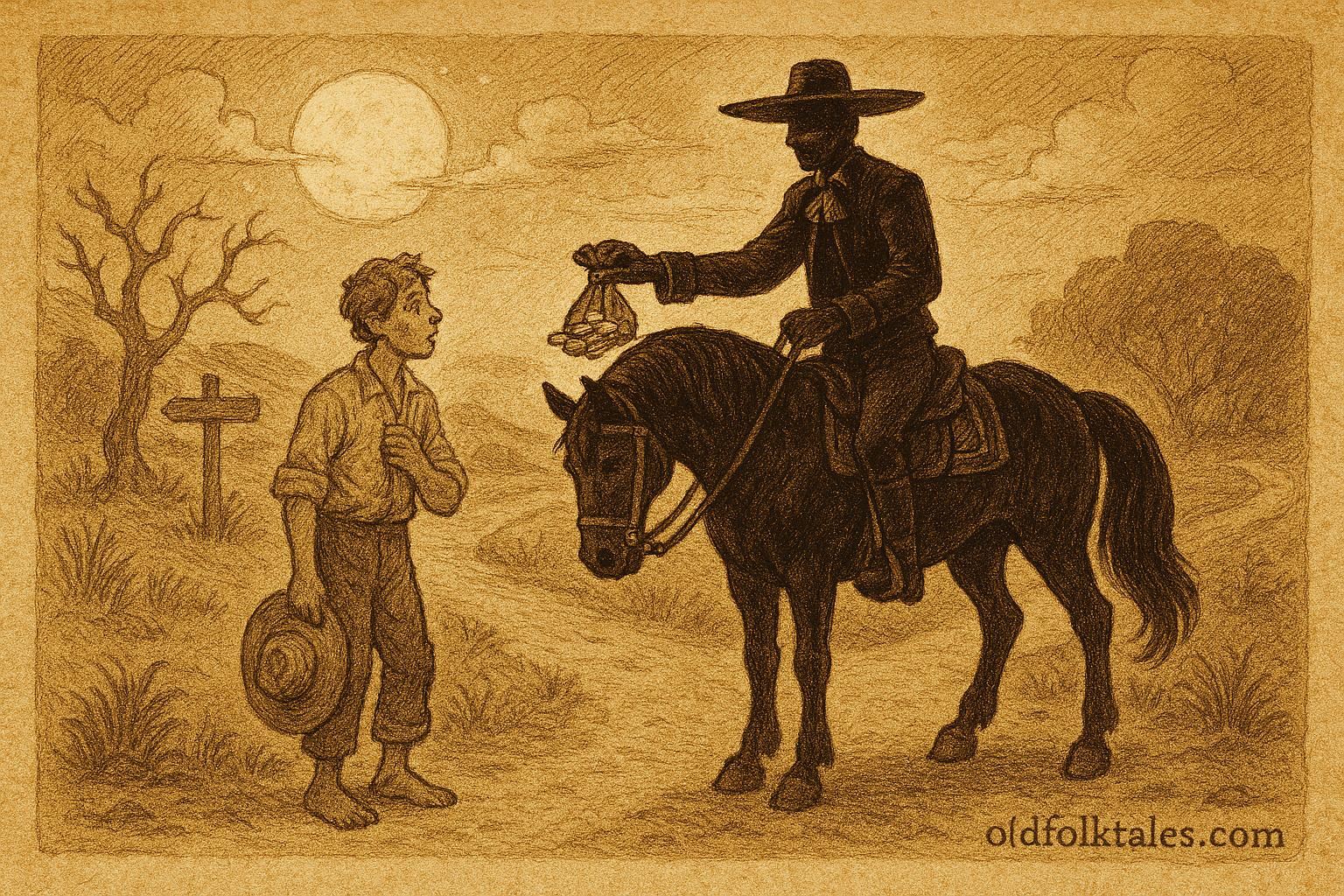
In the dusty towns and winding roads of colonial Mexico, whispers carried on the evening wind spoke of a man unlike any other. He was El Charro Negro, a mysterious figure dressed in the finest black charro attire, with silver buttons that gleamed faintly under the moonlight. His horse, equally black and imposing, seemed to emerge from the shadows themselves, hooves silent upon the earth. Villagers would not linger on the roads at night, for they feared the man who appeared to test the hearts of men.
The legend began with the story of a young farmer named Diego, who, though diligent in his work, struggled to provide for his family. His fields were meager, his livestock small, and his debts to the local merchants grew heavier with each passing season. One night, as Diego returned from the marketplace, he saw a figure standing beneath the old oak at the crossroads. The man’s clothing was immaculate, his presence commanding. As Diego approached, the Charro spoke in a voice smooth as silk yet edged with authority.
Journey through Central America’s heartlands and hear its stories of creation, courage, and nature.
“I see your troubles, young man,” the Charro said, “and I can grant you wealth beyond your imagination. You need only pledge your soul to me, and your fortunes shall rise like the sun over the mountains.”
Diego’s heart pounded. His dreams of prosperity had seemed impossible, and here, in the blackness of night, stood a chance to change his fate. Yet, deep within, a flicker of unease stirred. He remembered the stories told by his elders: those who accepted the Charro’s offer never prospered as they imagined. The gold would turn to dust, the riches would vanish, and their lives would be bound to misfortune forever.
Still, the temptation gnawed at him. He thought of his hungry children, of his wife’s weary hands, and the barren fields that refused to yield. With a trembling hand, he considered the pledge. But at that moment, a chill ran down his spine. The Charro’s eyes glinted with an unnatural light, and the shadows around him deepened, swallowing the edges of the road. Diego stepped back. The stories were true. The promise of quick wealth came at the price of eternity.
As the night deepened, the Charro faded into the darkness, leaving only the echo of his voice. Diego returned home with a renewed understanding: wealth built on deceit or immoral bargains carried consequences far worse than poverty. He tended his fields with care, worked patiently, and taught his children the value of honest labor. In time, his modest crops grew, his livestock multiplied, and his household flourished, not through shortcuts, but through perseverance and integrity.
The villagers, too, recounted sightings of El Charro Negro to warn young men and women of temptation. Some who had grown greedy and impatient swore they felt his presence on lonely roads, riding silently beside them, offering impossible riches in exchange for fleeting souls. Those who accepted his offer inevitably faced ruin. Farms failed, merchants’ promises crumbled, and misfortune followed like a shadow. The tale became a moral compass, reminding everyone that greed and unethical choices carry consequences beyond the material, stretching into the spiritual realm.
In the hearts of the people, El Charro Negro was more than a warning. He embodied the merging of colonial European notions of the devil with indigenous beliefs in spirits that guarded justice and morality. Wealth was not inherently evil, but the path to it, through dishonesty, impatience, or the sacrifice of one’s soul, was perilous. And so, the figure of the dark horseman persisted in stories told around fires, in marketplaces, and in whispered warnings to children.
Even today, the roads of rural Mexico carry the memory of El Charro Negro. Travelers who linger too long in the shadows or make hasty promises of fortune still speak of glimpsing a black horse and its rider, a silhouette of elegance and dread, silently reminding all who meet him that the allure of easy wealth is a path fraught with eternal consequence.
Discover Mexico’s timeless tales blending Indigenous roots and Spanish tradition
Moral Lesson
Greed and the pursuit of shortcuts through immorality bring lasting consequences. Honest work, patience, and respect for ethical laws ensure true prosperity, while attempting to cheat fate leads to ruin.
Knowledge Check
1. Who is El Charro Negro?
A mysterious, elegantly dressed man on a black horse who offers wealth in exchange for one’s soul.
2. What is the danger of accepting his offer?
Those who pledge their soul face misfortune, losing the promised wealth and suffering long-term consequences.
3. What motivates people like Diego to consider the Charro’s deal?
Desperation, poverty, and the desire to quickly improve their circumstances.
4. How did Diego avoid disaster?
He recognized the danger, rejected the Charro’s offer, and relied on hard work and patience.
5. What cultural elements are reflected in the story?
The blending of European devil motifs with indigenous Mexican beliefs about spirits, justice, and moral consequence.
6. What lesson does the folktale teach about wealth?
True prosperity comes from honest labor and ethical choices, not from greed or immoral shortcuts.
Source: Colonial oral folklore and ecclesiastical records
Cultural Origin: Mexico (Colonial Mexican folklore)